


DPDPA Compliance Platform for Indian Enterprises
About Privy by IDfy
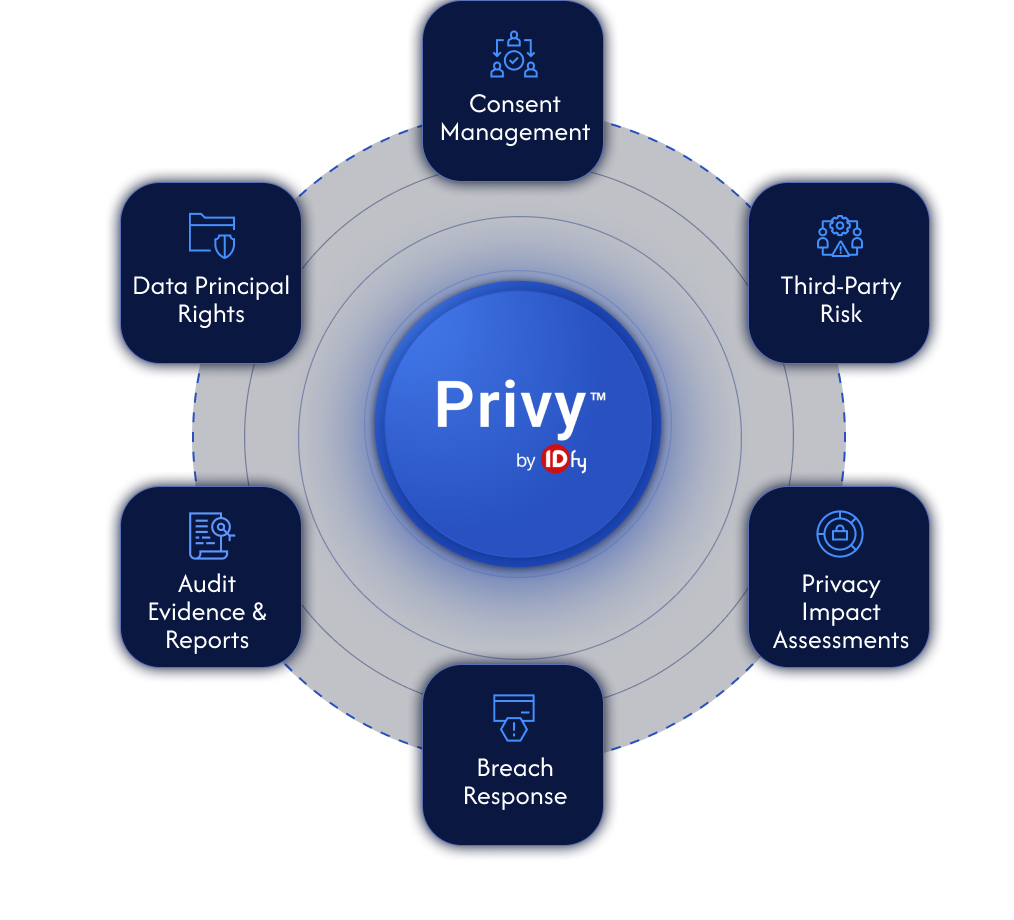
Privy by IDfy helps Indian enterprises operationalise DPDPA compliance across consent, data principal rights, breach response, data discovery, privacy impact assessments, third-party risk, and audit evidence. Built for the Digital Personal Data Protection Act, 2023, Privy gives compliance, legal, security, product, and technology teams one platform to manage privacy obligations at enterprise scale.
DPDPA compliance is not just about publishing a privacy notice or collecting consent. Organisations now need to know what personal data they process, why they process it, how consent is collected and withdrawn, how data principal rights are fulfilled, how processors and vendors are governed, and how compliance evidence is produced when required. Privy brings these workflows together so teams can move from policy to execution.

Trusted by Indian enterprises
Privy by IDfy supports privacy and compliance teams across BFSI, fintech, insurance, e-commerce, telecom, retail, and other high-data-volume sectors.

What does DPDPA Compliance Require?
The Digital Personal Data Protection Act, 2023, governs digital personal data processed in India and certain processing outside India linked to offering goods or services in India. It establishes requirements for lawful processing, consent, data fiduciary obligations, data principal rights, breach response, cross-border transfers, grievance redressal, and penalties.
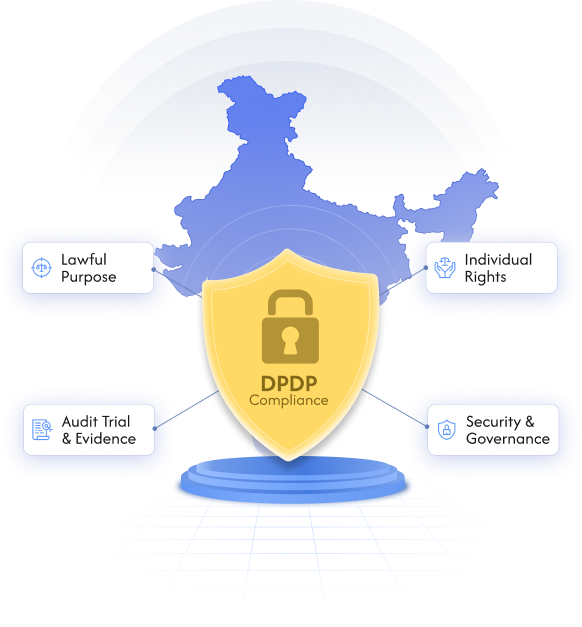
In simple terms, DPDPA requires organisations to prove three things:

They process personal data for a lawful and defined purpose.
They give individuals control through notice, consent, withdrawal, rights, and grievance mechanisms.
They maintain security, governance, vendor controls, audit trails, and evidence.
That is why DPDPA compliance cannot be managed through spreadsheets alone. It needs operational workflows, ownership, controls, alerts, and proof.

Every DPDP Requirement. One Platform.
DPDPA compliance is not a one-time legal exercise. Enterprises need to identify what personal data they process, issue clear notices, collect and manage consent, honour data principal rights, secure personal data, govern processors, handle breach response, and maintain evidence for audit and regulatory review.
The table below maps key obligations under the DPDP Act, 2023, and the DPDP Rules, 2025, to Privy’s platform capabilities.
Notice to Data Principals (Section 5 / Rule 3):
Data fiduciaries must provide clear, standalone notices explaining the personal data collected, the purpose of processing, consent withdrawal, data principal rights, and grievance mechanisms.
Purpose-mapped privacy notices.
Multilingual notice support.
Version-controlled notice records.
Audit trails for notice and consent journeys.
Consent Management (Section 6 / Rule 3):
Consent must be free, specific, informed, unconditional, unambiguous, and given through clear affirmative action. Withdrawal must be easy.
DPDPA-ready consent journeys.
Granular purpose mapping.
Immutable consent artefacts.
Consent review and withdrawal workflows.
Consent evidence for audits.
Legitimate Uses (Section 7 / Rule 5):
Certain processing may be permitted for specified legitimate uses, but organisations still need documentation and governance.
Lawful-basis mapping. Processing activity documentation. Purpose-level governance. Internal evidence records.
Security Safeguards (Section 8 / Rule 6):
Organisations must implement reasonable security safeguards, including encryption, access controls, monitoring, logs, backups, and processor safeguards.
Security control evidence. Logging and monitoring workflows. Processor security governance. Audit-ready safeguard documentation.
Personal Data Breach (Section 8 / Rule 7):
Organisations must notify affected data principals and the Data Protection Board after becoming aware of a personal data breach.
Breach intake and assessment workflows. 72-hour board update tracking. Automated escalation for legal, privacy, and security teams. Notification evidence and remediation tracking.
Data Retention and Erasure (Section 8 / Rule 8):
Personal data must be erased when the specified purpose is no longer served, unless retention is required by law.
Retention schedules. Erasure workflows. Processor deletion tracking. Evidence of retention and deletion decisions.
DPO and Grievance Contact (Section 8 / Rule 9):
Organisations must publish business contact information for the DPO, where applicable, or a person who can answer questions on personal data processing.
Rights Portal contact management. DPO and grievance workflow support. Contact details are included in rights' responses.
Children’s Data and Verifiable Consent (Section 9 / Rules 10–12):
Organisations processing children’s data must obtain verifiable parental consent where required and apply child-data restrictions appropriately.
Age and consent workflows. Parental or guardian verification support. Child data governance records. Exemption management support.
Significant Data Fiduciary Obligations (Section 10 / Rule 13 SDFs):
May need DPIAs, independent audits, DPO governance, algorithmic risk assessment, and board-level reporting.
India-specific DPIA templates. Algorithmic accountability workflows. DPO dashboards. Board-ready reports. Audit evidence.
Data Principal Rights (Sections 11–14 / Rule 14):
Data principals have rights related to access, correction, completion, update, erasure, grievance redressal, and nomination.
Self-service Rights Portal. Automated request routing. SLA tracking. Nomination and grievance workflows. Closure evidence.
Cross-Border Data Transfers (Section 16 / Rule 15):
Cross-border transfers must comply with restrictions or requirements notified by the central government.
Cross-border data-flow mapping. Vendor and processor visibility. Transfer-risk documentation. Governance workflows for notified restrictions.
Privy by IDfy vs Leading DPDP Platforms

DPDP-native consent management

Purpose-built for the DPDP Act with purpose-bound, immutable consent across web, apps, IVR, offline and assisted journeys, aligned with MeitY BRD

Basic digital consent with limited DPDP support

Built primarily for GDPR-style digital consent workflows

Consent receipts & Data Principal experience
Downloadable consent receipts, immutable audit trails, multilingual rights portal and lifecycle management
Basic consent logs with limited user visibility
Machine-readable logs with limited Data Principal experience

Indian-first privacy experience
End-to-end support across all 22 Indian languages for consent, cookies and rights management
Limited regional language support
Generic multilingual support with limited Indian regulatory context

AI-powered Indian data discovery
AI identifies Indian PII, documents, images and unstructured data across cloud, SaaS, endpoints and on-prem systems
Basic discovery with limited Indian PII coverage
Broad discovery with limited Indian PII and endpoint visibility

Enterprise data governance
Cross-border transfer governance, 200+ connectors, real-time data lineage and processor visibility
Limited integrations and governance capabilities
Broad integrations with limited India-specific governance

Third-party governance
Processor accountability, AI-assisted contract reviews, vendor workflows and unified SLA visibility
Basic vendor management
Partial governance through separate modules

DPDP assessments & compliance
Built-in DPIAs, RoPA mapping, business-linked assessments and audit-ready evidence
Basic or manual assessments
GDPR-oriented assessments with limited DPDP automation

Breach response & regulatory reporting
Automated breach workflows, affected-user identification and reporting aligned with DPB, CERT-In, RBI, SEBI and IRDAI
Mostly manual workflows
GDPR-focused reporting with limited Indian regulatory alignment

Privacy-first architecture
PII-blind architecture that minimizes data exposure, simplifies InfoSec reviews and reduces security risk
Platform processes or stores sensitive PII
Platform processes or stores sensitive PII

Enterprise-ready platform
Proven at Indian enterprise scale with 2,000 RPS throughput and 14+ years of deployments, delivered as one integrated privacy platform
Limited enterprise scale; multiple products required
Enterprise-scale platform with loosely integrated privacy modules
How Privy Maps to DPDPA Compliance
Privy is designed as a full-stack privacy governance platform for Indian enterprises. Instead of solving only one part of DPDPA, it connects the operational workflows required across the Act.
AI Compliance Co-pilot
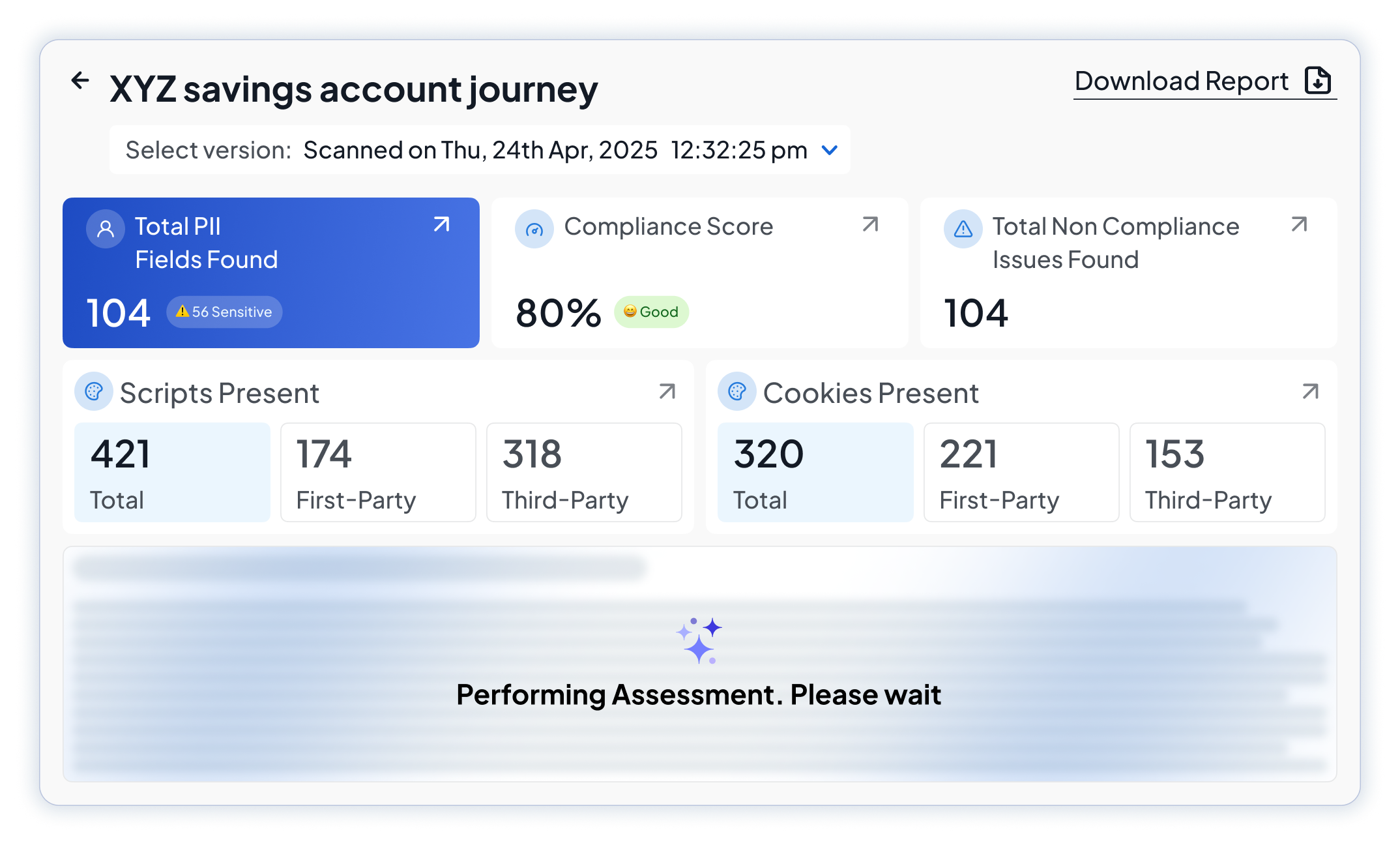
For surfacing compliance gaps, routing tasks, flagging risk, and helping teams move faster across privacy operations.

Recognition
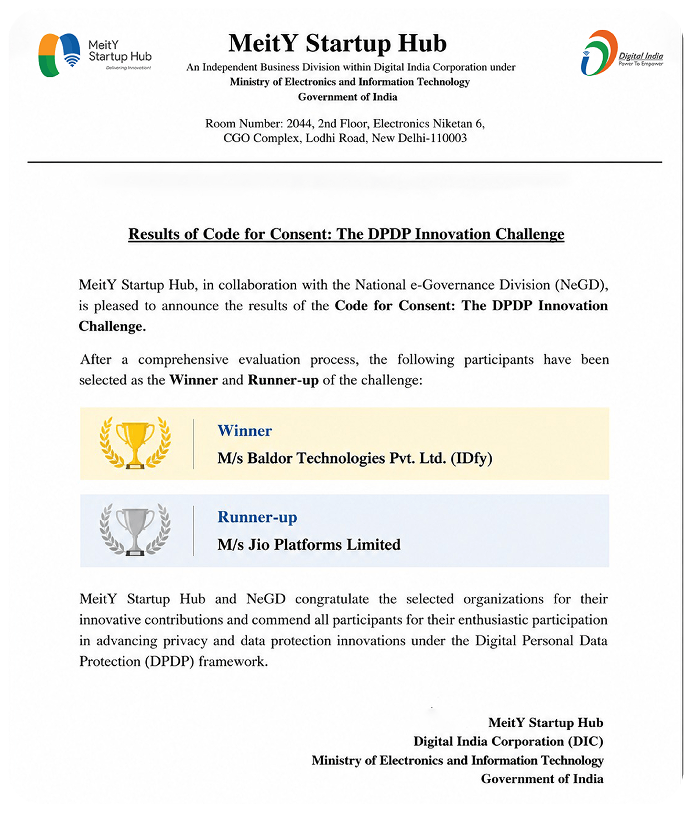
Privy by IDfy was ranked #1 in the MeitY-NeGD DPDP Innovation Challenge for its approach to consent management and DPDPA readiness.
For enterprises evaluating privacy technology, this recognition serves as a strong trust signal: Privy wasn't adapted for India's privacy landscape- it was purpose-built to address the requirements of the DPDPA from the ground up.
Why Enterprises Choose Privy by IDfy for DPDPA Compliance
Privy helps enterprises turn DPDPA compliance from a legal obligation into an operational privacy programme. Built on IDfy’s 14+ years of experience handling Indian PII across large-scale enterprise systems, Privy brings technology, workflows, and implementation expertise into one platform.


Built for India. Proven at Scale.
Privy is designed for India’s privacy landscape, Indian personal data types, and the operational realities of large enterprises. With 30+ enterprise clients and 50M+ consent impressions managed, Privy helps organisations implement DPDPA compliance with confidence.

Full-Stack Privacy and Data Governance
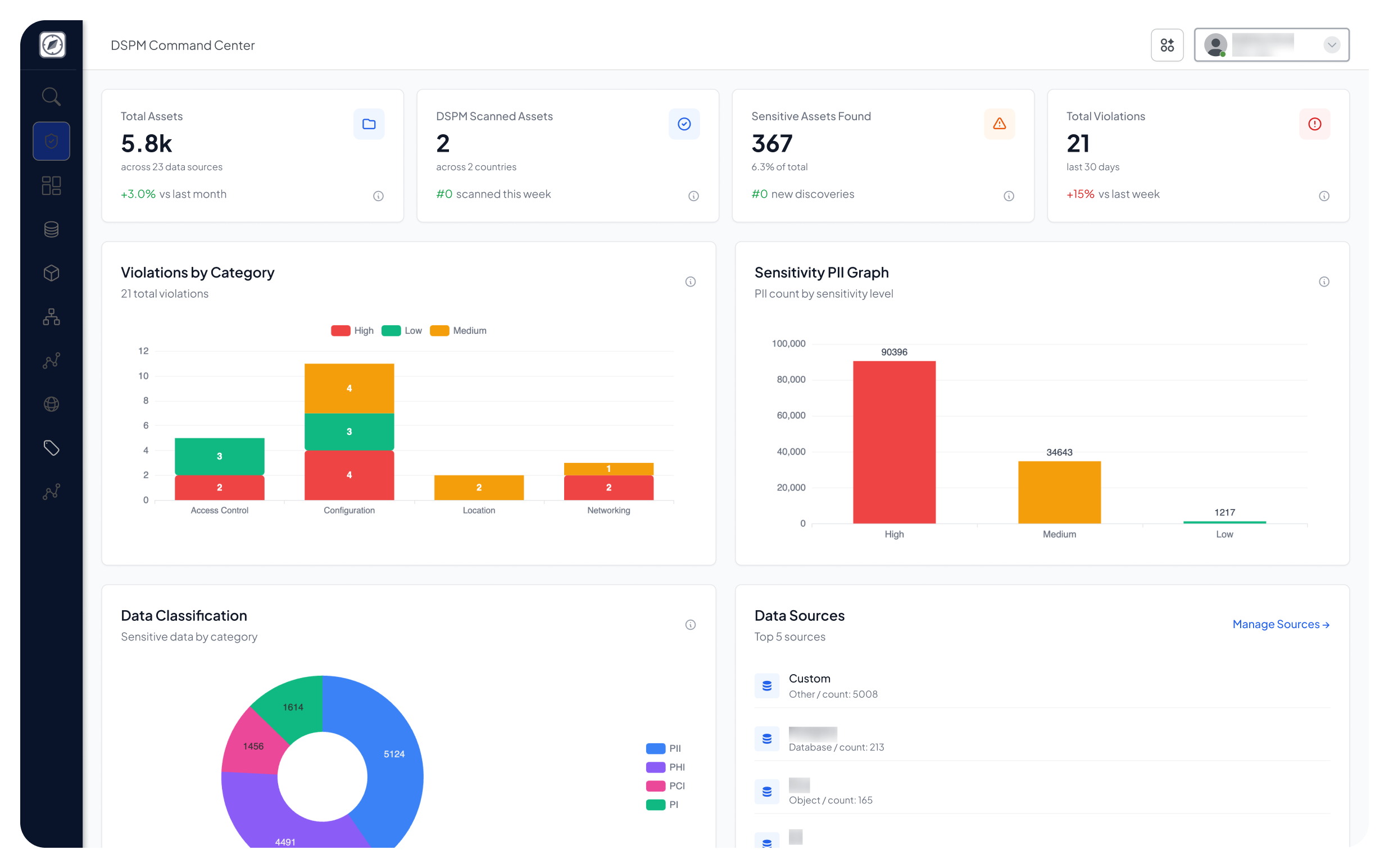
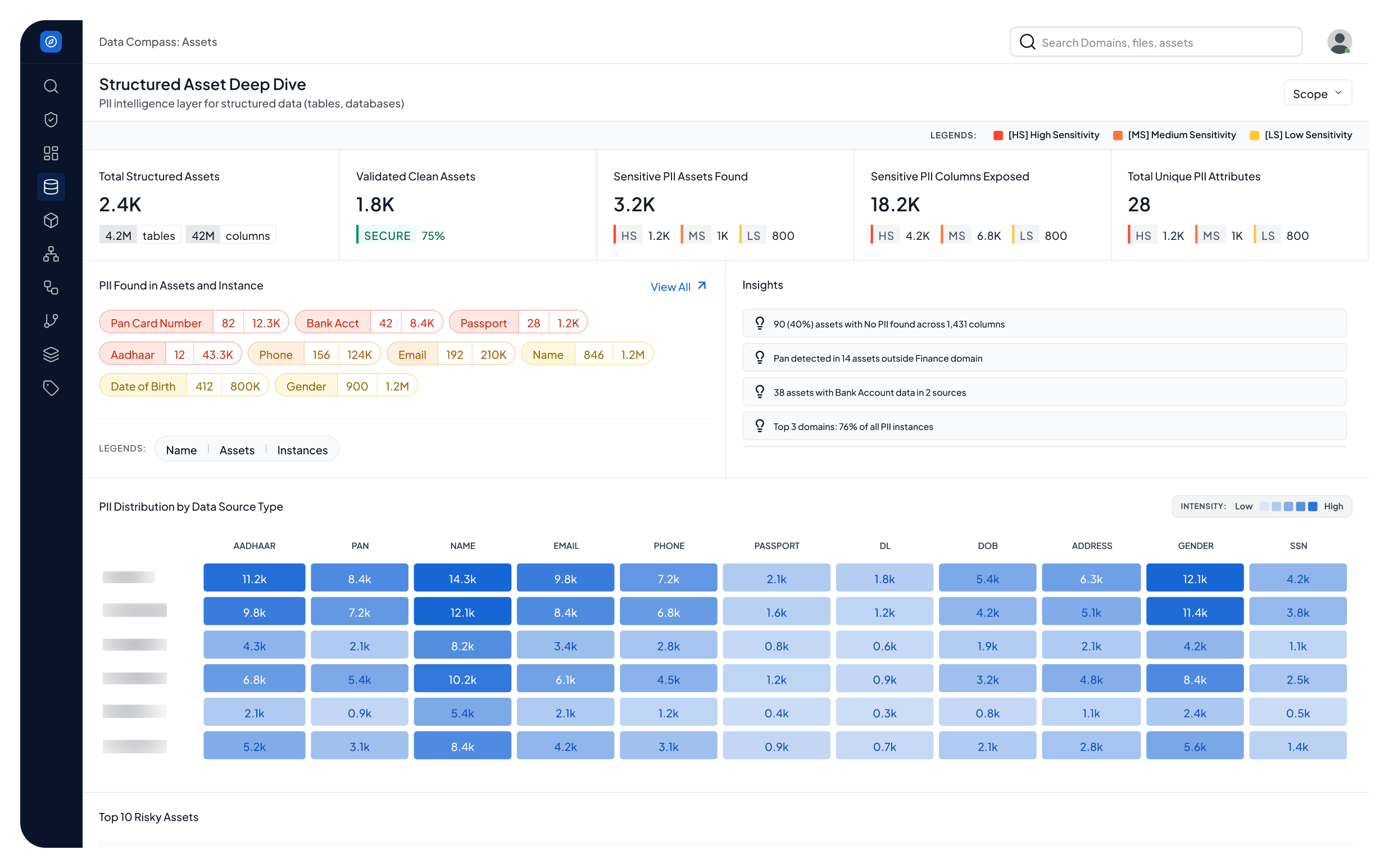
Manage consent, data principal rights, cookie governance, data discovery, DSPM, PETs, DPIAs, third-party risk, incident management, and AI governance from one connected platform.

First-Time-Right Execution
Privy brings proven implementation expertise that helps teams reduce rework, accelerate operational readiness, and move faster from compliance planning to execution.

Institutionalised Accountability
Embed ownership, approvals, workflows, and auditability across legal, compliance, security, product, and business teams so privacy does not remain stuck in spreadsheets or policy documents.

Demonstrable Defence
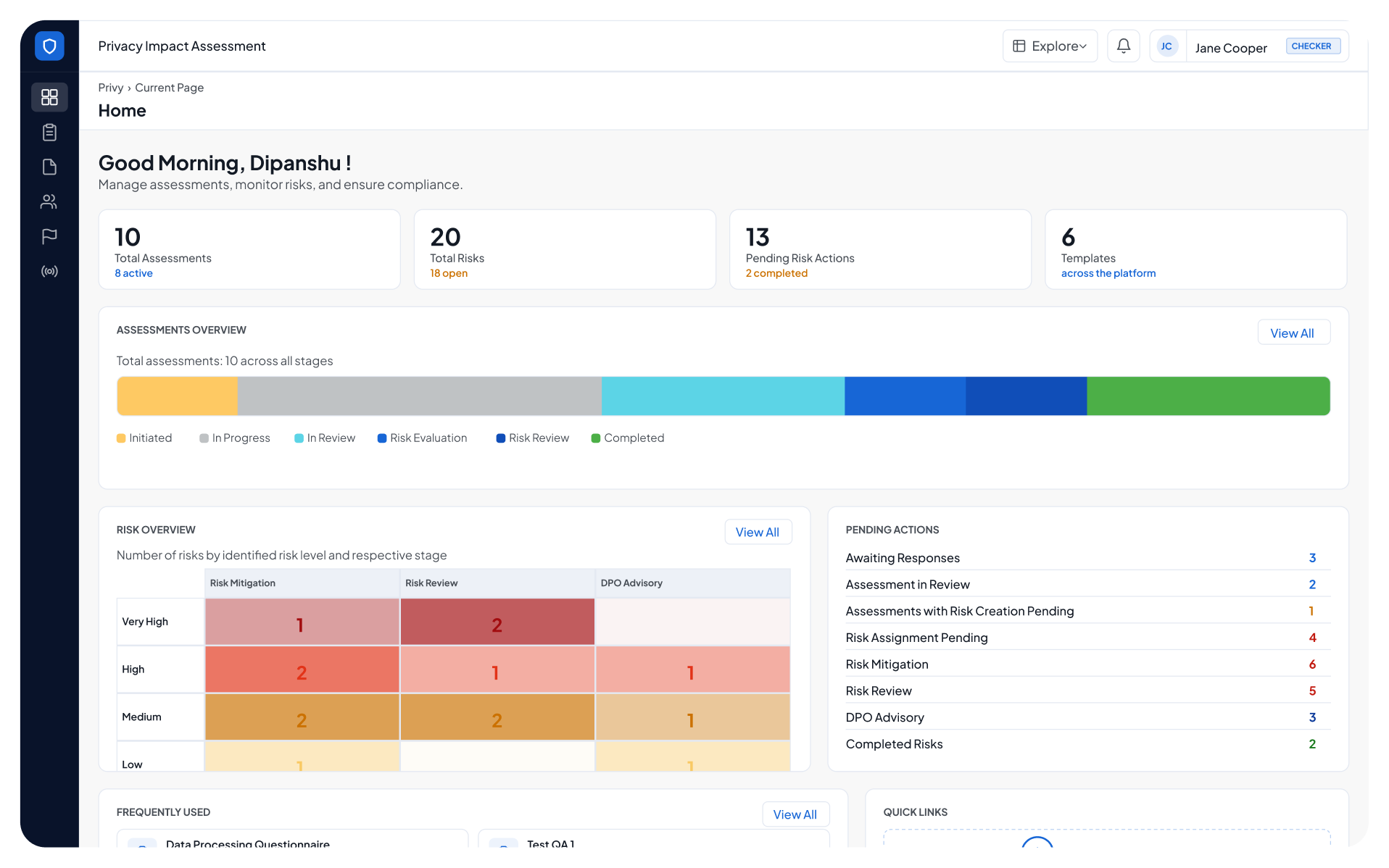
Maintain evidence-backed compliance through immutable consent artefacts, audit trails, breach logs, DPIA records, rights request histories, and governance documentation.

ROI on Privacy
Reduce manual effort, lower compliance overhead, and improve governance efficiency by automating privacy workflows across the personal data lifecycle.

Execution at Speed
Deploy automated privacy workflows aligned to regulatory timelines, business priorities, and enterprise-scale implementation needs.
Proof at Scale
DPDPA Compliance FAQs
DPDPA compliance means aligning an organisation's personal data processing with the Digital Personal Data Protection Act, 2023. This includes lawful processing, notice, consent, data principal rights, security safeguards, breach response, retention, vendor governance, and compliance evidence.
Any organisation processing digital personal data in India may fall within scope. The Act may also apply to processing outside India if it relates to offering goods or services to data principals in India.
No. Consent is important, but DPDPA compliance also requires notice, withdrawal, rights management, security safeguards, breach response, retention controls, vendor governance, and evidence.
Consent must be free, specific, informed, unconditional, unambiguous, and given through clear affirmative action. It must be linked to a specified purpose and limited to necessary personal data.
Yes. Where consent is the basis of processing, the data principal has the right to withdraw consent. The ease of withdrawal should be comparable to the ease with which consent was given.
Start your DPDPA compliance journey with Privy
DPDPA compliance needs more than policy documents. It needs workflows, accountability, evidence, and enterprise-grade execution. Privy by IDfy helps teams move from readiness to implementation.




 shivani@idfy.com
 Unit no. 801, Skyline Icon, 804, Andheri - Kurla Rd, Chimatpada, Marol, Andheri East, Mumbai, Maharashtra 400059
 1800 123 4339