

Biometric Authentication
Definition
Biometric authentication is the process of verifying an individual’s identity using unique biological characteristics such as fingerprints, facial recognition, iris scans, or voice patterns.
Biometric authentication enables organizations to verify user identity using physical or behavioral biometric traits that are unique to an individual. It is commonly used across banking systems, mobile applications, workforce access management, digital onboarding, and secure enterprise environments to strengthen identity verification and reduce dependence on passwords or traditional credentials.
As organizations increasingly adopt digital identity systems and AI driven authentication technologies, biometric authentication becomes deeply connected to consent management, access control, fraud prevention, and security governance workflows. Because biometric information is highly sensitive and inherently linked to an individual’s identity, improper handling creates significant privacy, security, and regulatory risks.
In the context of the Digital Personal Data Protection Act, 2023, biometric data requires heightened protection, lawful processing practices, purpose limitation, and strong governance controls to ensure organizations can securely collect, process, store, and manage sensitive personal data.
In practice, gaps emerge when:
- Biometric data is collected without sufficient transparency or consent context.
- Authentication systems lack controls around storage, retention, or downstream usage.
- Biometric verification workflows operate independently from governance and audit systems.
- Organizations cannot demonstrate how biometric data is secured or processed across environments.
To address this, organizations implement governance frameworks that connect biometric authentication with identity management, consent lifecycle controls, access governance, monitoring, and auditability. This supports first time right implementation, full stack transformation across identity ecosystems, demonstrable defense through evidence grade controls, and institutionalized ownership of sensitive identity workflows. Within Privy, this is supported through capabilities such as consent lifecycle management, audit trails, governance visibility, and connected identity workflows, enabling organizations to operationalize biometric authentication with greater accountability, traceability, and compliance readiness.
Questions About Staying in Control?
Here’s everything you need to know about this term and how it fits into your compliance program.
Because biometric identifiers are unique to individuals and cannot easily be changed if compromised or misused.
Fingerprint recognition, facial recognition, iris scans, voice authentication, and behavioral biometrics.
Improper handling, storage, or reuse of biometric data without adequate security, transparency, or governance controls.
Because organizations must clearly communicate how biometric data is collected, processed, stored, and used across authentication workflows.
By connecting authentication systems with consent management, access controls, encryption, monitoring, and auditability mechanisms.
Still have a question?
Latest Blog

Sep 30, 2026
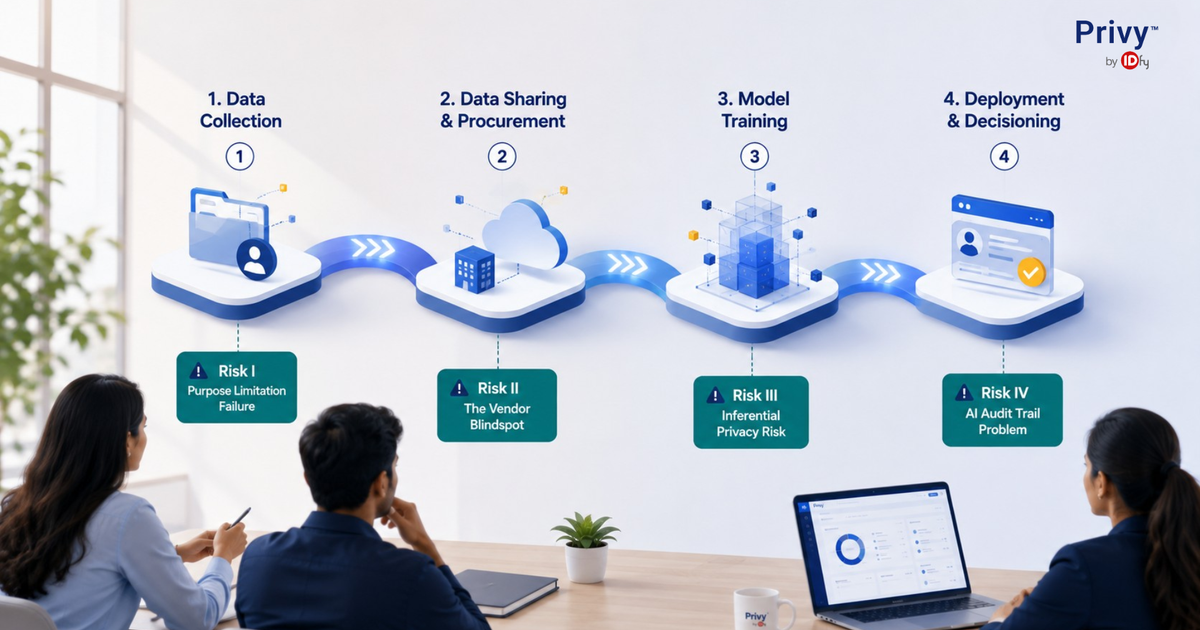
RBI NBFC Rules Just Banned Dark Patterns and Fake Consent
Sep 29, 2026
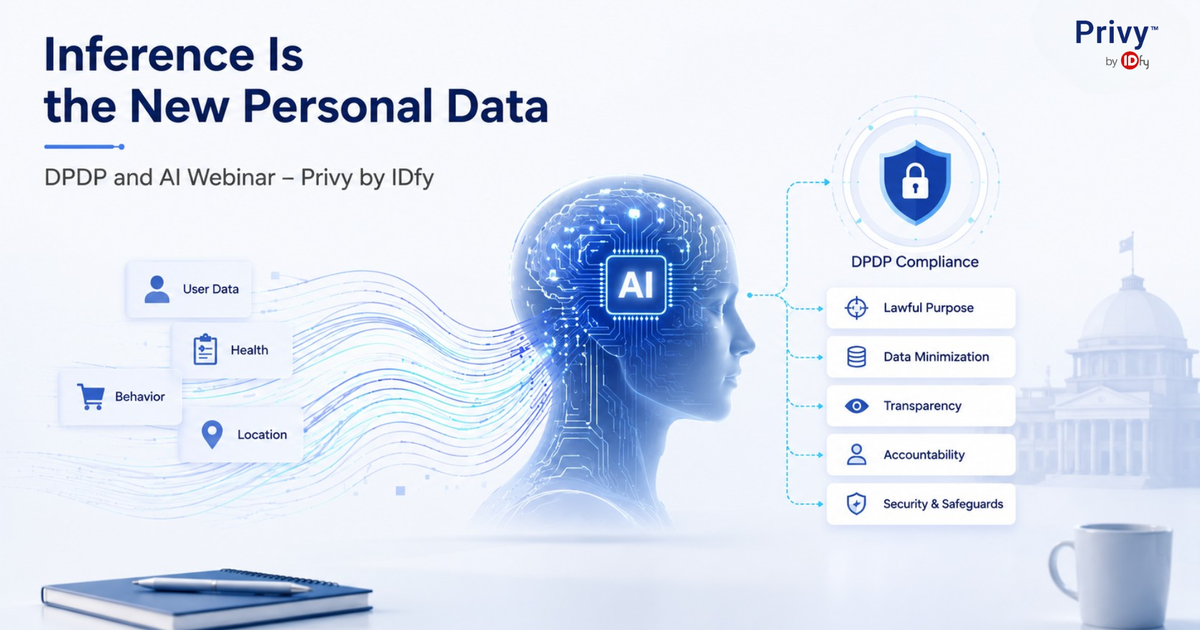
Data Privacy in the AI Era: The Four Risks Indian Corporations Have Already Inherited
Sep 10, 2026




 shivani@idfy.com
 Unit no. 801, Skyline Icon, 804, Andheri - Kurla Rd, Chimatpada, Marol, Andheri East, Mumbai, Maharashtra 400059
 1800 123 4339