
Board Oversight
Definition
Board oversight is the governance function through which leadership monitors enterprise risk, compliance, accountability, and operational control across the organization.
Board oversight defines how an organization’s leadership supervises governance execution across business operations, risk management, compliance programs, and data handling practices. It ensures that operational decisions, control frameworks, and accountability mechanisms align with regulatory obligations, business priorities, and enterprise-wide governance expectations.
As organizations operate across interconnected systems, third-party ecosystems, cloud infrastructure, and AI-enabled environments, board oversight increasingly depends on operational visibility rather than periodic policy reviews. Boards are expected to understand whether governance controls are functioning effectively across workflows, systems, vendors, and business units not just whether compliance documentation exists.
Under the Digital Personal Data Protection Act, 2023, organizations are expected to demonstrate accountable governance over personal data processing and protection. This expands board oversight from passive compliance supervision to active monitoring of how consent governance, data flows, vendor ecosystems, rights operations, and breach management processes function across the enterprise.
Effective oversight under DPDP depends on whether organizations can produce measurable evidence of governance execution through audit trails, operational reporting, traceable workflows, and system-level accountability. Boards increasingly require visibility into how privacy controls are embedded into day-to-day operations and continuously enforced across evolving data environments.
Core Areas of Effective Board Oversight
Strong board oversight typically depends on the organization’s ability to operationalize governance across multiple layers:
- Governance ownership and escalation structures across business units
- Continuous visibility into consent, retention, and rights workflows
- Enterprise-wide data discovery and traceable data lineage
- Vendor governance and third-party accountability mechanisms
- Incident response readiness and breach management visibility
- Audit-grade evidence generation and defensible reporting workflows
This shifts board oversight from reviewing static compliance updates to governing operational accountability and enterprise-wide control effectiveness.
In practice, gaps emerge when:
- Boards receive policy updates without operational governance visibility
- Privacy and compliance responsibilities remain fragmented across teams
- Risk reporting focuses on documentation rather than measurable controls
- Governance decisions remain disconnected from execution workflows
- Organizations cannot generate audit-ready evidence across systems
Organizations strengthen board oversight by implementing connected governance frameworks that provide continuous visibility into operational risk, compliance execution, incident readiness, vendor exposure, and privacy controls across the enterprise. This helps leadership move from reactive reporting to measurable and evidence-backed governance oversight.
Modern enterprises also operationalize oversight through centralized governance reporting, audit-ready workflows, continuous monitoring, and system-level accountability mechanisms. Within Privy, this is supported through capabilities such as governance visibility, audit trails, consent lifecycle management, incident workflows, and board-ready reporting that help organizations establish stronger operational defensibility and continuous compliance readiness.
Questions About Staying in Control?
Here’s everything you need to know about this term and how it fits into your compliance program.
Board oversight ensures that privacy, compliance, and operational risks are governed consistently across systems, vendors, and business operations.
Board accountability defines responsibility, while board oversight focuses on continuous supervision of governance execution, operational controls, and enterprise risk visibility.
Without visibility into live systems and workflows, boards cannot assess whether governance controls are actually functioning as intended.
Boards should monitor consent governance, incident readiness, vendor risks, rights workflows, auditability, operational KPIs, and compliance defensibility.
Fragmented governance, disconnected reporting, limited audit visibility, manual compliance tracking, and lack of measurable control monitoring are common indicators.
Still have a question?
Latest Blog
Sep 30, 2026
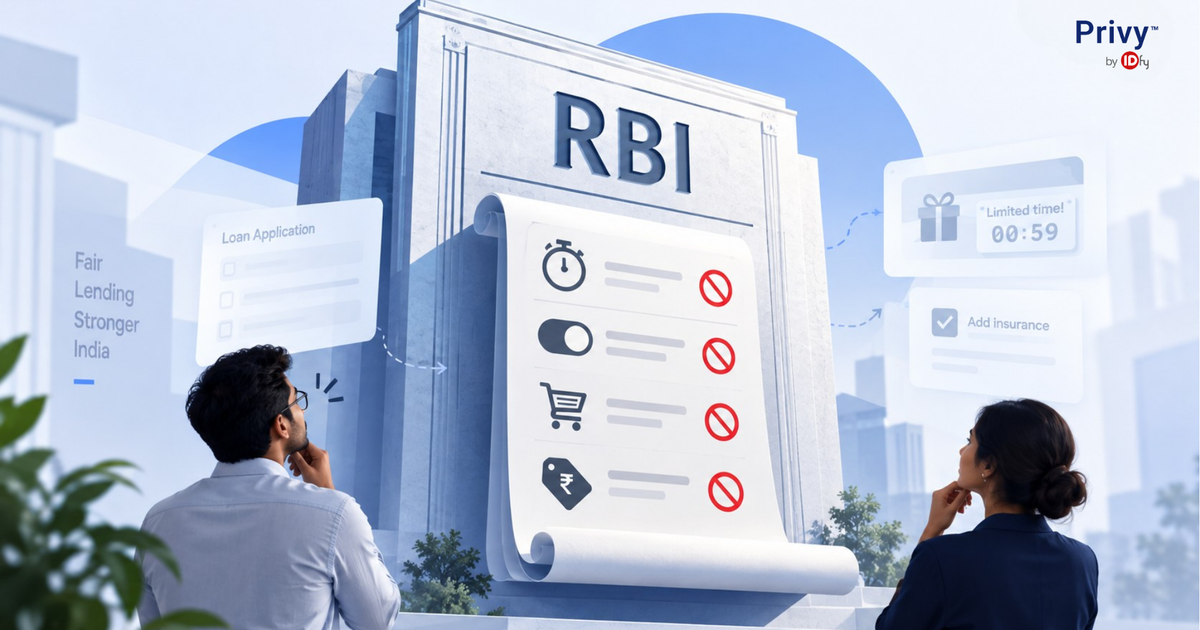
RBI NBFC Rules Just Banned Dark Patterns and Fake Consent
Sep 29, 2026
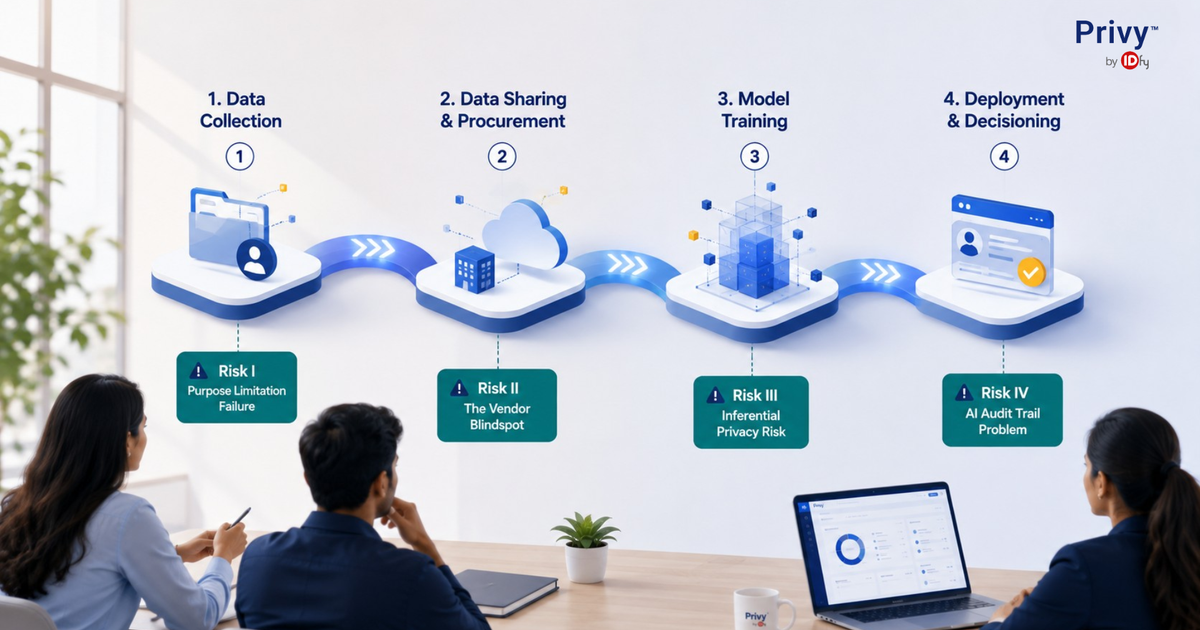
Data Privacy in the AI Era: The Four Risks Indian Corporations Have Already Inherited
Sep 10, 2026




 shivani@idfy.com
 Unit no. 801, Skyline Icon, 804, Andheri - Kurla Rd, Chimatpada, Marol, Andheri East, Mumbai, Maharashtra 400059
 1800 123 4339