

Breach Detection
Definition
Real-time identification of unauthorized access, data leaks, and suspicious activity across systems and data environments.
Breach detection refers to the process of continuously monitoring systems, networks, applications, and data environments to identify potential security incidents, unauthorized access, or abnormal behavior patterns. It combines monitoring tools, system logs, behavioral analytics, and AI-driven detection mechanisms to recognize threats before they escalate into larger breaches or operational disruptions.
Unlike breach containment, which focuses on limiting the impact after an incident occurs, breach detection is focused on identifying signals and indicators of compromise as early as possible. It helps organizations understand when suspicious activity begins, which systems may be affected, and whether sensitive data could be exposed.
In the context of the Digital Personal Data Protection Act, 2023, timely breach detection is critical because organizations are expected to identify personal data incidents quickly, assess impact, and initiate response and notification workflows without unnecessary delay.
In practice, gaps emerge when:
- Detection systems generate alerts without meaningful prioritization or context.
- Monitoring is fragmented across multiple tools without centralized visibility.
- Suspicious activity is identified too late to prevent data exposure
- Detection workflows are not connected to incident response and escalation processes.
To address this, organizations implement continuous monitoring and behavioral analysis systems that combine threat signals with data sensitivity, user activity, and access context. This enables security teams to identify genuine threats faster and respond with greater precision. Within Privy, this is supported through capabilities such as audit trails, data mapping, and incident visibility, enabling organizations to detect suspicious activity with stronger operational context and governance oversight.
Questions About Staying in Control?
Here’s everything you need to know about this term and how it fits into your compliance program.
Breach detection focuses on identifying suspicious activity or incidents, while breach containment focuses on limiting damage after a breach has been identified.
Delayed detection increases the likelihood of prolonged exposure, larger operational impact, regulatory scrutiny, and reputational damage.
Unauthorized access attempts, unusual login behavior, abnormal data movement, privilege misuse, and suspicious system activity.
Because alerts often lack prioritization, monitoring is fragmented, or suspicious behavior is not linked to business and data context.
Detection systems should trigger escalation, investigation, containment, and notification workflows automatically based on incident severity and data impact.
Still have a question?
Latest Blog

Sep 30, 2026
RBI NBFC Rules Just Banned Dark Patterns and Fake Consent
Sep 29, 2026
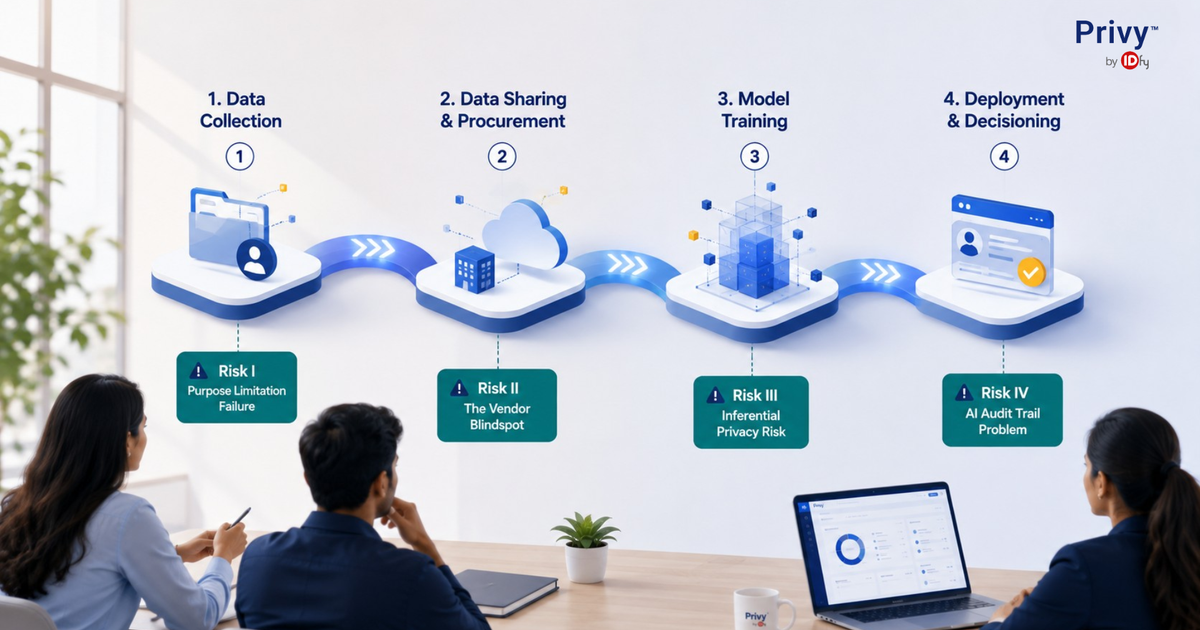
Data Privacy in the AI Era: The Four Risks Indian Corporations Have Already Inherited

Sep 10, 2026




 shivani@idfy.com
 Unit no. 801, Skyline Icon, 804, Andheri - Kurla Rd, Chimatpada, Marol, Andheri East, Mumbai, Maharashtra 400059
 1800 123 4339