

Endpoint Protection
Definition
Endpoint protection is the implementation of security controls that protect endpoint devices processing personal data from unauthorized access, malware, data loss, and other threats that could lead to a Personal Data Breach.
In the context of the Digital Personal Data Protection Act, 2023 (DPDP Act), endpoint protection refers to the safeguards implemented to protect endpoint devices that collect, access, process, store, or transmit personal data. These endpoints—including employee laptops, desktops, corporate mobile devices, and virtual workstations—are often used for customer onboarding, identity verification, consent management, customer support, and other activities involving personal data. Protecting these devices is essential because they represent one of the most common points through which personal data can be exposed or compromised.
Endpoint protection combines multiple security measures to reduce risks associated with personal data processing on endpoint devices. These measures may include endpoint detection and response (EDR), anti-malware protection, encryption, device access controls, multi-factor authentication, application control, patch management, remote device management, and continuous monitoring. Together, these controls help organizations detect suspicious activity, prevent unauthorized access, contain security incidents, and protect personal data throughout its lifecycle.
Although the DPDP Act does not prescribe specific endpoint protection technologies, it requires Data Fiduciaries to implement reasonable security safeguards to protect personal data from Personal Data Breaches. Endpoint protection supports this obligation by reducing the likelihood that personal data processed on endpoint devices will be accessed, altered, disclosed, or lost due to cyberattacks, device theft, or operational failures. It also forms an important part of a risk-based privacy and information security program.
In practice, gaps emerge when:
- Personal data is processed on unmanaged or unauthorized endpoint devices.
- Endpoint protection tools are deployed but not consistently configured across the organization.
- Devices accessing personal data operate with outdated security software or missing patches.
- Endpoint alerts involving sensitive personal data are not investigated promptly.
- Former employees retain access to managed devices containing personal data.
Organizations strengthen endpoint protection by implementing centralized device management, enforcing endpoint security policies, monitoring endpoint activity, maintaining encryption and authentication controls, and regularly reviewing device compliance. Within Privy, capabilities such as automated data discovery, data classification, data mapping, governance workflows, and audit-ready reporting help organizations identify where personal data is processed, enabling security teams to prioritize endpoint protection for systems handling sensitive information.
Questions About Staying in Control?
Here’s everything you need to know about this term and how it fits into your compliance program.
Endpoint protection is the combination of security technologies and controls used to protect endpoint devices that process or store personal data from cyber threats and unauthorized access.
Endpoint devices frequently handle personal data. Protecting them helps organizations implement reasonable security safeguards and reduce the risk of Personal Data Breaches.
The DPDP Act does not mandate any specific endpoint protection solution. It requires Data Fiduciaries to implement reasonable security safeguards appropriate to the risks associated with processing personal data.
Endpoint security refers to the broader strategy, policies, and governance for securing endpoint devices, while endpoint protection focuses on the technologies and controls deployed to defend those devices against threats. The two work together to protect personal data.
Privy helps organizations identify personal data across enterprise systems through automated data discovery, data classification, and data mapping, enabling security teams to focus endpoint protection efforts on devices and systems that process sensitive personal data.
Still have a question?
Latest Blog

Sep 30, 2026
RBI NBFC Rules Just Banned Dark Patterns and Fake Consent
Sep 29, 2026
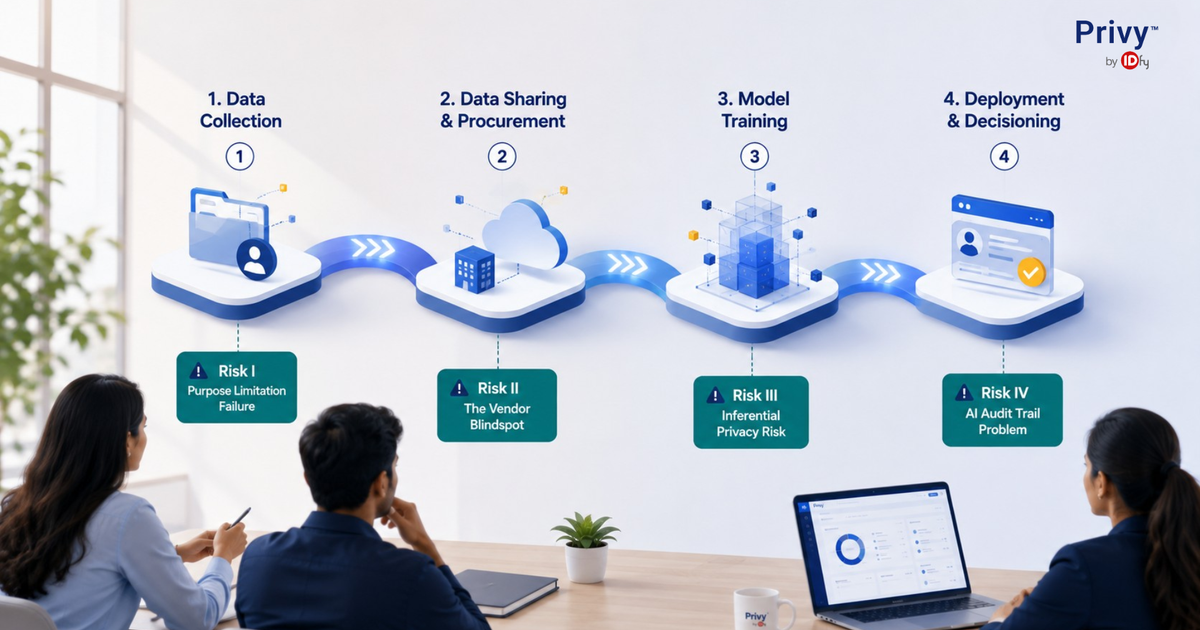
Data Privacy in the AI Era: The Four Risks Indian Corporations Have Already Inherited
Sep 10, 2026




 shivani@idfy.com
 Unit no. 801, Skyline Icon, 804, Andheri - Kurla Rd, Chimatpada, Marol, Andheri East, Mumbai, Maharashtra 400059
 1800 123 4339