

Endpoint Scanning
Definition
Endpoint scanning is the process of identifying and inspecting endpoint devices that process personal data to improve visibility, detect security risks, and support compliance with the DPDP Act.
In the context of the Digital Personal Data Protection Act, 2023 (DPDP Act), endpoint scanning refers to the continuous or periodic inspection of endpoint devices—such as employee laptops, desktops, and managed mobile devices—to identify where personal data is stored, processed, or transmitted. It helps organizations understand which endpoints contain sensitive personal data, whether appropriate security controls are in place, and whether those endpoints comply with internal privacy and security policies.
Endpoint scanning is particularly valuable for organizations with distributed workforces, hybrid environments, and multiple business applications. Personal data may exist on endpoints through downloaded reports, customer documents, spreadsheets, email attachments, cached files, or temporary application data. By scanning endpoints, organizations can detect unauthorized storage of personal data, identify unsecured files, validate encryption and security configurations, and reduce the risk of Personal Data Breaches resulting from lost, compromised, or unmanaged devices.
While the DPDP Act does not specifically require endpoint scanning, it requires Data Fiduciaries to implement reasonable security safeguards to protect personal data. Endpoint scanning supports these safeguards by improving visibility into where personal data resides, enabling organizations to identify risks proactively, strengthen endpoint security, and demonstrate a risk-based approach to protecting personal data.
In practice, gaps emerge when:
- Organizations do not know which employee devices contain personal data.
- Personal data is downloaded and stored locally without organizational oversight.
- Endpoint security configurations are not regularly verified across managed devices.
- Sensitive files remain on endpoints after business processes are completed.
- Lost or compromised devices cannot be quickly assessed for potential exposure of personal data.
Organizations improve endpoint governance by maintaining accurate endpoint inventories, scanning managed devices for personal data, enforcing encryption and access controls, monitoring policy compliance, and integrating endpoint visibility into broader privacy governance. Within Privy, capabilities such as automated data discovery, data classification, data mapping, governance workflows, and audit-ready reporting help organizations identify where personal data resides—including across endpoint environments—and support compliance with the DPDP Act.
Questions About Staying in Control?
Here’s everything you need to know about this term and how it fits into your compliance program.
Endpoint scanning is the process of inspecting endpoint devices to identify personal data, evaluate security controls, and detect risks associated with processing or storing sensitive information.
It helps organizations identify where personal data exists on endpoint devices, reduce the risk of unauthorized exposure, and support the implementation of reasonable security safeguards.
No. The DPDP Act does not specifically mandate endpoint scanning. However, it can support compliance by helping organizations protect personal data through appropriate security measures.
Organizations typically scan managed laptops, desktops, mobile devices, virtual desktops, and other endpoints that access or process personal data.
Privy helps organizations discover and classify personal data across enterprise environments, map data flows, identify privacy risks, and generate audit-ready reports that improve visibility into where personal data is processed, including on endpoint devices.
Still have a question?
Latest Blog

Sep 30, 2026
RBI NBFC Rules Just Banned Dark Patterns and Fake Consent
Sep 29, 2026
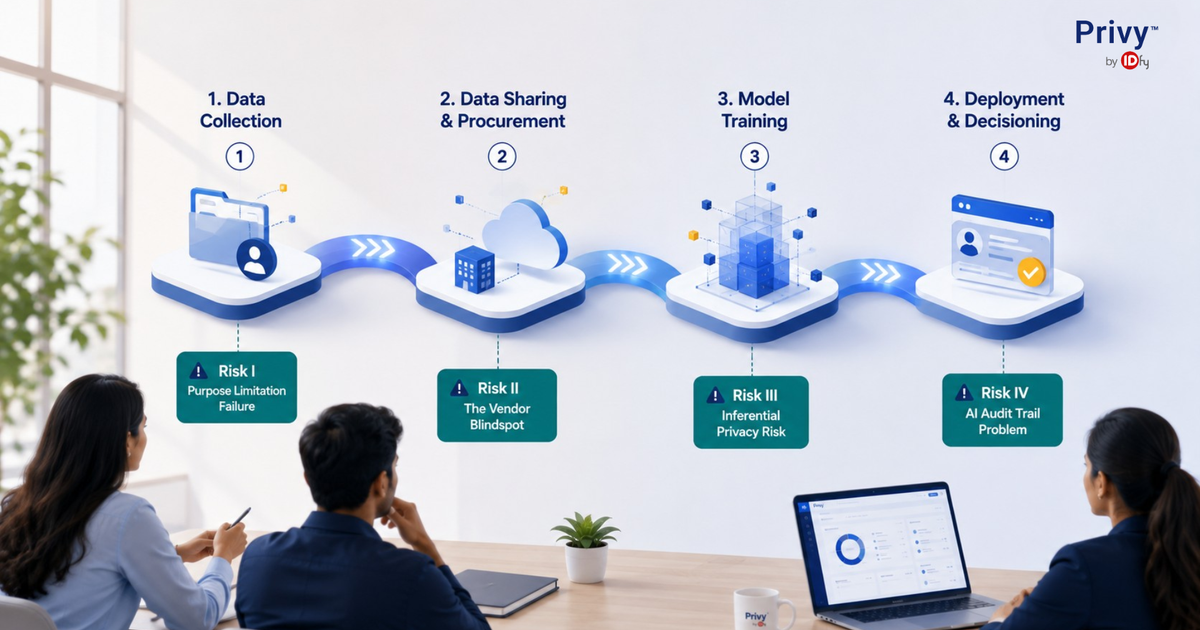
Data Privacy in the AI Era: The Four Risks Indian Corporations Have Already Inherited
Sep 10, 2026




 shivani@idfy.com
 Unit no. 801, Skyline Icon, 804, Andheri - Kurla Rd, Chimatpada, Marol, Andheri East, Mumbai, Maharashtra 400059
 1800 123 4339