

Escalation Matrix
Definition
An escalation matrix is a documented framework that defines how privacy incidents, Personal Data Breaches, Data Principal requests, and other DPDP-related events are escalated to the appropriate stakeholders for timely action.
In the context of the Digital Personal Data Protection Act, 2023 (DPDP Act), an escalation matrix is a predefined governance framework that establishes who should be notified, when an issue should be escalated, and the responsibilities of different teams during privacy and compliance events. It enables organizations to respond consistently to matters such as Personal Data Breaches, Data Principal rights requests, security incidents, regulatory notices, consent-related issues, and operational risks involving personal data.
An effective escalation matrix typically identifies incident severity levels, escalation timelines, responsible stakeholders, communication channels, approval authorities, and decision-making responsibilities. It ensures that privacy, legal, information security, IT, compliance, and business teams coordinate efficiently when responding to DPDP-related obligations. By defining responsibilities before an incident occurs, organizations can reduce delays, improve accountability, maintain audit trails, and ensure that privacy events are managed in accordance with internal governance processes.
While the DPDP Act does not specifically require organizations to maintain an escalation matrix, it requires Data Fiduciaries to implement reasonable security safeguards and comply with obligations relating to Personal Data Breaches and Data Principal rights. A documented escalation matrix supports these obligations by enabling timely reporting, coordinated incident response, effective decision-making, and consistent handling of privacy-related events across the organization.
In practice, gaps emerge when:
- Privacy incidents are reported but responsibilities for response are unclear.
- Business teams are unsure when to escalate a suspected Personal Data Breach.
- Data Principal requests remain pending because ownership is not clearly assigned.
- Multiple teams investigate the same issue without coordinated communication.
- Escalation decisions are handled informally without documented procedures or audit trails.
Organizations strengthen privacy governance by defining escalation criteria, assigning clear ownership, documenting response workflows, regularly testing escalation procedures, and maintaining records of privacy-related decisions. Within Privy, governance workflows, breach management, consent management, audit-ready reporting, and centralized privacy operations help organizations streamline escalations and improve accountability across DPDP compliance processes.
Questions About Staying in Control?
Here’s everything you need to know about this term and how it fits into your compliance program.
An escalation matrix is a documented framework that defines how privacy incidents, Personal Data Breaches, and other compliance events are escalated to the appropriate stakeholders for resolution.
It helps organizations respond consistently to privacy incidents, assign responsibilities, improve accountability, and support timely handling of obligations under the DPDP Act.
No. The DPDP Act does not specifically mandate an escalation matrix. However, maintaining one is a governance best practice that supports incident response, breach management, and compliance processes.
Depending on the organization, the matrix may include privacy, legal, information security, IT, compliance, business owners, senior management, and other stakeholders responsible for responding to DPDP-related events.
Privy supports structured privacy operations through governance workflows, breach management, consent management, audit-ready reporting, and centralized compliance processes that help organizations coordinate and document privacy-related escalations.
Still have a question?
Latest Blog

Sep 30, 2026
RBI NBFC Rules Just Banned Dark Patterns and Fake Consent
Sep 29, 2026
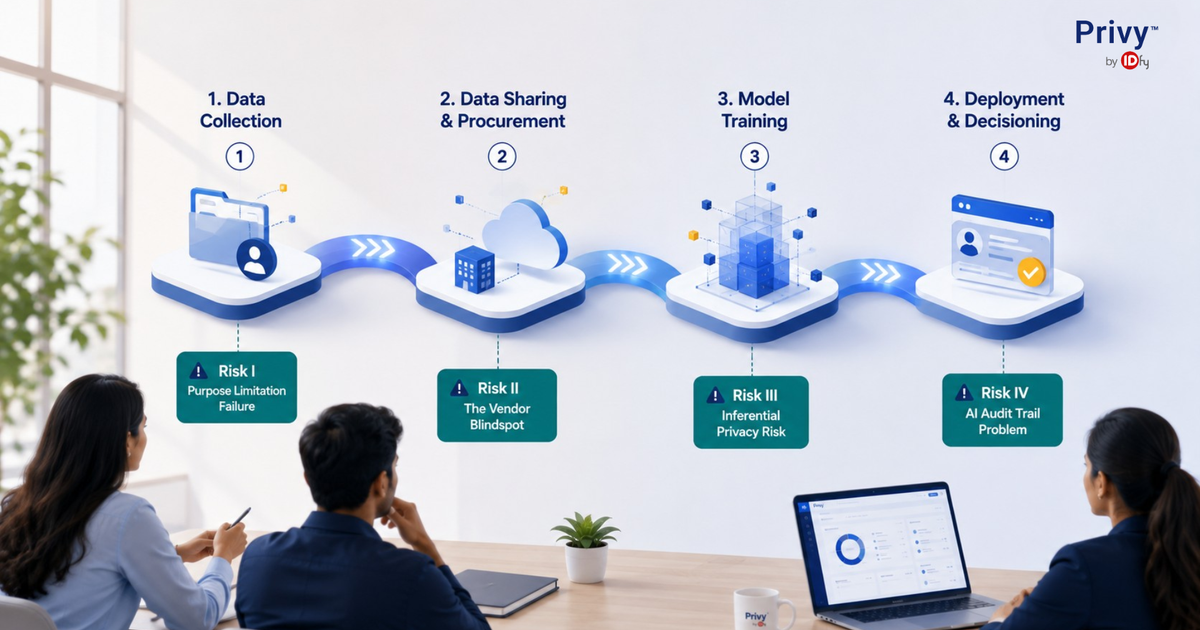
Data Privacy in the AI Era: The Four Risks Indian Corporations Have Already Inherited
Sep 10, 2026




 shivani@idfy.com
 Unit no. 801, Skyline Icon, 804, Andheri - Kurla Rd, Chimatpada, Marol, Andheri East, Mumbai, Maharashtra 400059
 1800 123 4339