

Unsolicited Data
Definition
Unsolicited data refers to personal data received or collected by an organization without being intentionally requested or expected for a specific processing purpose.
In the context of the DPDP Act, unsolicited data refers to personal data that an organization receives without actively seeking it or without a clearly defined collection process.
Organizations may receive unsolicited data through channels such as customer communications, uploaded documents, emails, forms, or third-party interactions. Even when personal data is received unintentionally, organizations must evaluate whether they have obligations under the DPDP Act based on how that data is handled, stored, or processed.
Managing unsolicited data is important because organizations may unknowingly hold personal data that lacks a defined purpose, consent record, ownership, or retention approach. Proper handling helps Data Fiduciaries reduce unnecessary data exposure and maintain control over personal data throughout its lifecycle.
In practice, gaps emerge when:
- Organizations store personal data unintentionally.
- Teams do not identify unsolicited personal data in their systems.
- Data lacks a defined processing purpose.
- Personal data is retained without review.
- Unstructured data sources are not monitored.
Organizations address these challenges by implementing data discovery, classification, retention controls, intake processes, and governance workflows. Within Privy, capabilities such as data discovery, data classification, data mapping, and privacy workflows help organizations identify and manage personal data across environments.
Questions About Staying in Control?
Here’s everything you need to know about this term and how it fits into your compliance program.
Unsolicited data is personal data received by an organization without being intentionally collected for a defined processing purpose.
Organizations should assess how such data is handled and whether it is retained, processed, or used for any purpose.
It helps organizations avoid unnecessary storage of personal data and maintain better control over privacy risks.
It may occur through emails, documents, customer communications, uploads, or other unstructured data sources.
Privy helps organizations discover, classify, and map personal data to improve visibility and privacy governance.
Still have a question?
Latest Blog

Sep 30, 2026
RBI NBFC Rules Just Banned Dark Patterns and Fake Consent
Sep 29, 2026
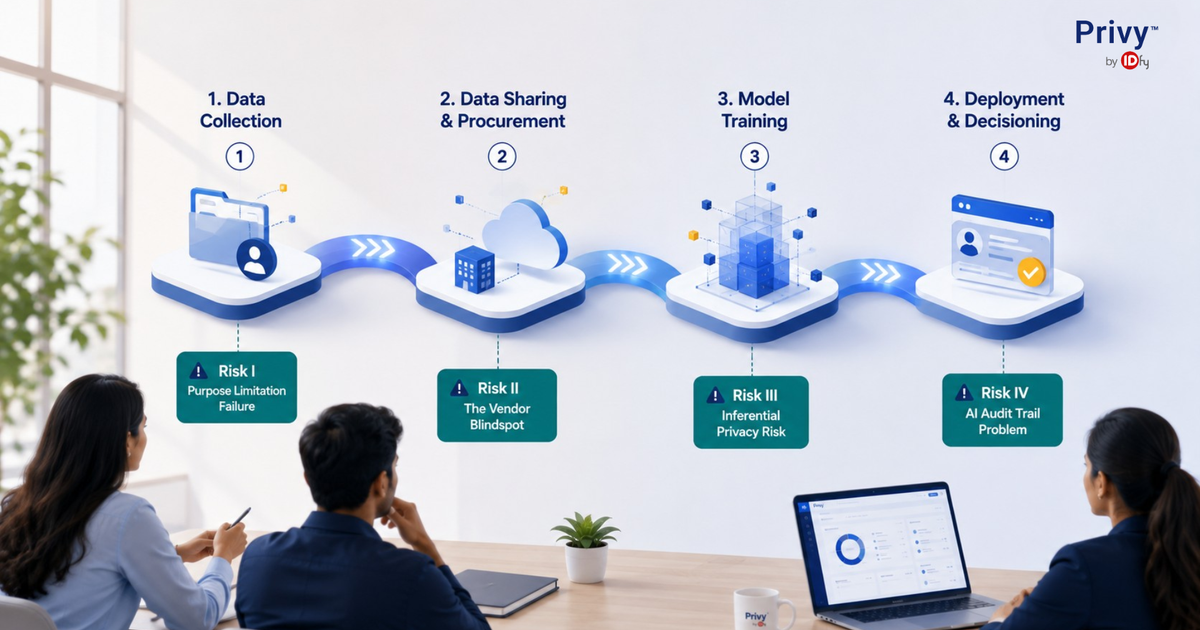
Data Privacy in the AI Era: The Four Risks Indian Corporations Have Already Inherited
Sep 10, 2026




 shivani@idfy.com
 Unit no. 801, Skyline Icon, 804, Andheri - Kurla Rd, Chimatpada, Marol, Andheri East, Mumbai, Maharashtra 400059
 1800 123 4339