

Zero Trust Architecture
Definition
Zero Trust Architecture is a security approach that requires continuous verification of users, devices, and access requests before allowing access to systems or data.
In the context of the DPDP Act, Zero Trust Architecture refers to a security approach that helps organizations protect personal data by adopting a “never trust, always verify” model for access management.
Unlike traditional security models that assume users or systems inside an organization’s network are trusted, Zero Trust requires continuous verification based on identity, access permissions, device security, and risk factors. This approach helps organizations limit unauthorized access and strengthen protection of personal data.
While Zero Trust Architecture is not specifically mandated under the DPDP Act, it aligns with the requirement for implementing reasonable security safeguards to protect personal data from unauthorized access, breaches, or misuse.
Organizations can use Zero Trust principles to strengthen identity management, enforce least-privilege access, monitor activity, and reduce the risk of personal data exposure across applications, cloud environments, and third-party integrations.
In Practice, Gaps Emerge When:
- Organizations provide broad access to personal data without regular reviews.
- User identities and permissions are not continuously verified.
- Third-party access is not adequately controlled.
- Security monitoring is limited across systems.
- Access controls are not aligned with data sensitivity.
Organizations address these challenges by implementing identity verification, access controls, multi-factor authentication, continuous monitoring, least-privilege policies, and risk-based access decisions. Within Privy, capabilities such as data discovery, data classification, governance workflows, and privacy risk management help organizations strengthen personal data protection practices.
Questions About Staying in Control?
Here’s everything you need to know about this term and how it fits into your compliance program.
Zero Trust Architecture is a security model that continuously verifies users, devices, and access requests before granting access to systems or data.
No. Zero Trust Architecture is not specifically required, but it supports stronger security safeguards for protecting personal data.
It helps reduce unauthorized access by enforcing verification, least-privilege access, and continuous monitoring.
Key principles include verifying every access request, limiting access privileges, monitoring activity, and assuming no user or system is automatically trusted.
Privy helps organizations understand personal data locations, manage governance workflows, and strengthen privacy controls around data access and processing.
Still have a question?
Latest Blog

Sep 30, 2026
RBI NBFC Rules Just Banned Dark Patterns and Fake Consent
Sep 29, 2026
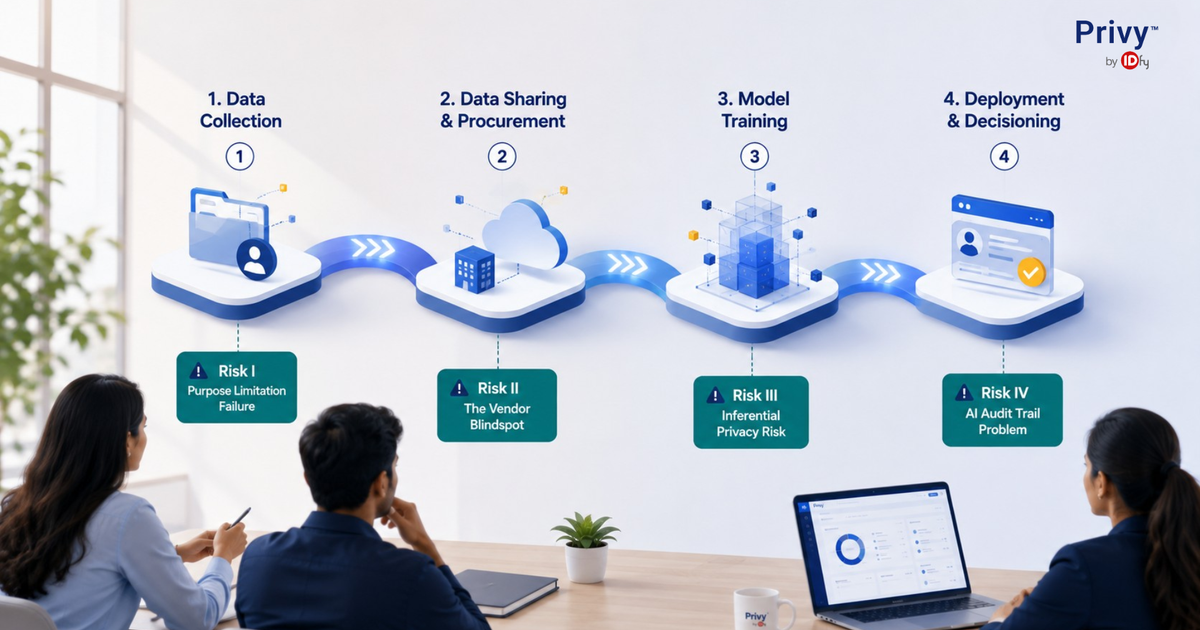
Data Privacy in the AI Era: The Four Risks Indian Corporations Have Already Inherited
Sep 10, 2026




 shivani@idfy.com
 Unit no. 801, Skyline Icon, 804, Andheri - Kurla Rd, Chimatpada, Marol, Andheri East, Mumbai, Maharashtra 400059
 1800 123 4339