

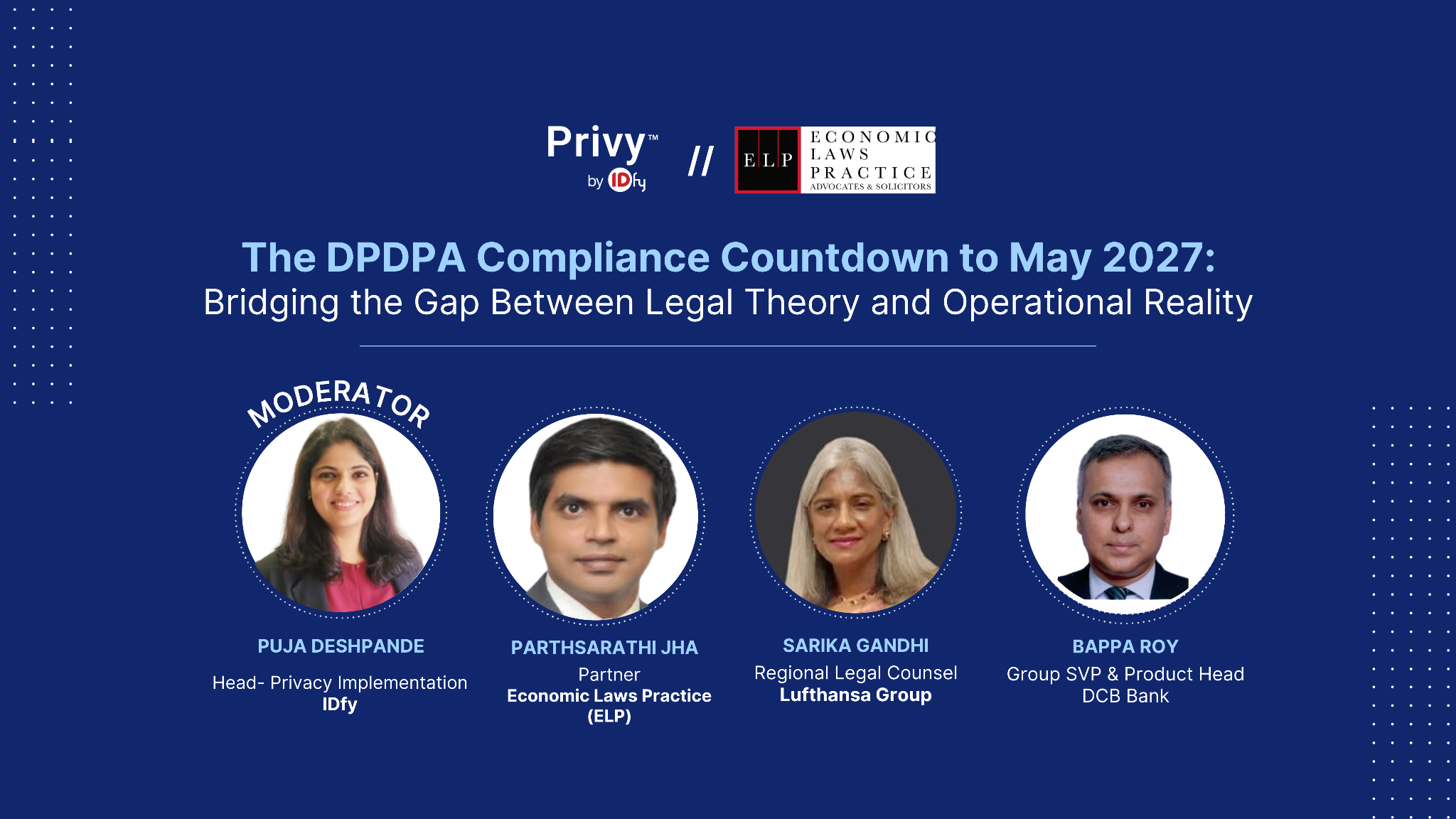
About This Webinar
With 14 months left for DPDP readiness, organisations are entering a pressure test where real readiness will be defined by how proactively privacy is built into everyday operations.
Under the DPDP, privacy is now an ongoing discipline, where consent management, DPAR handling, processor oversight, and data governance must work together across teams and systems without slowing the business.
This Webinar Covers:
 How to prioritise the 14-month DPDP implementation roadmap
- Navigating the grey areas between Notice & Consent and Legitimate Uses
- Solving data discovery and governance challenges across fragmented systems
- Building scalable workflows for consent, contracts, and Data Principal Rights
- Laying the foundation for continuous, audit-ready compliance
Why Watch This Now
- From policy debates to real executionCut through the grey areas of notice, consent, and legitimate use to see what actually needs to be built over the next 14 months.
- Fix the operational cracks before they break complianceFrom DPR workflows to contract remediation and data discovery, learn where most teams fail and how to stay ahead.
- Scale privacy without slowing growthBalance marketing needs with data minimisation, and automate consent and governance without burning out teams.
Who Is This Webinar For?
This webinar is designed for:
- DPOs and Privacy Leaders responsible for DPDP compliance and privacy governance.
- CISOs, CIOs and CTOs overseeing data security, discovery and governance.
- Legal, Risk and Compliance teams managing regulatory requirements and third-party risk.
- Business and Product leaders responsible for customer data and consent management.
- Organisations building or strengthening their DPDP compliance and readiness roadmap.

Puja Deshpande
Head of Privacy Implementation
IDfy

Bappa Roy
Group Senior Vice President & Product Head
DCB Bank

Sarika Gandhi
Regional Legal Counsel, India & South Asia
Lufthansa Group

Parthsarathi Jha
Partner
Economic Laws Practice (ELP)
FAQs
Organisations should focus on fixing consent flows, data discovery, DSR workflows, and vendor governance.
By clearly mapping data flows and defining use cases where legitimate use applies, while keeping consent for everything else auditable.
Through automated workflows that route, verify, and fulfil requests within timelines, without relying on manual processes.
Risk-based prioritisation, parallel remediation, and standardised addendums, instead of full renegotiations.
A real-time view of consent, data usage, and risk exposure, giving leadership ongoing visibility into privacy health.




 shivani@idfy.com
 Unit no. 801, Skyline Icon, 804, Andheri - Kurla Rd, Chimatpada, Marol, Andheri East, Mumbai, Maharashtra 400059
 1800 123 4339