

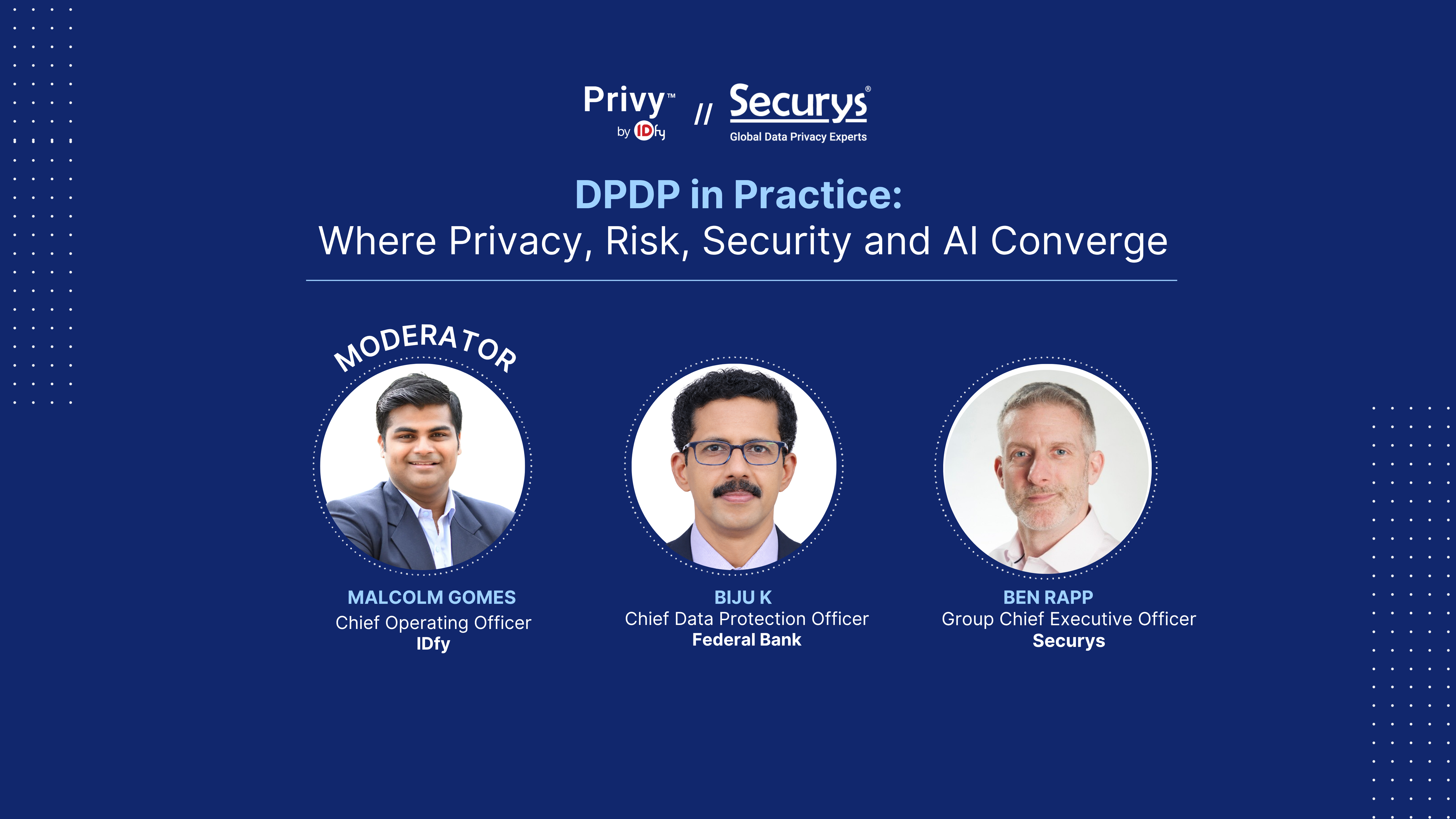
About This Webinar
AI, Security and Risk: Three Functions. One Common Data Challenge.
AI adoption is accelerating, security exposure is expanding, and enterprise risks are becoming increasingly interconnected. Yet the functions responsible for managing these challenges often operate with different priorities, systems, and visibility into organisational data.
The AI team needs reliable, contextualised data to build and deploy effective models. Security teams need to understand where sensitive information resides, who can access it and how it moves across the enterprise. Risk teams need visibility into potential exposure, third-party dependencies and accountability.
But these are not isolated challenges. The same data that powers AI can introduce privacy, security and business risks. Without a common understanding of how data is collected, classified, accessed and processed, organisations risk making critical decisions with incomplete information.
This is where data privacy management takes on a broader role.
It is no longer just about regulatory compliance or managing consent. It is about establishing a common foundation of data visibility, context and accountability that enables AI, security, privacy and risk functions to work together.
This on-demand webinar explores how organisations can move beyond functional silos and build a connected data governance approach that supports responsible AI adoption, stronger security controls and better enterprise risk management.
This Webinar Covers
- AI Governance and Data Readiness: How governed, contextualised and reliable data can support responsible AI adoption, improve model performance and establish stronger controls.
- Data Privacy and Security:Why security teams need greater visibility into sensitive data across applications, cloud environments, legacy systems and third-party ecosystems.
- Data-Centric Risk Management:How data discovery, classification and lineage can help organisations identify exposure, understand dependencies and prioritise enterprise risks.
- Third-Party Data Accountability:Why organisations need greater visibility into how personal data moves across vendors, partners and interconnected business ecosystems.
- Connected Enterprise Governance:How AI, security, privacy and risk functions can work from a common understanding of data rather than managing disconnected governance processes.
- Beyond DPDP Compliance:How a connected data privacy management foundation can enable operational efficiency, faster technology adoption, audit readiness and long-term business resilience.
Why Watch This Now?
- AI Adoption Is Moving Faster Than Enterprise GovernanceOrganisations are investing heavily in AI, but data provenance, access controls, usage permissions, and accountability are not always keeping pace. An effective AI governance platform needs to go beyond model oversight and establish visibility into the data powering AI applications. Without understanding where data originates, what it was collected for, and whether it is appropriate for its intended use, AI adoption can introduce risks that are difficult to identify once data enters models and automated workflows. Discover how better data governance can make data more reliable, AI adoption more responsible, and enterprise AI governance more effective.
- Security Needs to Look Beyond InfrastructureProtecting networks, endpoints and applications is no longer enough. Sensitive personal data can sit across legacy databases, cloud environments, third-party platforms, and AI workflows. Security teams need to understand not just where vulnerabilities exist, but what information is exposed and what the potential impact could be. This is where Data Security Posture Management (DSPM) becomes relevant. By identifying, classifying, and monitoring sensitive data across the enterprise, organisations can prioritise security controls based on the actual data exposure. Explore how data privacy management and data-centric security can work together to improve visibility and strengthen enterprise protection.
- Enterprise Risks Are Increasingly Connected Through DataA single data-related incident can create simultaneous privacy, cybersecurity, regulatory, operational, and reputational consequences. Risk teams need more than isolated assessments to understand how exposure travels across systems and third parties. Data discovery, classification, lineage and continuous monitoring can help organisations identify dependencies, understand potential impact and improve risk prioritisation. This session examines how a connected approach to data governance can help transform a fragmented data map into a more actionable enterprise risk map.
- Privacy and Data Governance Can Connect Traditionally Siloed FunctionsAI, security, privacy, and risk teams may have different mandates, but they increasingly depend on the same underlying data. A connected privacy management platform can help establish common visibility, clearer accountability and consistent controls across the enterprise. Instead of managing separate assessments, disconnected inventories and fragmented processes, organisations can build a shared understanding of how personal data is collected, accessed, processed and shared. Understand why data privacy management can become shared enterprise infrastructure rather than an isolated compliance responsibility.
- DPDP Readiness Is an Opportunity to Strengthen the EnterpriseWith substantive DPDP obligations approaching in May 2027, organisations need to move beyond policy documentation towards demonstrable operational readiness. However, the value of a DPDP compliance platform extends beyond meeting regulatory requirements. Better data visibility, privacy automation and traceable accountability can also support AI adoption, security prioritisation and business resilience. Discover how organisations can use the DPDP implementation journey as an opportunity to strengthen their overall data governance foundation.

Malcolm Gomes
Chief Operating Officer
IDfy

Ben Rapp
Group Chief Executive Officer
Securys

Biju K
Chief Data Protection Officer
FAQs
Data privacy management refers to the processes, policies, technologies and controls organisations use to govern how personal data is collected, stored, accessed, processed, shared and retained. It involves establishing visibility into personal data, managing consent and individual rights, assessing privacy risks, monitoring processing activities and maintaining accountability across the organisation. Effective data privacy management helps enterprises move beyond isolated compliance activities towards a structured and continuous approach to data governance.
As organisations adopt AI, expand cloud environments and work with interconnected third-party ecosystems, personal data moves across increasingly complex systems. Without clear visibility into where data resides, how it is used and who has access to it, organisations may struggle to identify exposure, manage privacy obligations and establish accountability. A structured data privacy management approach helps improve data visibility, strengthen controls, support regulatory compliance and enable more informed business decisions.
AI governance, data privacy and cybersecurity are interconnected because they all depend on understanding how data is collected, accessed, processed, stored and shared. AI teams need appropriate and reliable data for model development. Privacy teams need to ensure that data is used in accordance with applicable requirements and intended purposes. Security teams need to protect information from unauthorised access and exposure. A common data governance foundation helps these functions work with consistent visibility, controls, and accountability.
Data Security Posture Management (DSPM) is an approach to identifying, classifying and monitoring sensitive data across an organisation's digital environment. It helps security teams understand where sensitive information resides, who has access to it, how it is exposed and where security controls may be insufficient. DSPM strengthens data-centric security by helping organisations prioritise protection based on the sensitivity, location, and exposure of their data.
Data governance supports compliance with India's Digital Personal Data Protection Act by helping organisations identify personal data, understand processing purposes, maintain appropriate controls and establish accountability. Capabilities such as data discovery, classification, consent management, data principal rights management, retention controls, privacy assessments and audit trails can help organisations operationalise their obligations under the DPDP framework. A DPDP compliance platform can bring these activities together and provide greater visibility into the organisation's privacy programme.





 shivani@idfy.com
 Unit no. 801, Skyline Icon, 804, Andheri - Kurla Rd, Chimatpada, Marol, Andheri East, Mumbai, Maharashtra 400059
 1800 123 4339