
Access Governance
Definition
A control framework that manages who can access data, systems, and applications.
Access governance refers to the policies, controls, and systems that determine who can access what data, under which conditions, and for what purpose. It goes beyond basic access control by continuously managing permissions, monitoring usage, and enforcing least privilege principles across users, roles, and systems. As organizations handle increasing volumes of sensitive and personal data, access governance becomes critical to prevent unauthorized exposure and misuse.
Globally, access governance is a foundational security and compliance practice. In the context of the Digital Personal Data Protection Act, 2023, it helps ensure that personal data is accessed only by authorized entities for defined purposes. Uncontrolled or excessive access can directly lead to compliance risks, especially where data is used beyond the intended scope.
In practice, gaps emerge when:
- Access rights are over-provisioned and not aligned with actual roles.
- Permissions are not revoked when roles change or users exit.
- There is limited visibility into who accessed what data and when.
- Access controls exist but are not continuously reviewed or audited.
To address this, organizations implement structured access governance processes that align permissions with roles, continuously monitor usage, and periodically review access rights. This ensures that access remains relevant, controlled, and auditable over time. Within Privy, this is supported through capabilities such as data mapping, consent lifecycle management, and audit trails, enabling organizations to maintain visibility and control over how personal data is accessed and used.
Questions About Staying in Control?
Here’s everything you need to know about this term and how it fits into your compliance program.
Access control defines who can access systems or data, while access governance ensures those permissions remain appropriate, reviewed, and aligned with roles over time.
Because access decisions are spread across multiple systems and teams, it is difficult to maintain consistency, visibility, and timely updates.
Unauthorized data access, insider misuse, and inability to justify who accessed sensitive data during audits or incidents.
By continuously reviewing permissions, aligning access with roles, and monitoring how data is accessed and used.
Privy provides visibility into data flows and access patterns, helping organizations ensure that data access remains controlled, traceable, and aligned with governance requirements.
Still have a question?
Latest Blog

Sep 30, 2026
RBI NBFC Rules Just Banned Dark Patterns and Fake Consent
Sep 29, 2026
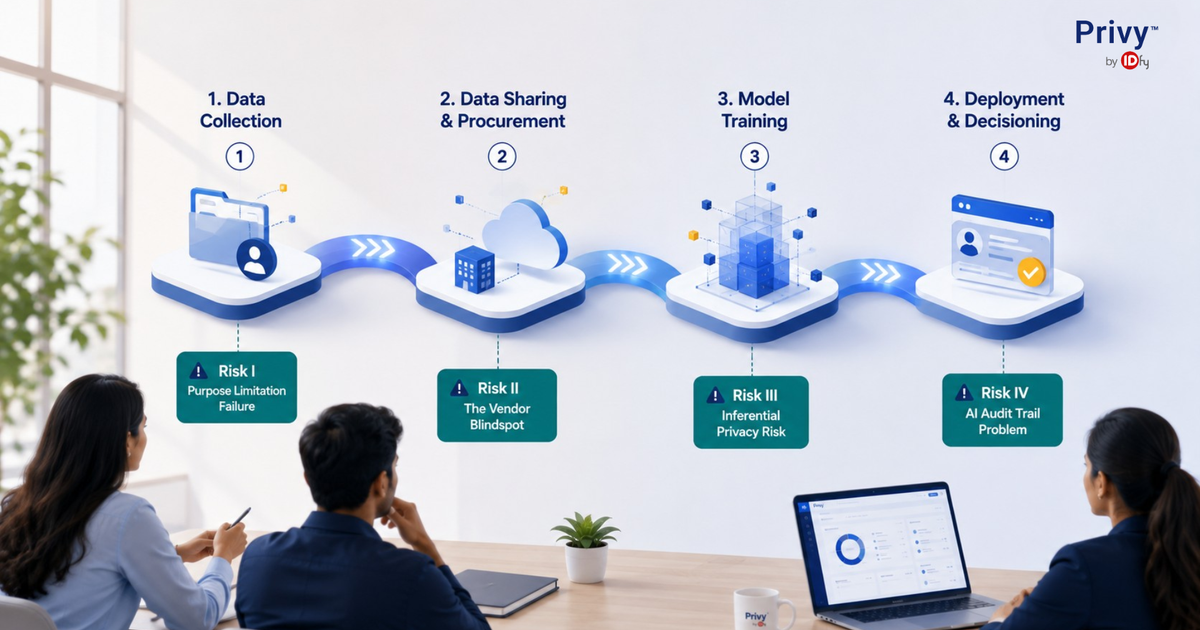
Data Privacy in the AI Era: The Four Risks Indian Corporations Have Already Inherited
Sep 10, 2026




 shivani@idfy.com
 Unit no. 801, Skyline Icon, 804, Andheri - Kurla Rd, Chimatpada, Marol, Andheri East, Mumbai, Maharashtra 400059
 1800 123 4339