

AI Compliance Co-Pilot
Definition
An AI assistant that helps manage compliance workflows, risk signals, and data privacy controls.
An AI compliance co-pilot refers to the use of artificial intelligence to assist teams in executing and maintaining compliance activities across systems. Unlike standalone automation tools, a co-pilot works alongside existing workflows, helping interpret data, surface risks, and guide actions rather than replacing decision making entirely.
As compliance requirements expand across data flows, access controls, and user rights, teams often struggle to maintain consistency and speed. A co-pilot helps by continuously analyzing system activity, identifying potential compliance gaps, and recommending actions in context. In the context of the Digital Personal Data Protection Act, 2023, this supports the need to ensure that personal data is processed within defined purposes, with valid consent, and with the ability to demonstrate control when required.
However, the value of a co-pilot depends on how well it connects insight to action. Gaps emerge when recommendations are not tied to actual controls, when outputs lack traceability, or when teams rely on AI suggestions without validation. This creates a layer of visibility without true governance.
To address this, organizations adopt co-pilot models that are embedded into compliance workflows, where insights are linked to data flows, consent context, and enforceable controls. This ensures that recommendations are actionable and verifiable. Within Privy, this is supported through capabilities such as data mapping, consent lifecycle management, and audit trails, enabling AI-driven assistance that is grounded in visibility, control, and accountability.
Questions About Staying in Control?
Here’s everything you need to know about this term and how it fits into your compliance program.
Traditional tools execute predefined rules, while a co-pilot interprets data, surfaces risks, and guides actions dynamically within workflows.
Risk identification, data usage monitoring, compliance checks, and guiding responses to regulatory or audit requirements.
When they generate insights without linking them to enforceable actions or verifiable system-level controls.
No, co-pilots assist decision-making but require validation and oversight to ensure accuracy and accountability.
Its ability to connect insights to actual data flows, controls, and compliance requirements in a traceable way.
Still have a question?
Latest Blog
Sep 30, 2026
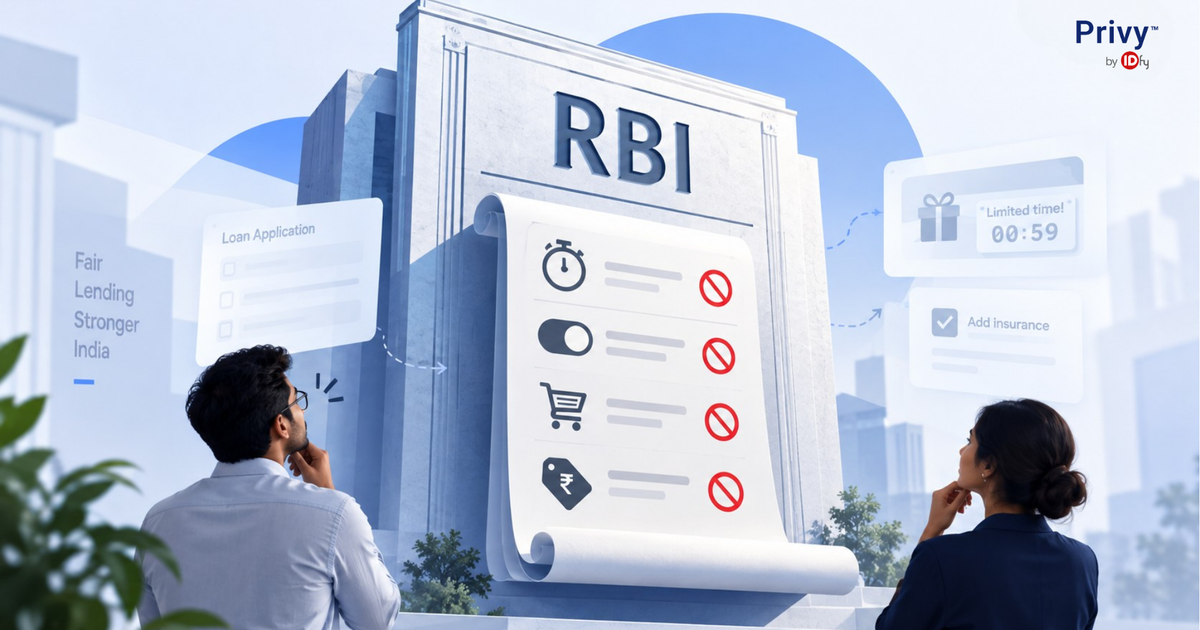
RBI NBFC Rules Just Banned Dark Patterns and Fake Consent
Sep 29, 2026
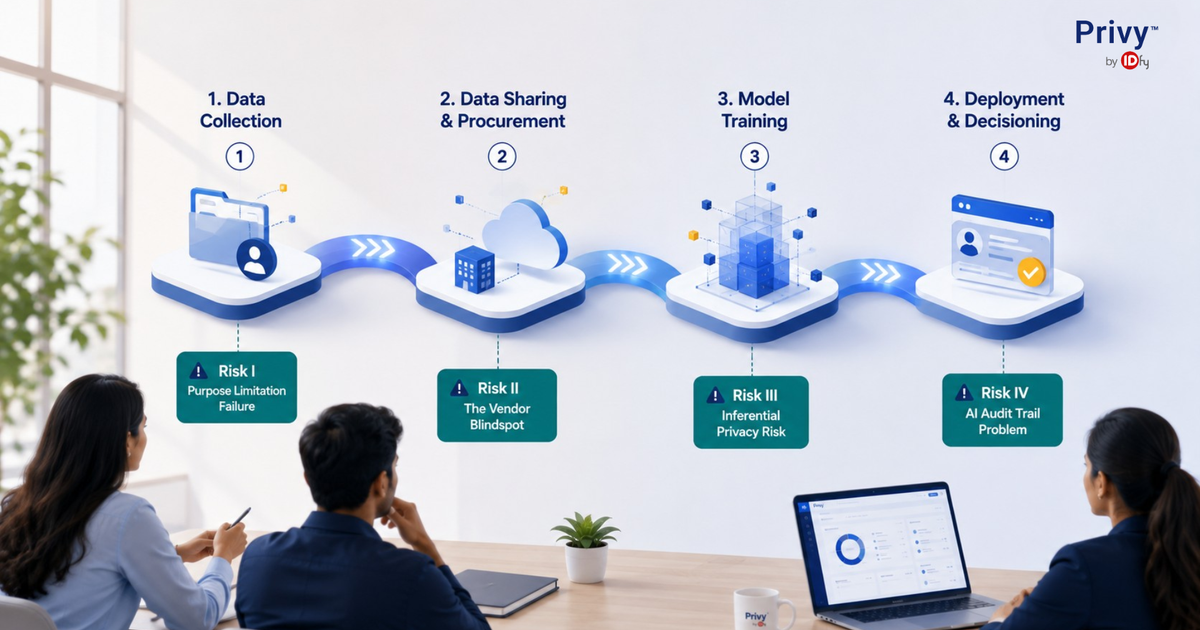
Data Privacy in the AI Era: The Four Risks Indian Corporations Have Already Inherited
Sep 10, 2026




 shivani@idfy.com
 Unit no. 801, Skyline Icon, 804, Andheri - Kurla Rd, Chimatpada, Marol, Andheri East, Mumbai, Maharashtra 400059
 1800 123 4339