
Asset Versioning
Definition
Tracking changes to data assets over time to maintain history, integrity, and traceability.
Asset versioning refers to the practice of maintaining historical versions of data assets so that every change can be tracked, compared, and, if required, reversed. It ensures that updates to datasets, schemas, models, or documents do not overwrite previous states but instead create a clear timeline of how the asset has evolved.
As data flows across systems and is continuously modified, versioning becomes critical for maintaining integrity and control. It allows organizations to understand not just the current state of data, but how it reached that state, who made changes, and what impact those changes had. In regulated environments, this becomes essential to validate decisions and ensure that data usage aligns with defined policies.
In the context of the Digital Personal Data Protection Act, 2023, versioning supports accountability by enabling organizations to trace how personal data and related artifacts have changed over time. This is particularly important when demonstrating compliance, validating consent-driven changes, or responding to regulatory scrutiny.
In practice, gaps emerge when:
- Changes overwrite existing data without maintaining history.
- Versions are stored but not linked to users, purpose, or actions.
- There is no visibility into what changed between versions.
- Rollbacks or reconstruction require manual effort.
To address this, organizations implement structured version control across data assets, ensuring that every change is captured with context and can be traced end-to-end. This includes linking versions to identity, purpose, and usage, making changes both visible and verifiable. Within Privy, this is supported through capabilities such as audit trails, data mapping, and consent lifecycle management, enabling organizations to maintain control over how data evolves.
Questions About Staying in Control?
Here’s everything you need to know about this term and how it fits into your compliance program.
Datasets, schemas, consent records, policies, and models where changes impact how data is used or interpreted.
When version history exists but lacks context, making it difficult to understand what changed and why.
Backups restore data, but versioning explains how and why data changed, which is essential for governance and audits.
Clear linkage between versions, users, and actions, allowing organizations to reconstruct changes without ambiguity.
It provides a traceable history of data changes, helping validate that updates align with policies, consent, and regulatory expectations.
Still have a question?
Latest Blog

Sep 30, 2026
RBI NBFC Rules Just Banned Dark Patterns and Fake Consent
Sep 29, 2026
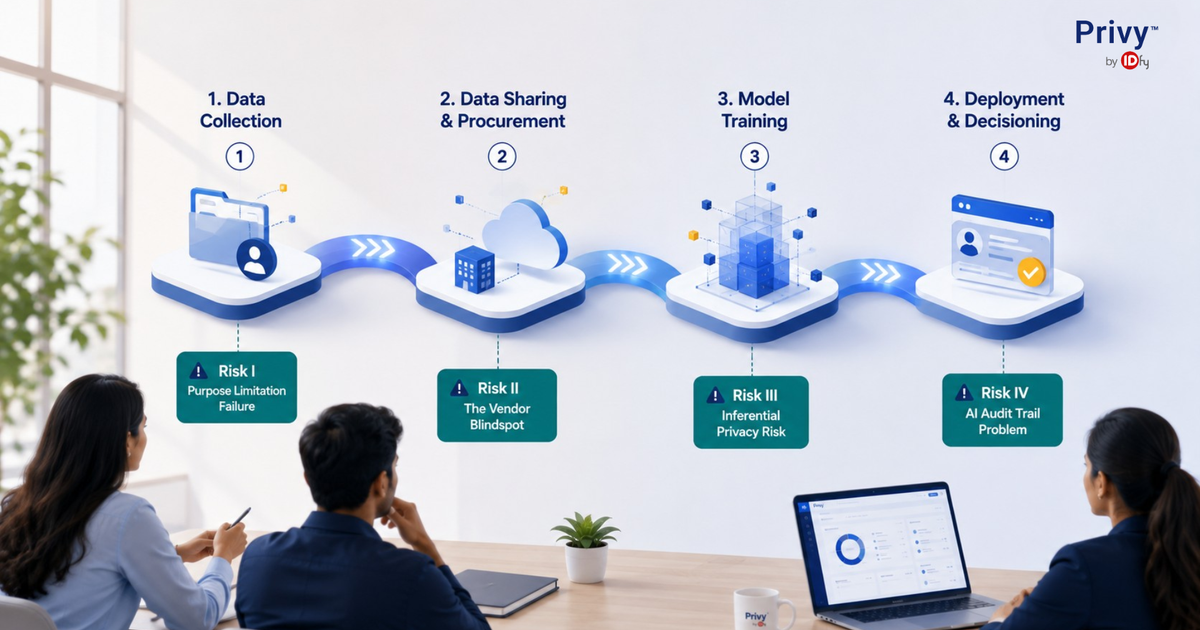
Data Privacy in the AI Era: The Four Risks Indian Corporations Have Already Inherited
Sep 10, 2026




 shivani@idfy.com
 Unit no. 801, Skyline Icon, 804, Andheri - Kurla Rd, Chimatpada, Marol, Andheri East, Mumbai, Maharashtra 400059
 1800 123 4339