

Automated Incident Detection
Definition
Real time identification of security incidents, breaches, and anomalies using monitoring and AI systems.
Expanded Explanation
Automated incident detection refers to the continuous monitoring of systems to identify potential security incidents such as unauthorized access, data breaches, system anomalies, or unusual behavior patterns. It uses AI driven analysis and rule based monitoring to detect signals early, before they escalate into larger issues.
Unlike general data visibility or discovery tools, incident detection focuses specifically on identifying abnormal or potentially harmful activity as it happens. It analyzes system behavior, access patterns, and data movement to flag deviations from expected norms, enabling faster investigation and response.
In the context of the Digital Personal Data Protection Act, 2023, timely detection of personal data breaches and security incidents is critical, as organizations are required to take prompt action and demonstrate control over data protection measures.
In practice, gaps emerge when:
- Alerts are generated but not prioritized based on risk or impact.
- Detection exists but is not connected to response workflows.
- Systems generate high noise, leading to missed critical incidents.
- Monitoring is fragmented across tools without unified visibility.
To address this, organizations implement continuous monitoring systems that not only detect anomalies but also contextualize them based on data sensitivity, access patterns, and potential impact. This ensures that incidents are identified early and escalated appropriately. Within Privy, this is supported through capabilities such as audit trails, data mapping, and consent lifecycle visibility, enabling organizations to detect and respond to incidents with clarity and control.
Questions About Staying in Control?
Here’s everything you need to know about this term and how it fits into your compliance program.
Incident detection focuses on identifying abnormal or suspicious activity, while discovery and lineage focus on visibility and tracking.
Unauthorized access, unusual data movement, system anomalies, and potential data breaches.
Still have a question?
Latest Blog

Sep 30, 2026
RBI NBFC Rules Just Banned Dark Patterns and Fake Consent
Sep 29, 2026
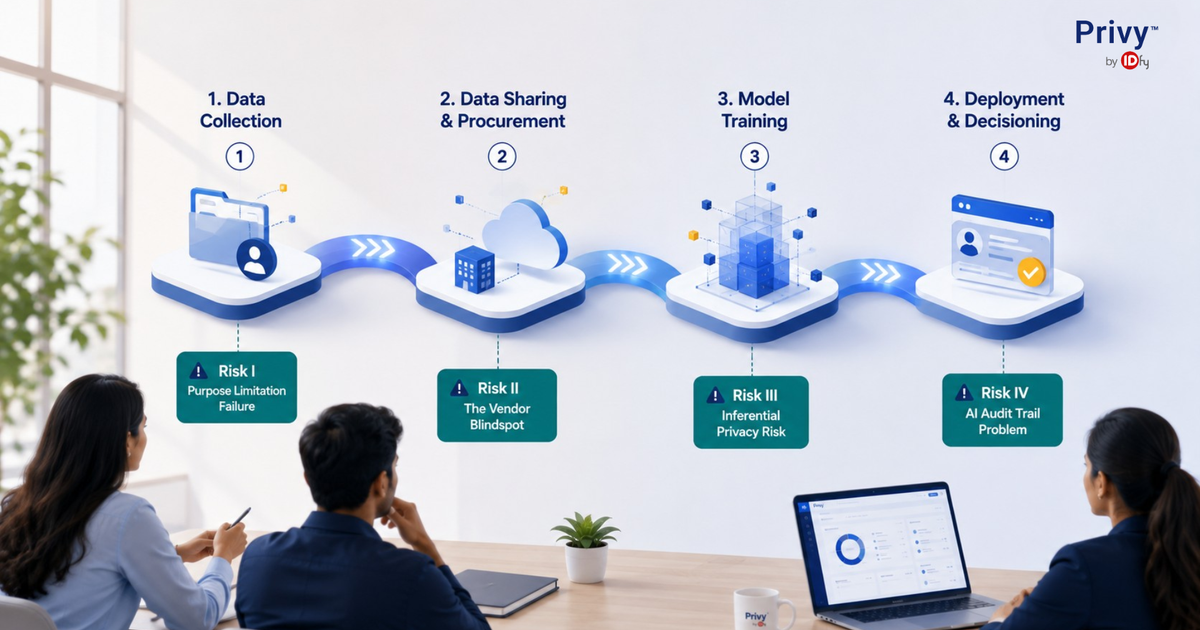
Data Privacy in the AI Era: The Four Risks Indian Corporations Have Already Inherited
Sep 10, 2026




 shivani@idfy.com
 Unit no. 801, Skyline Icon, 804, Andheri - Kurla Rd, Chimatpada, Marol, Andheri East, Mumbai, Maharashtra 400059
 1800 123 4339