

Consent Lifecycle Management
Definition
Consent lifecycle management is the continuous management of consent from collection to update, enforcement, expiration, and withdrawal across the full data processing lifecycle.
Consent lifecycle management refers to the operational governance of consent over time, ensuring that consent remains valid, updated, enforceable, and traceable throughout every stage of data processing.
Unlike basic consent collection, which focuses only on obtaining user permission at a single point in time, consent lifecycle management governs what happens to that consent afterward — including how it is stored, synchronized, updated, renewed, enforced, and revoked across systems.
It is also important to distinguish consent lifecycle management from the concept of a Consent Manager under the Digital Personal Data Protection Act, 2023. Consent lifecycle management is an organization’s internal governance capability for handling consent across systems and workflows, whereas a Consent Manager is a formally recognized intermediary under DPDPA that enables users to manage and withdraw consent through a standardized platform.
As organizations operate across multiple applications, vendors, APIs, and processing environments, consent becomes dynamic rather than static. User preferences may change, processing purposes may evolve, or regulations may require revalidation of consent over time.
This becomes critical because compliance is not achieved simply by capturing consent once. Under GDPR and the Digital Personal Data Protection Act, 2023, organizations must continuously ensure that data processing aligns with the user’s latest valid consent state.
However, the challenge is not consent capture alone but maintaining consent integrity throughout its lifecycle. Gaps emerge when:
- Consent is collected but not updated across downstream systems
- Expired or withdrawn consent continues to permit processing
- Consent changes are not synchronized across platforms or vendors
- Organizations cannot trace how consent evolved over time
To address this, organizations implement lifecycle-based consent governance that continuously tracks consent state changes, enforces updates across systems, and maintains auditable records of every consent event and transition.
Within Privy, consent lifecycle management connects consent capture, enforcement, synchronization, and auditability into a unified framework that ensures consent remains continuously governed across systems and over time.
GAP's
- Consent captured once but not continuously governed
- Downstream systems using outdated consent states
- Lack of synchronization across applications and vendors
- Missing traceability of consent updates or revocations
- Expired consent still enabling active processing
Questions About Staying in Control?
Here’s everything you need to know about this term and how it fits into your compliance program.
Basic consent collection captures permission once, while lifecycle management governs how consent is maintained, updated, enforced, and withdrawn over time.
Consent lifecycle management is an internal governance capability, while a Consent Manager is a legally recognized intermediary that enables users to manage consent.
Consent validity can change, and organizations must ensure processing always aligns with the latest consent state.
Consent grant, storage, synchronization, update, renewal, enforcement, expiration, and revocation.
Keeping the consent state synchronized consistently across distributed systems and vendors.
Still have a question?
Latest Blog
Sep 30, 2026
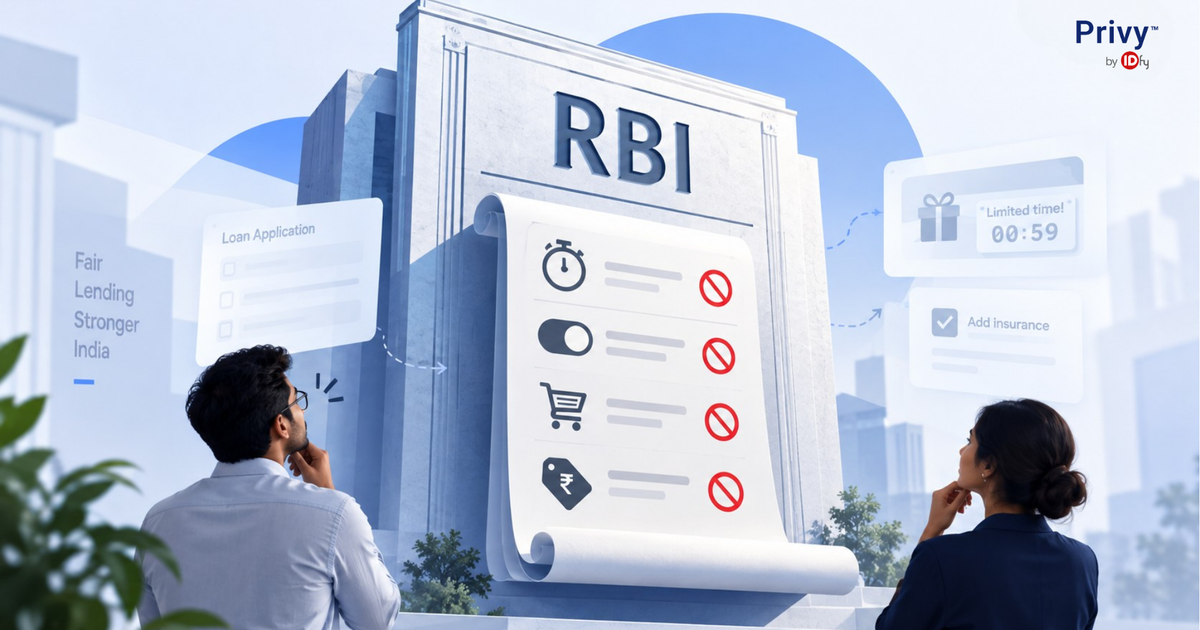
RBI NBFC Rules Just Banned Dark Patterns and Fake Consent
Sep 29, 2026
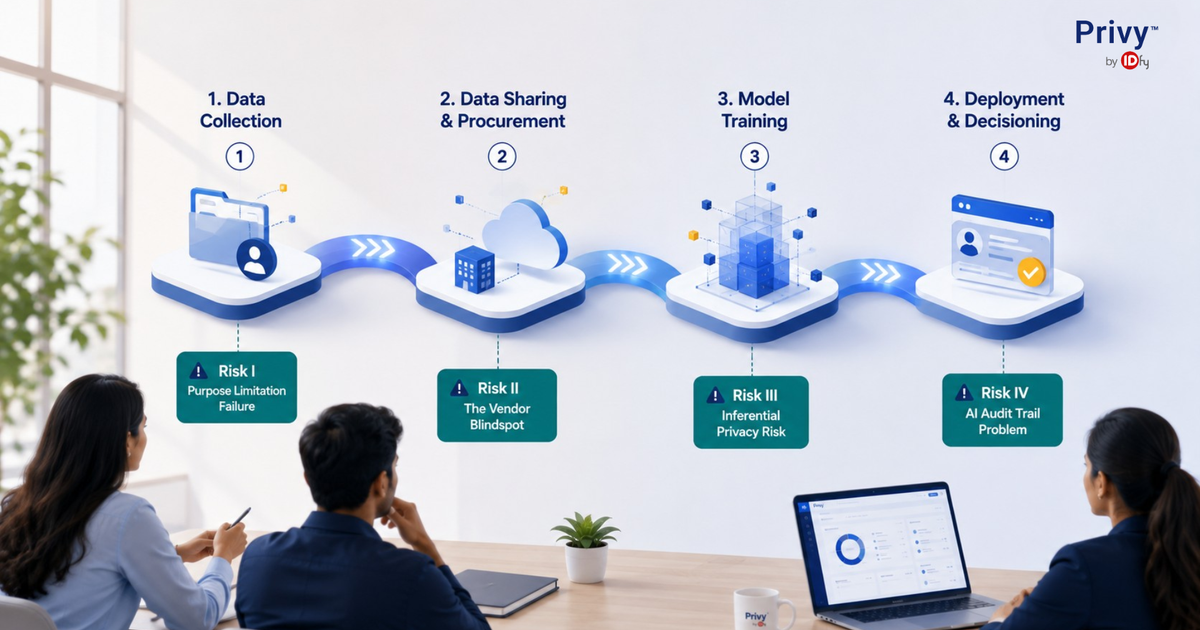
Data Privacy in the AI Era: The Four Risks Indian Corporations Have Already Inherited
Sep 10, 2026




 shivani@idfy.com
 Unit no. 801, Skyline Icon, 804, Andheri - Kurla Rd, Chimatpada, Marol, Andheri East, Mumbai, Maharashtra 400059
 1800 123 4339