

Consent Receipt
Definition
Consent Receipt is a record confirming that a user has given consent for specific data processing activities.
Consent Receipt functions as the verification and evidence layer of the consent lifecycle. It records what was consented to, when it was given, and under what context, creating a verifiable audit trail.
Unlike consent capture, which is interactive, the receipt is a post-event record that proves consent existed at a specific point in time.
As organizations scale across systems and vendors, receipts ensure consent remains traceable even when data moves across environments.
In practice, gaps emerge when:
- Consent exists but cannot be reconstructed during audits
- Records are not linked to a purpose or processing activity
- Consent data is fragmented across systems
- Historical consent states are not preserved
To address this, organizations implement structured consent logging that preserves immutable consent records tied to identity and purpose.
Within Privy, Consent Receipt acts as an audit-grade record connected to consent lifecycle events and data processing activity.
Questions About Staying in Control?
Here’s everything you need to know about this term and how it fits into your compliance program.
It is a verifiable record that proves consent was captured for a specific purpose at a specific point in time.
Because it serves as audit evidence that consent was not assumed but explicitly obtained and recorded.
It includes the user identity reference, purpose of consent, timestamp, scope of permissions, and contextual metadata of the consent event.
Organizations lose the ability to reliably demonstrate a lawful basis for processing, creating compliance and audit exposure.
Privy generates structured, audit-ready consent receipts that are directly linked to consent events and downstream data processing activities for full traceability.
Still have a question?
Latest Blog
Sep 30, 2026
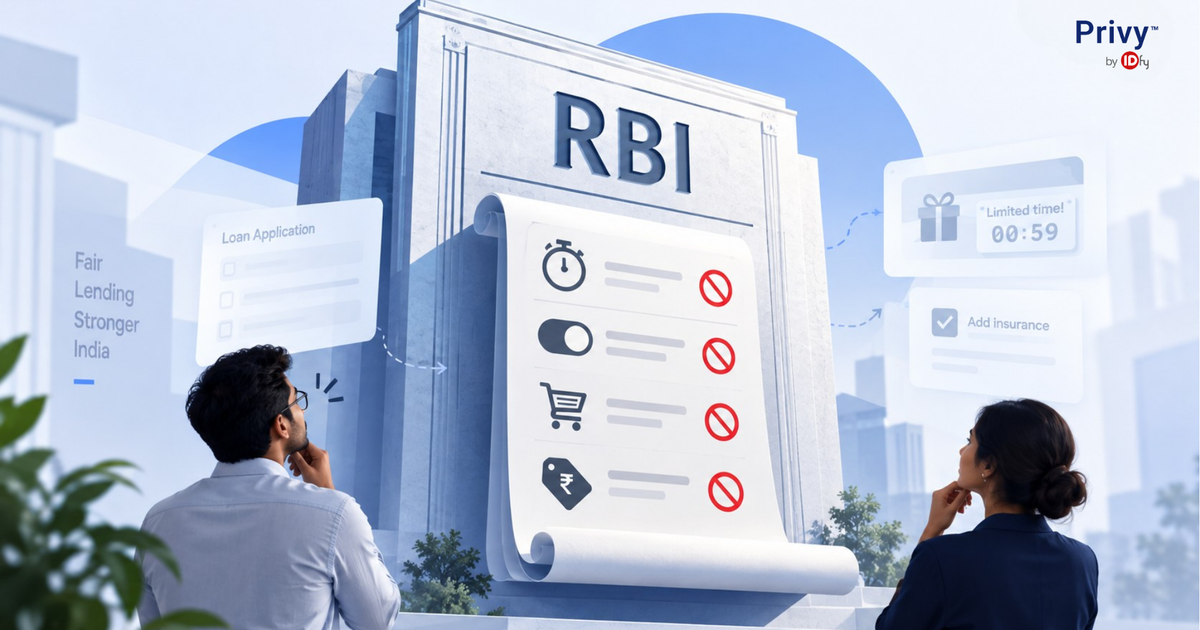
RBI NBFC Rules Just Banned Dark Patterns and Fake Consent
Sep 29, 2026
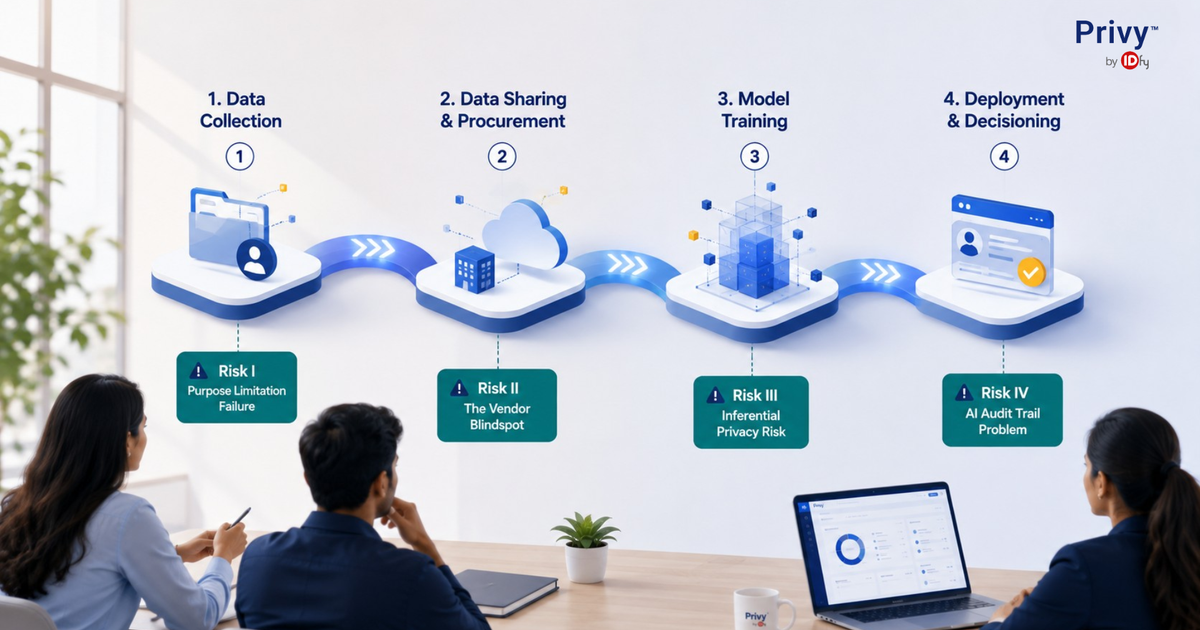
Data Privacy in the AI Era: The Four Risks Indian Corporations Have Already Inherited

Sep 10, 2026




 shivani@idfy.com
 Unit no. 801, Skyline Icon, 804, Andheri - Kurla Rd, Chimatpada, Marol, Andheri East, Mumbai, Maharashtra 400059
 1800 123 4339