
Consent Status
Definition
Consent Status represents the real-time state of a user’s consent, such as granted, withdrawn, expired, or pending.
Consent Status represents the live operational condition of consent that determines whether personal data can be processed at any given moment. It acts as a control signal across systems to ensure that only valid and active consent is used for processing decisions.
As organizations operate across distributed architectures, consent is continuously evaluated across multiple systems, applications, and data pipelines where user data is actively processed.
Unlike consent capture (which records consent) or consent receipt (which proves it), consent status governs ongoing eligibility for data processing in real time.
In practice, gaps emerge when:
- Consent updates are not reflected instantly across connected systems
- Different applications display inconsistent consent states for the same user
- Withdrawn consent continues to allow processing in downstream systems
- Status changes are not synchronized with data pipelines or APIs
To address this, organizations implement centralized consent state synchronization so that every system evaluates the same, up-to-date consent condition before processing data.
Within Privy, Consent Status is continuously synchronized across systems to ensure that only valid consent governs active data processing decisions.
Questions About Staying in Control?
Here’s everything you need to know about this term and how it fits into your compliance program.
Because consent can change at any moment, and data processing decisions must reflect the latest user intent, not historical states.
Different systems may continue processing data even after consent has been withdrawn, creating silent compliance violations.
If not enforced in real time, downstream systems may continue using outdated consent assumptions, leading to unauthorized profiling or usage.
Because consent updates often sit in one system while data processing happens across multiple disconnected applications and vendors.
The status change should immediately propagate across all connected systems and automatically block any further processing tied to that consent.
Still have a question?
Latest Blog
Sep 30, 2026
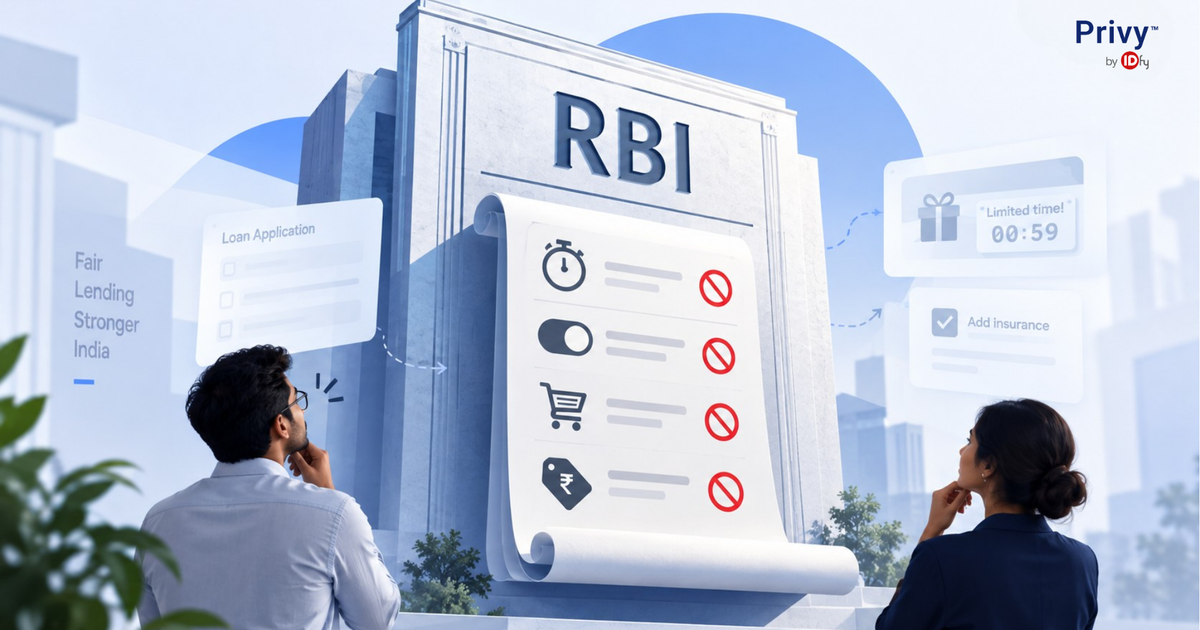
RBI NBFC Rules Just Banned Dark Patterns and Fake Consent
Sep 29, 2026
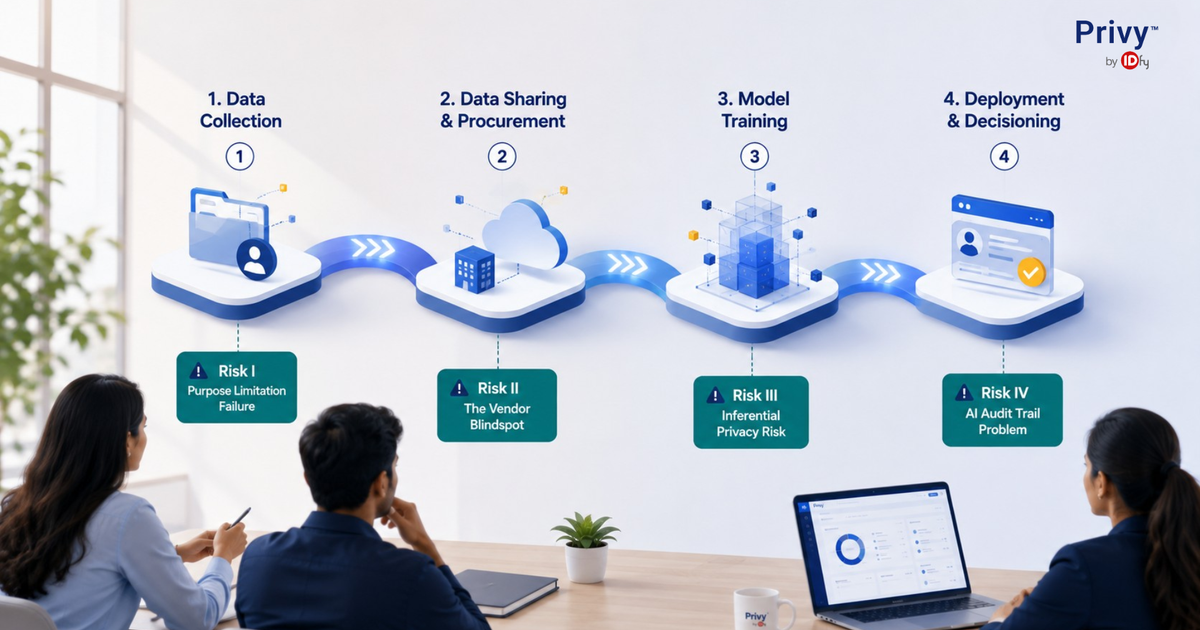
Data Privacy in the AI Era: The Four Risks Indian Corporations Have Already Inherited
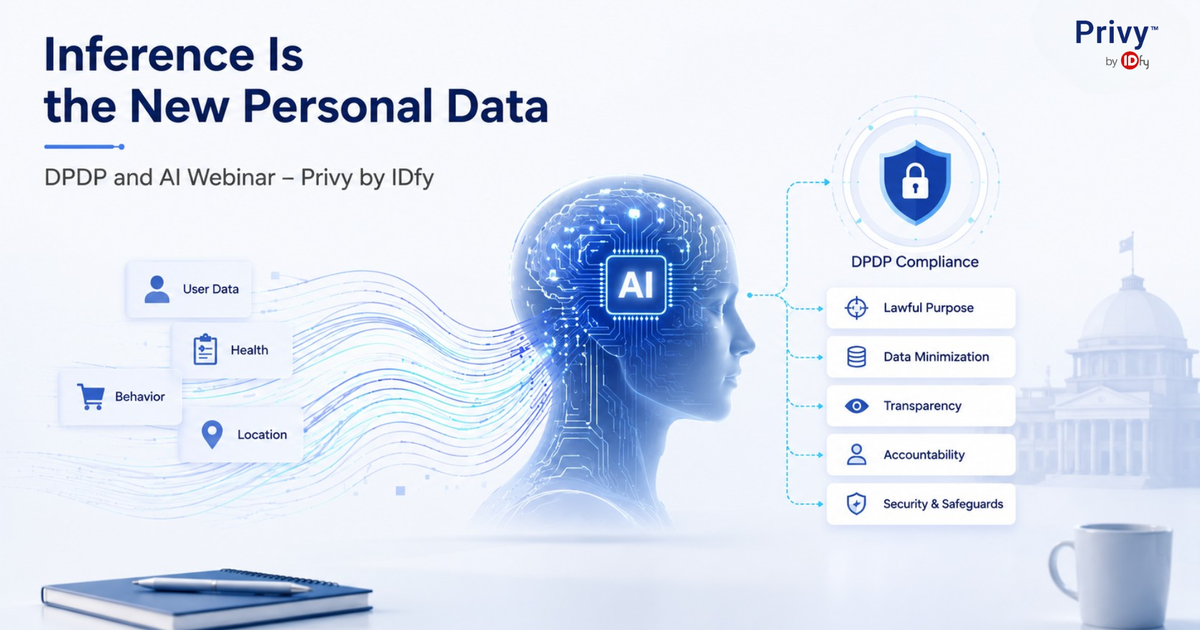
Sep 10, 2026




 shivani@idfy.com
 Unit no. 801, Skyline Icon, 804, Andheri - Kurla Rd, Chimatpada, Marol, Andheri East, Mumbai, Maharashtra 400059
 1800 123 4339