

Data Fiduciaries
Definition
Entities that determine why and how personal data is processed and are responsible for ensuring that such processing complies with applicable privacy obligations.
A Data Fiduciary is any organization, business, government body, or individual that decides the purpose and means of processing personal data. Under the Digital Personal Data Protection Act, 2023, Data Fiduciaries are accountable for how personal data is collected, used, shared, stored, and protected throughout its lifecycle.
Unlike Data Processors, which process data on behalf of another entity, Data Fiduciaries are responsible for the decisions surrounding data processing. In practice, gaps emerge when:
- Consent is collected but not linked to actual data usage
- Personal data flows across systems without clear ownership
- Rights requests are managed through fragmented processes
- Third-party processing activities lack governance visibility
To address this, organizations establish governance frameworks that connect consent, data processing, rights management, and auditability across systems. Within Privy, this is supported through capabilities such as consent lifecycle management, data mapping, governance workflows, and audit-ready traceability.
Questions About Staying in Control?
Here’s everything you need to know about this term and how it fits into your compliance program.
Any person, company, government entity, or organization that determines the purpose and means of processing personal data is considered a Data Fiduciary.
A Data Fiduciary decides why and how personal data is processed, while a Data Processor processes data on behalf of the Data Fiduciary based on its instructions.
Responsibilities include obtaining valid consent where required, protecting personal data, managing Data Principal rights, and ensuring compliance with the DPDP Act.
Yes. Depending on the processing activity, an organization may act as a Data Fiduciary in some situations and a Data Processor in others.
Organizations must be able to demonstrate that personal data is processed responsibly and in accordance with regulatory obligations through verifiable controls and records.
Still have a question?
Latest Blog

Sep 30, 2026
RBI NBFC Rules Just Banned Dark Patterns and Fake Consent
Sep 29, 2026
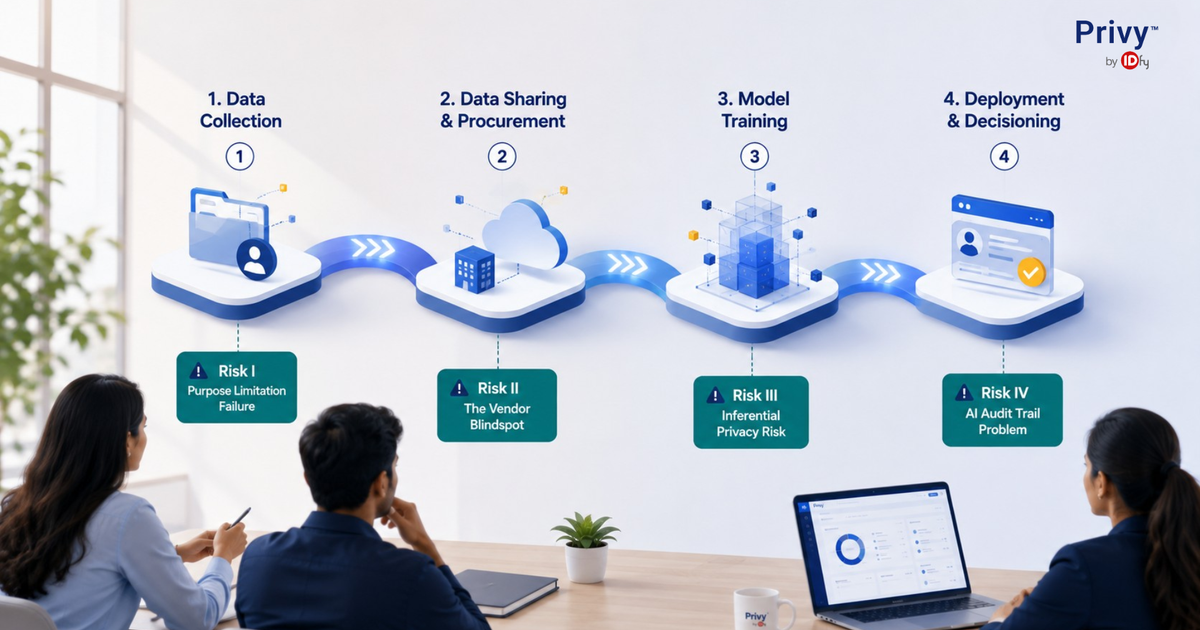
Data Privacy in the AI Era: The Four Risks Indian Corporations Have Already Inherited
Sep 10, 2026




 shivani@idfy.com
 Unit no. 801, Skyline Icon, 804, Andheri - Kurla Rd, Chimatpada, Marol, Andheri East, Mumbai, Maharashtra 400059
 1800 123 4339