

Data Flow Mapping
Definition
The process of documenting and visualizing how data moves across systems, applications, teams, and third parties throughout its lifecycle.
Data flow mapping helps organizations understand where data originates, how it moves, where it is stored, and who has access to it. Under the Digital Personal Data Protection Act, 2023, this visibility is essential for demonstrating how personal data is collected, processed, shared, retained, and protected across the organization.
Unlike a static data inventory, data flow mapping focuses on the movement and relationships of data between systems and stakeholders. In practice, gaps emerge when:
- Data moves across systems without documented visibility
- Third-party data sharing is not fully tracked
- Personal data flows cannot be linked to business purposes
- Data maps become outdated due to manual maintenance
To address this, organizations implement continuous discovery and mapping processes that keep data flows updated as systems evolve. Within Privy, this is supported through capabilities such as automated data mapping, governance workflows, and audit-ready traceability that help maintain visibility across the data lifecycle
Questions About Staying in Control?
Here’s everything you need to know about this term and how it fits into your compliance program.
Data flow mapping is the process of tracking how data moves across systems, applications, business functions, and third parties.
It helps organizations understand where personal data exists, how it is processed, and whether data handling practices align with regulatory requirements.
Data discovery identifies where data resides, while data flow mapping focuses on how that data moves between systems and stakeholders.
Organizations may struggle to identify data sharing activities, assess compliance risks, respond to rights requests, or investigate incidents effectively.
Privy helps organizations create and maintain visibility into personal data movement through automated mapping, governance workflows, and audit-ready records.
Still have a question?
Latest Blog

Sep 30, 2026
RBI NBFC Rules Just Banned Dark Patterns and Fake Consent
Sep 29, 2026
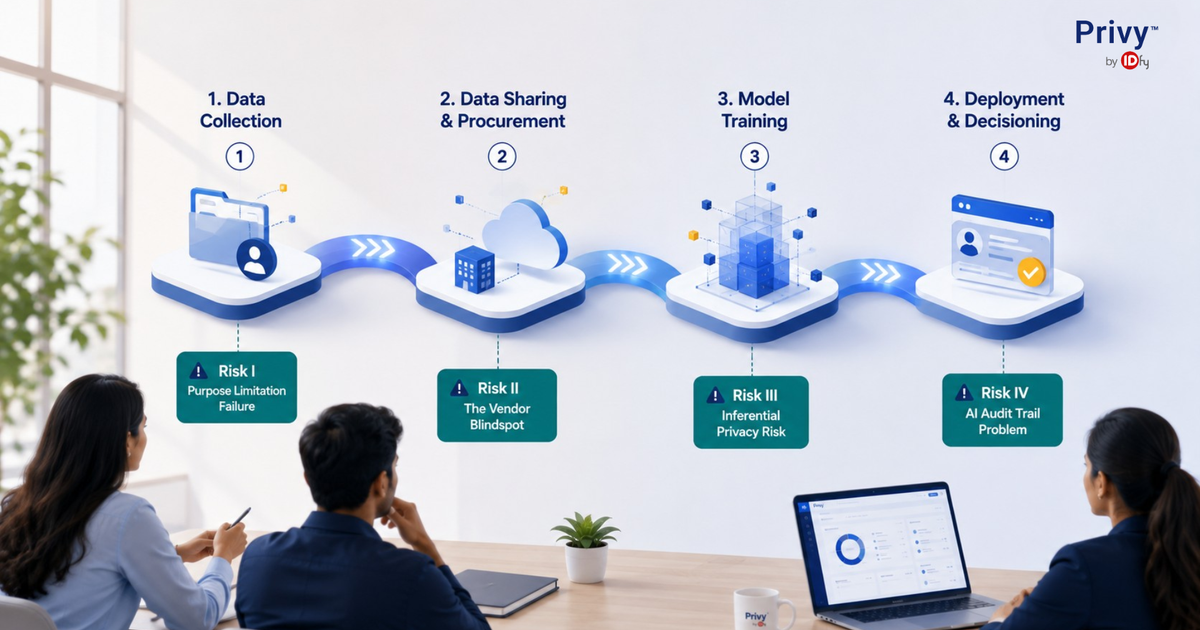
Data Privacy in the AI Era: The Four Risks Indian Corporations Have Already Inherited
Sep 10, 2026




 shivani@idfy.com
 Unit no. 801, Skyline Icon, 804, Andheri - Kurla Rd, Chimatpada, Marol, Andheri East, Mumbai, Maharashtra 400059
 1800 123 4339