
Data Lineage
Definition
Data lineage is the process of tracking the origin, movement, transformation, and usage of data across systems throughout its lifecycle, improving visibility, governance, and regulatory compliance.
Data lineage is the practice of documenting and visualizing how data moves through an organization's systems from its point of collection or creation to its storage, transformation, sharing, and eventual archival or deletion. It provides a complete record of where data originated, how it has been modified, which systems and users have interacted with it, and where it is ultimately consumed. Data lineage helps organizations understand the flow of data across databases, applications, cloud platforms, data warehouses, analytics tools, and business processes.
As organizations increasingly rely on distributed data ecosystems, maintaining visibility into data movement becomes essential for governance and operational efficiency. Data lineage enables organizations to trace the impact of changes, investigate data quality issues, support root cause analysis, improve metadata management, validate data accuracy, and establish trust in analytics and AI models. It also helps data stewards, engineers, security teams, and compliance professionals understand how personal and business data flows across the enterprise.
Although the Digital Personal Data Protection Act, 2023 (DPDP Act) does not explicitly require organizations to maintain data lineage, it supports several compliance objectives under the Act. Understanding where personal data is collected, processed, shared, stored, and deleted enables Data Fiduciaries to implement purpose limitation, respond to Data Principal requests more efficiently, manage Data Processors, investigate Personal Data Breaches, and demonstrate accountability through documented governance. Data lineage is therefore an important capability for organizations building mature privacy and data governance programs.
In practice, gaps emerge when:
- Organizations cannot identify where personal data originated or how it reached downstream systems.
- Data transformations are undocumented, making investigations difficult.
- Different business teams maintain inconsistent records of data flows.
- Privacy teams struggle to determine which systems are affected by a Data Principal request.
- Data quality issues cannot be traced back to their source due to limited visibility.
Organizations strengthen governance by maintaining automated lineage across structured and unstructured data sources, integrating lineage with metadata management, and continuously monitoring data movement throughout the lifecycle. Within Privy, capabilities such as automated data discovery, data classification, data mapping, metadata management, and governance workflows help organizations establish visibility into personal data flows, improve accountability, and support DPDP compliance.
Questions About Staying in Control?
Here’s everything you need to know about this term and how it fits into your compliance program.
Data lineage is the process of tracking where data originates, how it moves across systems, how it is transformed, and where it is ultimately used or stored.
Data lineage improves data governance, supports data quality initiatives, enables impact analysis, strengthens regulatory compliance, and increases trust in business reporting and analytics.
The DPDP Act does not expressly mandate data lineage. However, maintaining lineage helps organizations understand personal data flows, support Data Principal rights, investigate incidents, and demonstrate accountability.
Data mapping identifies where personal data exists and how it moves between systems, while data lineage provides a detailed history of the origin, movement, transformations, and dependencies of data throughout its lifecycle. The two capabilities complement each other within a broader data governance program.
Privy supports data lineage through automated data discovery, data classification, data mapping, metadata visibility, and governance workflows that help organizations understand and govern personal data across their technology ecosystem.
Still have a question?
Latest Blog
-1-1200x630.png)
Oct 19, 2026
DPDP Compliance Services: Same Law, Different Data in Every Industry
Sep 30, 2026
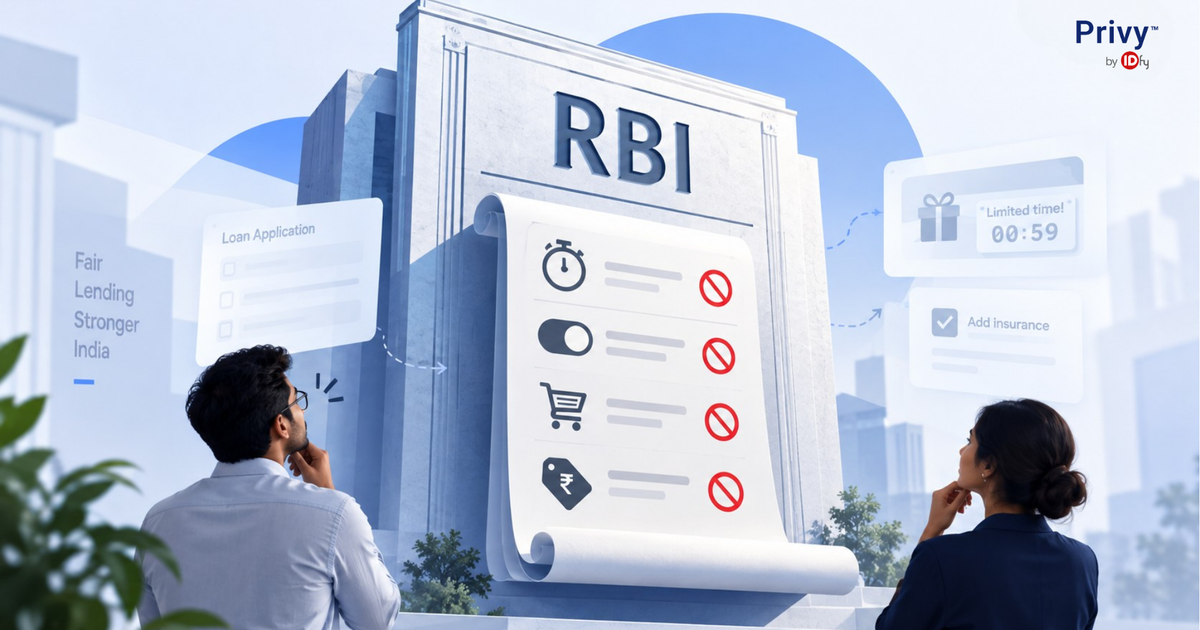
RBI NBFC Rules Just Banned Dark Patterns and Fake Consent
Sep 29, 2026




 shivani@idfy.com
 Unit no. 801, Skyline Icon, 804, Andheri - Kurla Rd, Chimatpada, Marol, Andheri East, Mumbai, Maharashtra 400059
 1800 123 4339