

Data Localization
Definition
Data localization refers to requirements or practices that require certain categories of data to be stored or processed within a specific geographic jurisdiction.
Data localization is the practice or legal requirement of storing, processing, or maintaining certain categories of data within the geographical boundaries of a particular country or region. Governments may introduce localization requirements for various reasons, including national security, regulatory oversight, law enforcement access, critical infrastructure protection, or sector-specific compliance. The exact scope of localization depends on the applicable laws and regulations governing the organization.
Organizations operating across multiple countries often use cloud infrastructure that stores or processes data across different regions. Data localization introduces additional governance considerations, including where data resides, how cross-border transfers occur, which service providers are involved, and how organizations maintain visibility over data movement. As a result, organizations need accurate data inventories, mapping, and governance controls to ensure that applicable localization requirements are met.
The Digital Personal Data Protection Act, 2023 does not impose a general data localization requirement for personal data. Instead, it provides a framework for cross-border transfers of personal data, subject to restrictions that may be notified by the Central Government. Organizations should therefore distinguish between data localization obligations arising under sector-specific regulations and the cross-border transfer provisions under the DPDP Act.
In practice, gaps emerge when:
- Organizations cannot determine where personal data is physically stored.
- Cloud services replicate data across multiple geographic regions without visibility.
- Cross-border data flows are not documented.
- Different business units use vendors with inconsistent hosting locations.
- Data residency requirements are assessed only after systems are deployed.
Organizations address these challenges by maintaining accurate data inventories, documenting data flows, evaluating vendor hosting practices, and continuously monitoring where personal data is processed. Within Privy, capabilities such as automated data discovery, data mapping, and governance reporting help organizations improve visibility into data locations and cross-border processing activities.
Questions About Staying in Control?
Here’s everything you need to know about this term and how it fits into your compliance program.
Data localization is the practice or legal requirement of storing or processing certain categories of data within a specified country or jurisdiction.
No. Data residency refers to where data is stored, while data localization generally refers to legal or regulatory requirements restricting where data may be stored or processed.
No. The DPDP Act, 2023 does not establish a general data localization requirement. It permits cross-border transfers subject to restrictions that may be notified by the Central Government.
It helps organizations comply with applicable legal, regulatory, or sector-specific requirements regarding where certain categories of data may be stored or processed.
Privy helps organizations discover personal data, map data flows, maintain inventories, and improve visibility into where personal data is processed across enterprise environments.
Still have a question?
Latest Blog

Sep 30, 2026
RBI NBFC Rules Just Banned Dark Patterns and Fake Consent
Sep 29, 2026
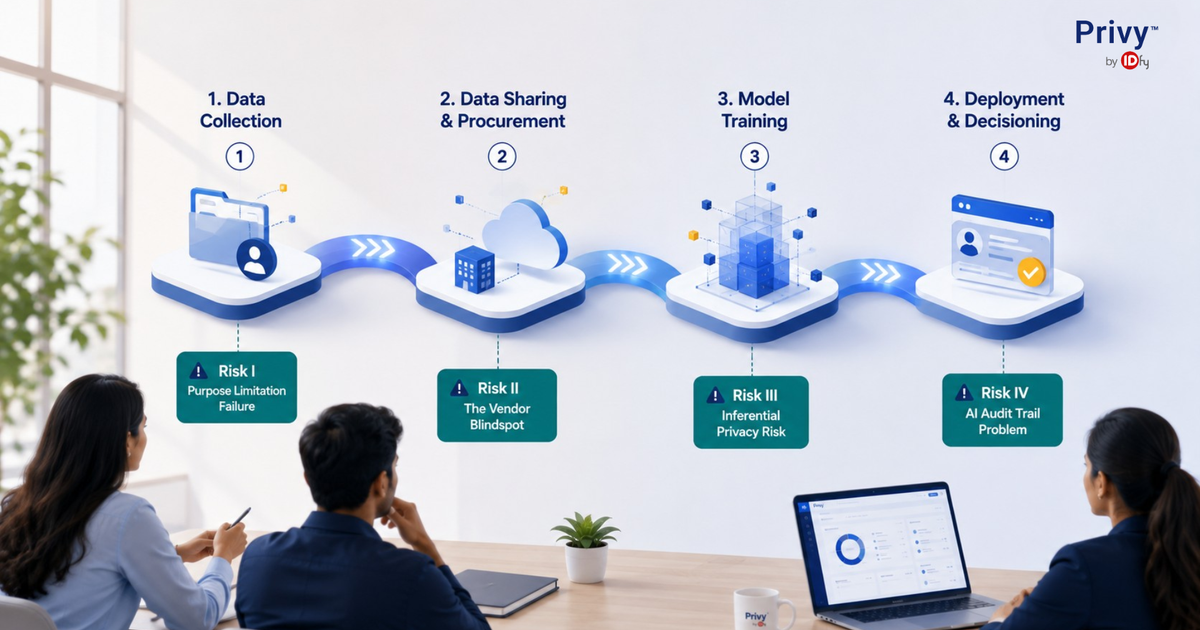
Data Privacy in the AI Era: The Four Risks Indian Corporations Have Already Inherited
Sep 10, 2026




 shivani@idfy.com
 Unit no. 801, Skyline Icon, 804, Andheri - Kurla Rd, Chimatpada, Marol, Andheri East, Mumbai, Maharashtra 400059
 1800 123 4339