

Encryption-in-Use
Definition
Encryption-in-use is a privacy-enhancing approach that protects personal data while it is being actively processed, helping reduce exposure risks during computation and analysis.
In the context of the Digital Personal Data Protection Act, 2023 (DPDP Act), encryption-in-use refers to techniques that protect personal data while it is being processed by applications, systems, or computing environments. Unlike encryption at rest, which protects stored data, and encryption in transit, which protects data while it moves between systems, encryption-in-use focuses on protecting data during active processing when it would traditionally need to be available in readable form.
Organizations process personal data across analytics platforms, artificial intelligence systems, cloud environments, databases, and business applications. During processing, data may be exposed to administrators, applications, infrastructure providers, or unauthorized actors if appropriate controls are not implemented. Encryption-in-use technologies, such as confidential computing and secure processing environments, aim to minimize this exposure by allowing organizations to perform operations on protected data while reducing access to the underlying information.
The DPDP Act does not specifically require encryption-in-use or prescribe any particular encryption technology. However, it requires Data Fiduciaries to implement reasonable security safeguards to protect personal data from Personal Data Breaches. For organizations processing high-risk personal data or using advanced technologies such as artificial intelligence, encryption-in-use may be considered as part of a broader privacy and security strategy to strengthen protection during data processing.
In practice, gaps emerge when:
- Personal data is encrypted during storage and transmission but remains exposed during processing.
- Organizations use cloud processing environments without understanding data access risks.
- AI and analytics systems process personal data without adequate privacy safeguards.
- Sensitive personal data is shared with third-party processors without appropriate controls.
- Security measures focus only on databases and networks while ignoring processing environments.
Organizations address these risks by adopting privacy-enhancing technologies, implementing secure processing environments, applying strict access controls, and evaluating protection measures throughout the personal data lifecycle. Within Privy, capabilities such as automated data discovery, data classification, data mapping, governance workflows, privacy assessments, and audit-ready reporting help organizations understand where personal data is processed and identify appropriate safeguards based on privacy risks.
Questions About Staying in Control?
Here’s everything you need to know about this term and how it fits into your compliance program.
Encryption-in-use refers to techniques that protect personal data while it is actively being processed, reducing exposure risks during computation and analysis.
Encryption at rest protects stored data, encryption in transit protects data moving between systems, and encryption-in-use focuses on protecting data while it is being processed.
No. The DPDP Act does not specifically require encryption-in-use. However, it may support Data Fiduciaries in implementing reasonable security safeguards depending on the risks associated with personal data processing.
Encryption-in-use may be relevant in areas such as confidential computing, privacy-preserving analytics, artificial intelligence systems, secure cloud processing, and environments handling sensitive personal data.
Privy helps organizations understand personal data locations, classifications, and flows through data discovery, data mapping, governance workflows, and audit-ready reporting, enabling informed decisions about privacy and security controls.
Still have a question?
Latest Blog

Sep 30, 2026
RBI NBFC Rules Just Banned Dark Patterns and Fake Consent
Sep 29, 2026
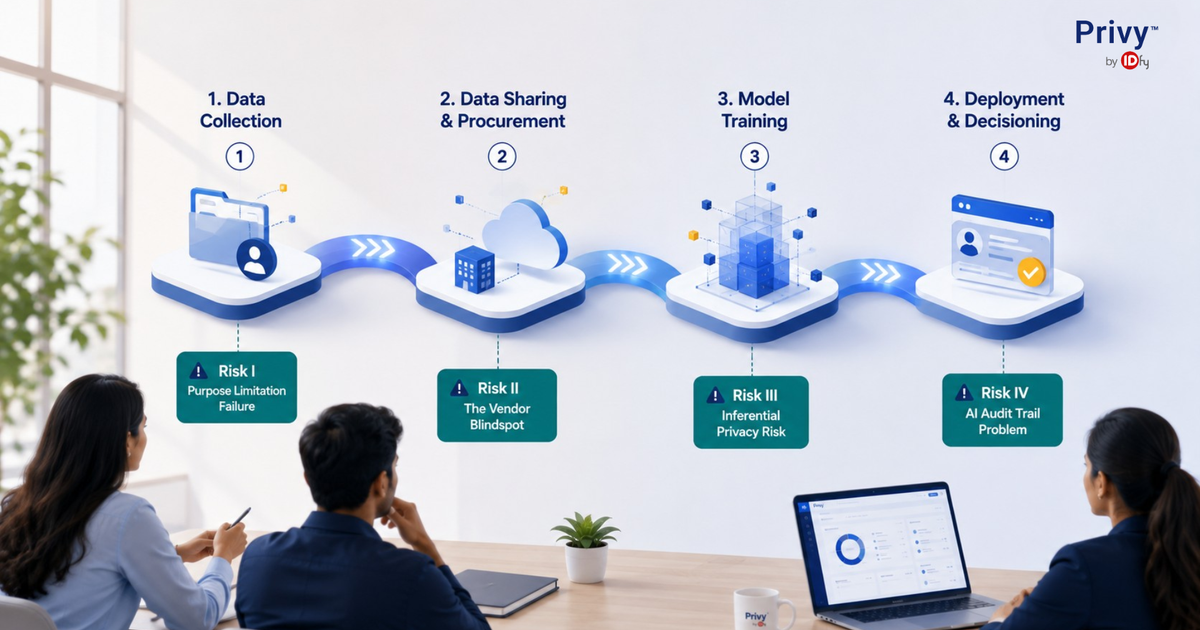
Data Privacy in the AI Era: The Four Risks Indian Corporations Have Already Inherited
Sep 10, 2026




 shivani@idfy.com
 Unit no. 801, Skyline Icon, 804, Andheri - Kurla Rd, Chimatpada, Marol, Andheri East, Mumbai, Maharashtra 400059
 1800 123 4339