

Evidence Grade Compliance
Definition
Evidence grade compliance refers to maintaining verifiable, reliable, and audit-ready records that demonstrate how privacy controls and DPDP obligations are implemented across an organization.
In the context of the Digital Personal Data Protection Act, 2023 (DPDP Act), evidence grade compliance refers to an organization's ability to produce reliable documentation and records that demonstrate compliance activities related to personal data processing. It goes beyond having policies in place by ensuring that organizations can show proof of implementation through structured, traceable, and consistent evidence.
Organizations process personal data across multiple systems, teams, applications, and third-party environments. During internal reviews, audits, assessments, or regulatory interactions, organizations may need to demonstrate how they manage activities such as consent collection, notices, Data Principal rights requests, security safeguards, vendor oversight, breach response, and governance processes. Evidence grade compliance enables organizations to maintain records that are accurate, complete, and connected to the controls they represent.
The DPDP Act does not specifically define the term "evidence grade compliance." However, the Act establishes accountability obligations for Data Fiduciaries and requires organizations to comply with requirements related to personal data processing, security safeguards, and breach management. Maintaining reliable evidence supports this accountability by helping organizations demonstrate that privacy practices are implemented and monitored effectively.
In practice, gaps emerge when:
- Organizations cannot prove that documented privacy policies are implemented.
- Compliance evidence is collected manually only when audits occur.
- Records related to consent, notices, and rights requests are incomplete.
- Privacy controls exist but lack ownership, timestamps, or supporting documentation.
- Teams struggle to connect compliance evidence with specific processing activities.
Organizations build evidence grade compliance by automating evidence collection, maintaining centralized records, linking controls with supporting documentation, tracking privacy activities over time, and ensuring audit readiness. Within Privy, capabilities such as consent management, data discovery, data mapping, privacy workflows, assessments, breach management, and compliance reporting help organizations maintain structured evidence for privacy governance and DPDP readiness.
Questions About Staying in Control?
Here’s everything you need to know about this term and how it fits into your compliance program.
Evidence grade compliance is the ability to maintain reliable, traceable, and audit-ready records that demonstrate how privacy controls and compliance activities are implemented.
It helps Data Fiduciaries demonstrate accountability by providing documented proof of how personal data processing obligations and safeguards are managed.
The DPDP Act does not use the term evidence grade compliance. However, maintaining appropriate records and documentation supports accountability and compliance management.
Examples include consent records, notices, data inventories, processing records, privacy assessments, breach documentation, vendor assessments, and governance approvals.
Privy helps organizations generate and manage audit-ready evidence through data discovery, consent management, privacy workflows, data mapping, assessments, and compliance reporting capabilities.
Still have a question?
Latest Blog

Sep 30, 2026
RBI NBFC Rules Just Banned Dark Patterns and Fake Consent
Sep 29, 2026
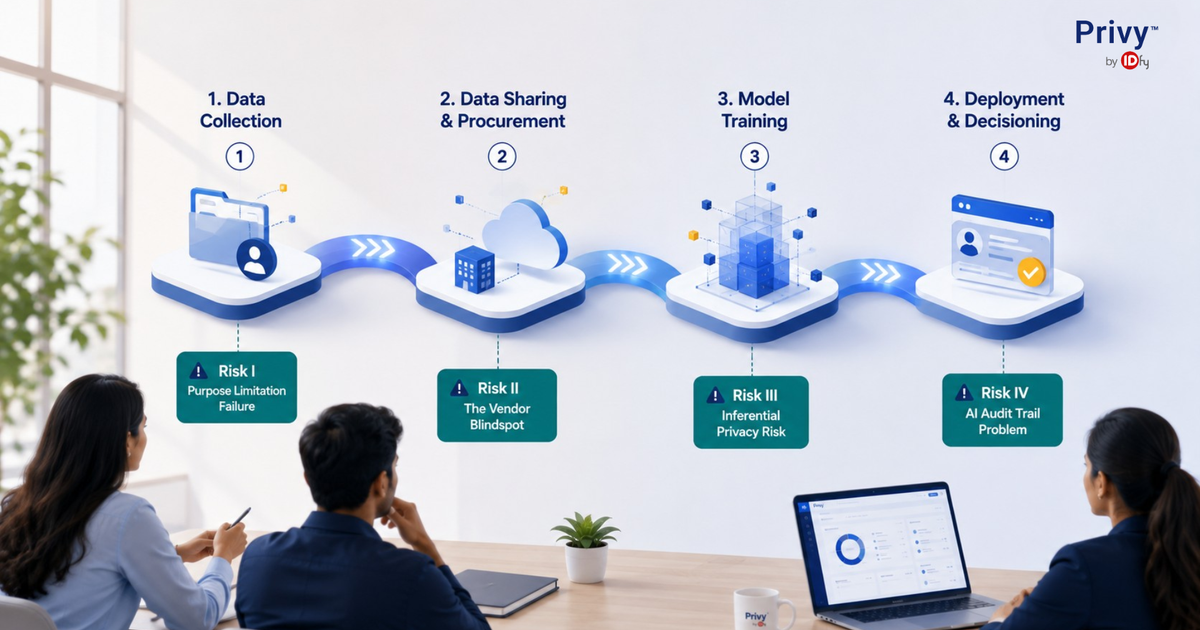
Data Privacy in the AI Era: The Four Risks Indian Corporations Have Already Inherited
Sep 10, 2026




 shivani@idfy.com
 Unit no. 801, Skyline Icon, 804, Andheri - Kurla Rd, Chimatpada, Marol, Andheri East, Mumbai, Maharashtra 400059
 1800 123 4339