

Executive Accountability
Definition
Executive accountability refers to the responsibility of organizational leadership for ensuring effective governance, oversight, and compliance in the handling and protection of personal data.
In the context of the Digital Personal Data Protection Act, 2023 (DPDP Act), executive accountability refers to the responsibility of senior leadership in ensuring that personal data processing activities are governed appropriately and that privacy obligations are integrated into organizational decision-making. While operational teams manage day-to-day privacy activities, executives play a key role in establishing priorities, allocating resources, approving governance frameworks, and ensuring that personal data protection receives appropriate oversight.
Organizations process personal data across multiple functions, including customer operations, marketing, human resources, technology, and third-party services. Without executive ownership, privacy initiatives may become fragmented, with unclear accountability for risks, compliance activities, and remediation efforts. Executive accountability helps ensure that privacy governance is supported at an organizational level through defined responsibilities, appropriate investments, risk oversight, and alignment between business objectives and personal data protection practices.
The DPDP Act places responsibility on Data Fiduciaries for ensuring compliance with obligations related to personal data processing. While the Act does not specifically use the term "executive accountability," leadership oversight supports organizational accountability by ensuring appropriate governance structures, security safeguards, privacy processes, and compliance measures are implemented effectively.
In practice, gaps emerge when:
- Privacy responsibilities are assigned to teams without sufficient leadership oversight.
- Executives lack visibility into personal data risks and compliance status.
- Privacy investments are made reactively after incidents rather than proactively.
- Business decisions involving personal data are taken without privacy considerations.
- Ownership of privacy risks remains unclear across departments.
Organizations strengthen executive accountability by defining privacy ownership, establishing governance committees, reviewing privacy risks regularly, allocating appropriate resources, and maintaining clear reporting mechanisms. Within Privy, capabilities such as privacy dashboards, compliance reporting, risk assessments, governance workflows, data discovery, and audit-ready evidence help organizations provide leadership with visibility into privacy posture and compliance activities.
Questions About Staying in Control?
Here’s everything you need to know about this term and how it fits into your compliance program.
Executive accountability is the responsibility of organizational leadership to provide oversight, direction, and support for protecting personal data and managing privacy risks.
It helps ensure that privacy governance receives appropriate organizational support and that Data Fiduciaries maintain accountability for personal data processing activities.
The DPDP Act does not mandate a specific executive privacy role for all organizations. However, certain obligations and governance requirements may require designated responsibilities depending on the organization's role and applicable provisions.
Executives can support compliance by establishing governance structures, approving privacy policies, reviewing risks, ensuring resources are available, and monitoring privacy performance.
Privy helps organizations provide leadership visibility through compliance dashboards, reporting, governance workflows, privacy assessments, and audit-ready evidence related to personal data processing activities.
Still have a question?
Latest Blog

Sep 30, 2026
RBI NBFC Rules Just Banned Dark Patterns and Fake Consent
Sep 29, 2026
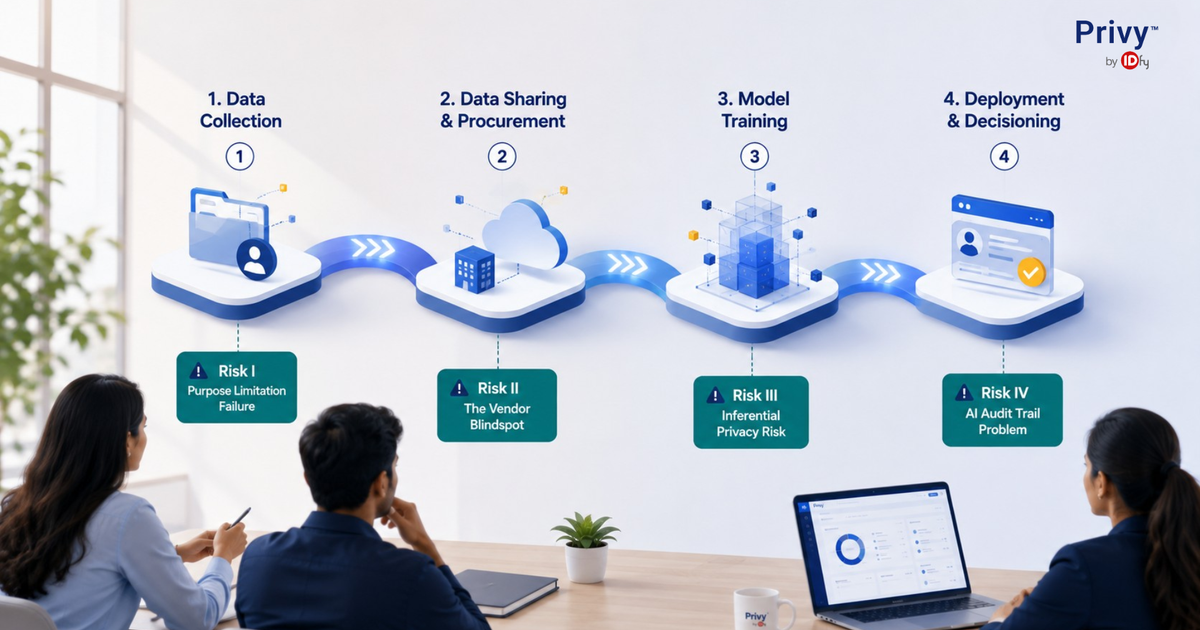
Data Privacy in the AI Era: The Four Risks Indian Corporations Have Already Inherited

Sep 10, 2026




 shivani@idfy.com
 Unit no. 801, Skyline Icon, 804, Andheri - Kurla Rd, Chimatpada, Marol, Andheri East, Mumbai, Maharashtra 400059
 1800 123 4339