

File Classification
Definition
File classification is the process of identifying and categorizing files containing personal data to help Data Fiduciaries understand, manage, and protect information processed under the DPDPA.
Under the Digital Personal Data Protection Act, 2023 (DPDP Act), file classification refers to identifying files that contain personal data and categorizing them based on their content, purpose, and handling requirements. Since personal data may exist across documents, spreadsheets, reports, attachments, and file repositories, classification helps Data Fiduciaries understand where personal data is stored and how it is being processed.
Organizations may process personal data through files containing details such as names, contact information, identity-related information, employment records, customer documents, or other information linked to an identifiable individual. Without proper identification of such files, organizations may have limited visibility into personal data locations, access patterns, retention practices, and potential risks associated with processing activities.
The DPDP Act does not specifically require file classification as a standalone obligation. However, identifying personal data locations supports Data Fiduciaries in fulfilling obligations related to responsible processing, data protection, reasonable security safeguards, and responding effectively to Personal Data Breaches. File classification can help organizations maintain better awareness of personal data assets and apply appropriate privacy controls.
In practice, gaps emerge when:
- Organizations cannot identify which files contain personal data.
- Personal data remains stored in unmanaged file repositories.
- Files containing personal data are shared without proper access controls.
- Old files containing personal data are retained without review.
- Organizations lack visibility into personal data stored outside structured systems.
Organizations address these challenges by identifying files containing personal data, maintaining visibility into personal data locations, assigning ownership, reviewing access, and integrating classification with privacy governance processes. Within Privy, capabilities such as automated data discovery, data classification, data mapping, and governance workflows help organizations identify personal data across environments and support DPDPA compliance activities.
Questions About Staying in Control?
Here’s everything you need to know about this term and how it fits into your compliance program.
File classification under the DPDPA context is the process of identifying files that contain personal data and categorizing them to improve visibility and management of personal data processing.
No. The DPDP Act does not specifically require file classification. However, identifying where personal data exists can help Data Fiduciaries implement appropriate safeguards and maintain accountability.
File classification helps Data Fiduciaries understand where personal data is stored, support data governance activities, reduce risks of unauthorized access, and respond better to privacy incidents.
By identifying files containing personal data, organizations can more effectively determine what information may have been affected during a Personal Data Breach.
Privy helps organizations discover and classify personal data across environments, enabling better visibility into personal data locations and supporting privacy governance under the DPDPA.
Still have a question?
Latest Blog

Sep 30, 2026
RBI NBFC Rules Just Banned Dark Patterns and Fake Consent
Sep 29, 2026
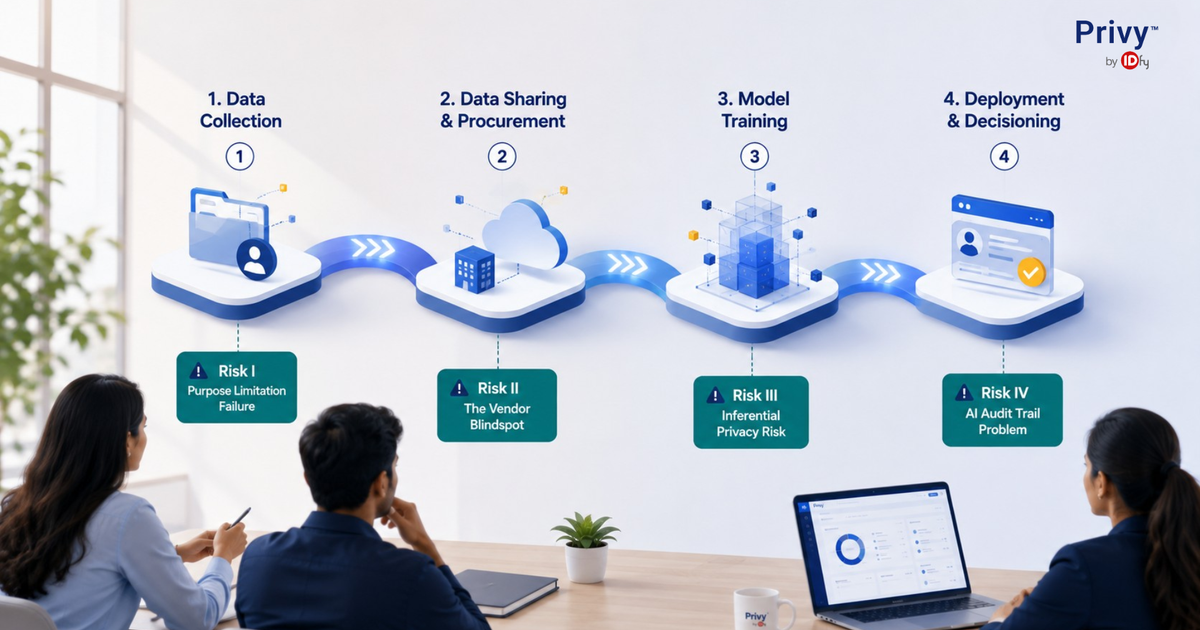
Data Privacy in the AI Era: The Four Risks Indian Corporations Have Already Inherited

Sep 10, 2026




 shivani@idfy.com
 Unit no. 801, Skyline Icon, 804, Andheri - Kurla Rd, Chimatpada, Marol, Andheri East, Mumbai, Maharashtra 400059
 1800 123 4339