

Financial Data Protection
Definition
Financial data protection refers to the measures used to safeguard financial personal data from unauthorized access, misuse, disclosure, or breaches while ensuring compliance with applicable privacy obligations.
In the context of the Digital Personal Data Protection Act, 2023 (DPDP Act), financial data protection refers to protecting personal data related to an individual's financial information, such as account details, transaction information, payment-related data, and other financial records that may identify or relate to a Data Principal. Organizations handling such information must ensure that financial personal data is processed securely, transparently, and only for appropriate purposes.
Financial institutions, fintech platforms, payment service providers, lending platforms, insurance companies, and other businesses process large volumes of financial personal data across applications, databases, analytics platforms, and third-party systems. Effective financial data protection requires organizations to understand where financial data exists, who can access it, how it flows across systems, and whether appropriate safeguards are implemented to reduce risks of unauthorized disclosure or misuse.
The DPDP Act does not create a separate category called "financial data" or prescribe financial data-specific controls. However, financial information may constitute personal data when it relates to an identifiable individual. Organizations acting as Data Fiduciaries must comply with obligations under the Act, including providing appropriate notices, processing personal data lawfully, implementing reasonable security safeguards, and protecting personal data from Personal Data Breaches.
In practice, gaps emerge when:
- Financial personal data is stored across multiple systems without complete visibility.
- Organizations cannot identify all applications and vendors accessing financial information.
- Access permissions allow unnecessary users to view financial records.
- Historical financial data is retained longer than required for business purposes.
- Financial data flows between internal teams and third parties are not properly mapped.
Organizations strengthen financial data protection by maintaining accurate data inventories, classifying financial information, implementing access controls, monitoring data flows, applying retention policies, and maintaining security safeguards. Within Privy, capabilities such as automated data discovery, data classification, data mapping, privacy workflows, governance automation, and audit-ready reporting help organizations identify and manage financial personal data across their ecosystem.
Questions About Staying in Control?
Here’s everything you need to know about this term and how it fits into your compliance program.
Financial data protection refers to the practices and controls used to safeguard financial information that relates to individuals from unauthorized access, misuse, or disclosure.
Financial information may be considered personal data under the DPDP Act if it relates to an identifiable individual.
No. The DPDP Act does not create separate financial data protection rules, but organizations processing financial personal data must comply with applicable obligations under the Act.
Financial information can create significant risks if exposed or misused. Protecting it helps organizations reduce breach risks and maintain trust with Data Principals.
Privy helps organizations discover, classify, and map personal data across systems, enabling better visibility into financial information processing and supporting privacy governance activities.
Still have a question?
Latest Blog

Sep 30, 2026
RBI NBFC Rules Just Banned Dark Patterns and Fake Consent
Sep 29, 2026
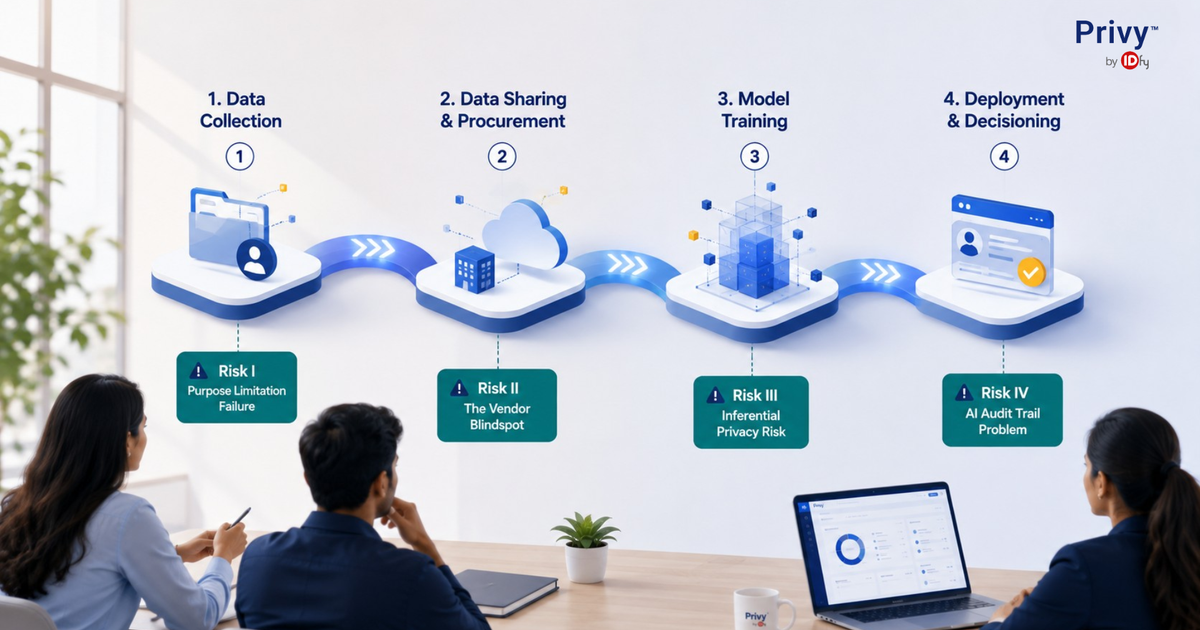
Data Privacy in the AI Era: The Four Risks Indian Corporations Have Already Inherited
Sep 10, 2026




 shivani@idfy.com
 Unit no. 801, Skyline Icon, 804, Andheri - Kurla Rd, Chimatpada, Marol, Andheri East, Mumbai, Maharashtra 400059
 1800 123 4339