
Full Stack Transformation
Definition
Full stack transformation refers to a comprehensive approach to modernizing privacy, data governance, and technology processes across systems, teams, and workflows handling personal data.
In the context of the Digital Personal Data Protection Act, 2023 (DPDP Act), full stack transformation refers to an organization-wide approach where privacy, governance, security, and data management capabilities are improved across the entire personal data lifecycle. Instead of addressing individual compliance activities separately, organizations transform processes, technologies, and operating models together to create a more connected approach to managing personal data.
Organizations today process personal data across applications, cloud platforms, databases, analytics environments, business operations, and third-party ecosystems. A full stack transformation approach helps organizations build visibility across these environments by connecting data discovery, classification, mapping, consent management, privacy operations, security controls, and governance processes. This enables teams to manage personal data more consistently while adapting to evolving business and regulatory requirements.
The DPDP Act does not define or require full stack transformation as a specific obligation. However, organizations acting as Data Fiduciaries need to implement processes that support lawful processing, transparency, security safeguards, and accountability for personal data handling. A comprehensive transformation approach can help organizations operationalize these obligations by integrating privacy into business processes, technology environments, and governance structures.
In practice, gaps emerge when:
- Privacy activities are managed through disconnected tools and manual processes.
- Organizations lack visibility into personal data across their technology ecosystem.
- Data governance, security, and privacy teams operate without shared workflows.
- New systems and applications are introduced without privacy considerations.
- Compliance efforts focus on documentation rather than operational implementation.
Organizations address these challenges by creating integrated privacy and data governance programs, connecting technology capabilities with business processes, automating workflows, and establishing clear ownership across teams. Within Privy, capabilities such as automated data discovery, data classification, data mapping, consent management, privacy workflows, assessments, and audit-ready reporting help organizations build scalable privacy operations aligned with DPDP requirements.
Questions About Staying in Control?
Here’s everything you need to know about this term and how it fits into your compliance program.
Full stack transformation is an organization-wide approach to improving processes, technologies, and governance practices across the complete lifecycle of data management and privacy operations.
It helps organizations operationalize DPDP obligations by integrating privacy controls, governance processes, and data management practices across systems and teams.
No. The DPDP Act does not require full stack transformation. It is an approach organizations may adopt to improve privacy maturity and compliance management.
It may include data discovery, classification, consent management, data mapping, governance workflows, security controls, privacy assessments, and compliance reporting.
Privy helps organizations modernize privacy operations through capabilities such as data discovery, classification, mapping, consent workflows, governance automation, and audit-ready compliance reporting.
Still have a question?
Latest Blog

Sep 30, 2026
RBI NBFC Rules Just Banned Dark Patterns and Fake Consent
Sep 29, 2026
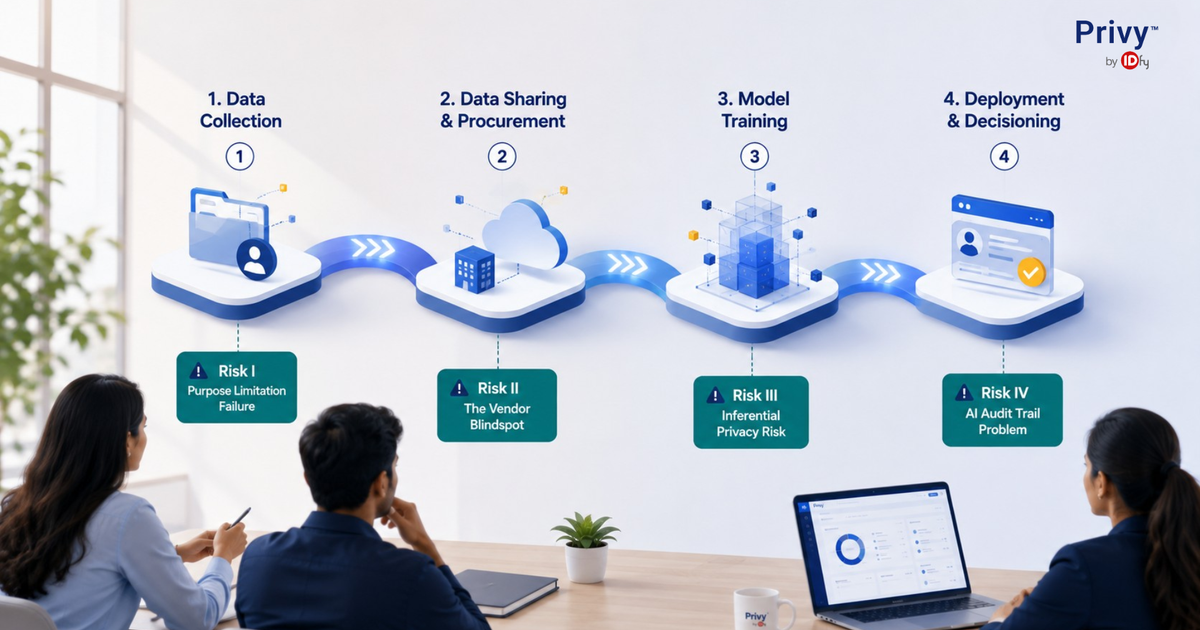
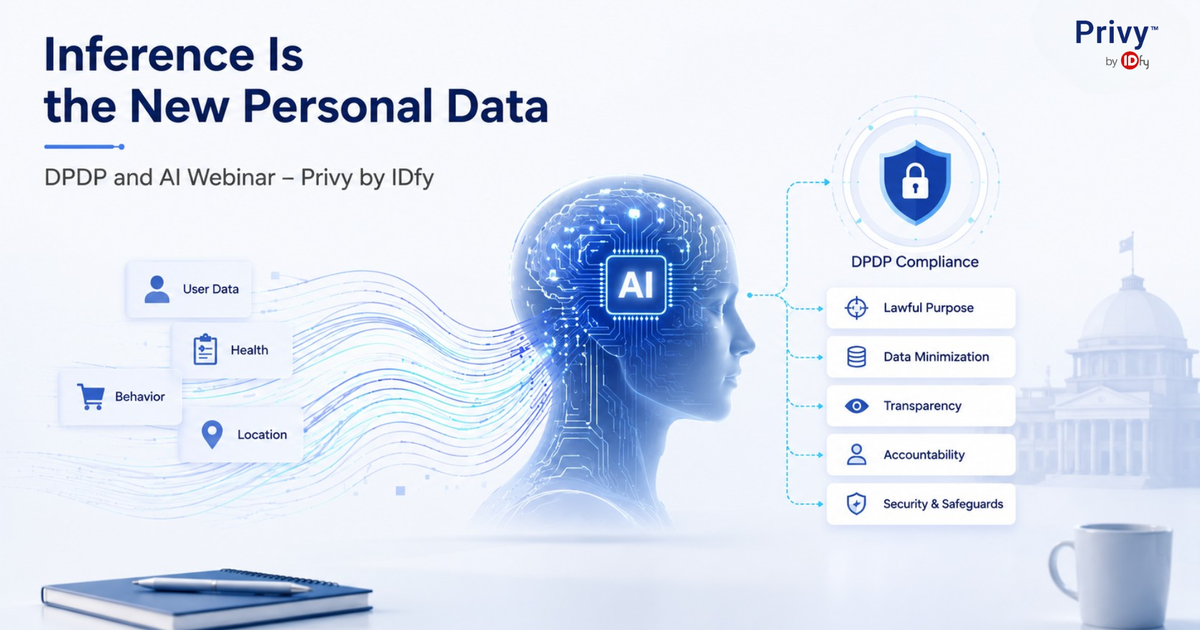
Data Privacy in the AI Era: The Four Risks Indian Corporations Have Already Inherited
Sep 10, 2026




 shivani@idfy.com
 Unit no. 801, Skyline Icon, 804, Andheri - Kurla Rd, Chimatpada, Marol, Andheri East, Mumbai, Maharashtra 400059
 1800 123 4339