

Liveness Detection
Definition
Liveness detection is a technology used to verify whether an individual is physically present during identity verification while processing personal data under the DPDPA.
Under the Digital Personal Data Protection Act, 2023 (DPDP Act), liveness detection refers to a verification technique used during identity-related processes to determine whether the individual being verified is a real, live person rather than a photograph, recording, or artificial representation. When liveness detection involves processing information that identifies an individual, it may involve the processing of personal data by a Data Fiduciary or Data Processor.
Organizations may use liveness detection during digital identity verification, onboarding, authentication, or access processes. Since such systems may process personal data, organizations need to ensure that the processing purpose is clearly communicated, appropriate consent or another valid basis for processing is established where required, and reasonable security safeguards are implemented to protect the information collected.
The DPDP Act does not specifically define liveness detection or prescribe its use for identity verification. However, if liveness detection involves processing digital personal data, organizations must comply with applicable DPDPA obligations, including providing appropriate Notice, ensuring lawful processing, protecting personal data through reasonable security safeguards, and managing Data Processor relationships where third parties provide verification services.
In practice, gaps emerge when:
- Organizations use liveness detection without clearly informing individuals about the processing purpose.
- Identity verification data is collected beyond what is necessary.
- Third-party verification providers process personal data without adequate oversight.
- Organizations cannot identify what personal data is captured during verification.
- Retention and deletion practices for verification data are unclear.
Organizations address these challenges by defining verification purposes, minimizing data collection, maintaining transparency through notices, managing Data Processor relationships, applying security safeguards, and establishing retention practices. Within Privy, capabilities such as consent management, data discovery, data mapping, privacy workflows, and compliance reporting help organizations maintain visibility into personal data processing activities.
Questions About Staying in Control?
Here’s everything you need to know about this term and how it fits into your compliance program.
Liveness detection is a verification method used to confirm that an individual is physically present during an identity verification process, where such processing may involve personal data.
No. The DPDP Act does not mandate liveness detection. Organizations may use such technologies based on their processing requirements while complying with applicable obligations.
It may be considered personal data if the information processed relates to an identifiable individual.
Organizations must ensure lawful processing, provide appropriate notices, implement reasonable security safeguards, and manage third-party processing appropriately.
Privy helps organizations understand personal data processing through capabilities such as data discovery, data mapping, consent workflows, and privacy governance tools.
Still have a question?
Latest Blog

Sep 30, 2026
RBI NBFC Rules Just Banned Dark Patterns and Fake Consent
Sep 29, 2026
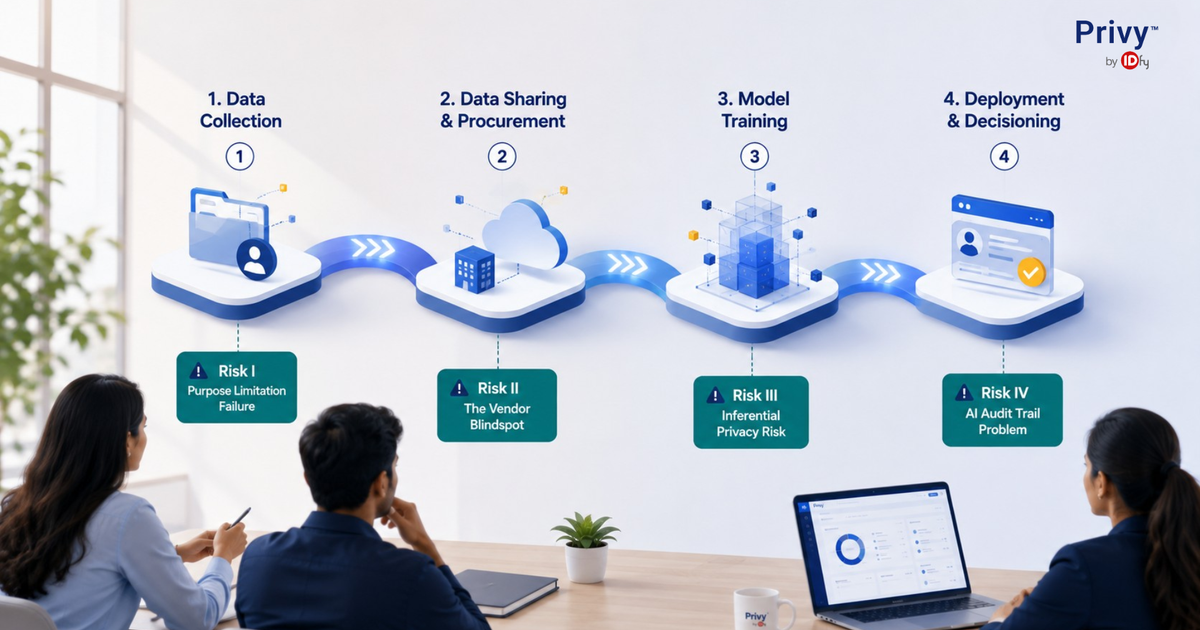
Data Privacy in the AI Era: The Four Risks Indian Corporations Have Already Inherited
Sep 10, 2026




 shivani@idfy.com
 Unit no. 801, Skyline Icon, 804, Andheri - Kurla Rd, Chimatpada, Marol, Andheri East, Mumbai, Maharashtra 400059
 1800 123 4339