

Real-time Data Discovery
Definition
Real-time data discovery enables organizations to continuously identify, locate, and understand personal data across systems to support DPDP compliance.
Under the DPDP Act, real-time data discovery refers to the ability of organizations to continuously identify and track where personal data exists across their digital environments. It helps Data Fiduciaries maintain visibility into personal data being collected, stored, processed, and shared across systems.
Real-time data discovery supports key privacy operations such as data mapping, responding to Data Principal Rights requests, managing Personal Data Breaches, and maintaining accountability for personal data processing. By having updated visibility into data locations and flows, organizations can better understand what personal data they hold and apply appropriate governance controls.
While the DPDP Act does not specifically require real-time data discovery, maintaining visibility into personal data helps organizations meet obligations related to security safeguards, transparency, data governance, and responsible processing.
In practice, gaps emerge when:
- Organizations do not know where personal data exists across systems.
- New data sources are added without privacy visibility.
- Personal data cannot be quickly identified during breach investigations.
- Data Principal requests require manual searches across multiple systems.
- Data inventories become outdated over time.
Organizations address these challenges by implementing automated data discovery, maintaining data inventories, mapping data flows, and continuously monitoring personal data environments. Within Privy, capabilities such as data discovery, data classification, data mapping, and privacy workflows help organizations maintain visibility into personal data processing.
Questions About Staying in Control?
Here’s everything you need to know about this term and how it fits into your compliance program.
Real-time data discovery is the continuous identification and tracking of personal data across systems to support privacy governance.
The DPDP Act does not specifically mandate real-time data discovery, but maintaining visibility into personal data helps organizations meet compliance obligations
It helps organizations understand what personal data they process, where it exists, and how it is managed.
It helps organizations quickly identify affected personal data and understand the impact of a breach.
Privy helps organizations discover, classify, and map personal data to improve visibility and support privacy governance.
Still have a question?
Latest Blog

Sep 30, 2026
RBI NBFC Rules Just Banned Dark Patterns and Fake Consent
Sep 29, 2026
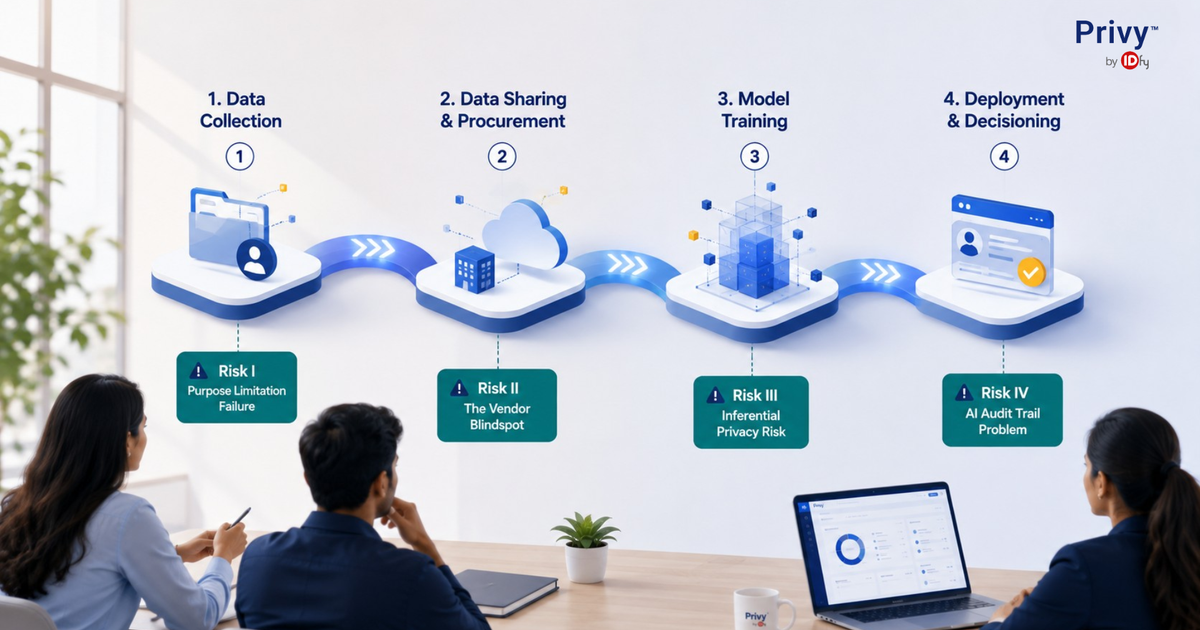
Data Privacy in the AI Era: The Four Risks Indian Corporations Have Already Inherited
Sep 10, 2026




 shivani@idfy.com
 Unit no. 801, Skyline Icon, 804, Andheri - Kurla Rd, Chimatpada, Marol, Andheri East, Mumbai, Maharashtra 400059
 1800 123 4339