
Blanket Consent
Definition
Consent given in broad terms without a specific purpose, scope, or clear user understanding.
Blanket consent refers to a form of user agreement where individuals allow data processing in a general manner without clear visibility into what data is collected, why it is collected, or how it will be used. Instead of being tied to specific purposes, it is applied across multiple processing activities under a single, non-granular approval.
Modern privacy frameworks require consent to be specific, informed, and purpose bound. Under the Digital Personal Data Protection Act, 2023, consent must clearly define the purpose of data processing and cannot be bundled across unrelated activities. Blanket consent therefore creates a structural gap between user expectation and actual data usage, making it difficult to ensure lawful and transparent processing.
In practice, gaps emerge when:
- A single consent covers multiple unrelated data processing activities
- Users are not informed of specific purposes or downstream usage
- Consent is embedded in long, generic terms without granular choice
- There is no traceability between consent and actual data processing events
To address this, organizations adopt purpose specific consent models where each data use is clearly defined, separately captured, and enforced across systems. Within Privy, this is supported through consent lifecycle management and audit trails, ensuring consent is traceable, enforceable, and aligned with actual data usage.
Questions About Staying in Control?
Here’s everything you need to know about this term and how it fits into your compliance program.
Because it does not clearly define specific purposes for which data is collected or processed, making consent non-specific and non-informed.
It creates a mismatch between user expectations and actual data usage, increasing regulatory and compliance exposure.
When consent is bundled across multiple unrelated processing activities without clear purpose-level separation.
Because it cannot demonstrate purpose-specific consent for each data processing activity, making compliance difficult to prove.
Valid consent is purpose-specific and informed, while blanket consent is broad and lacks clarity on how data will be used.
Still have a question?
Latest Blog

Sep 30, 2026
RBI NBFC Rules Just Banned Dark Patterns and Fake Consent
Sep 29, 2026
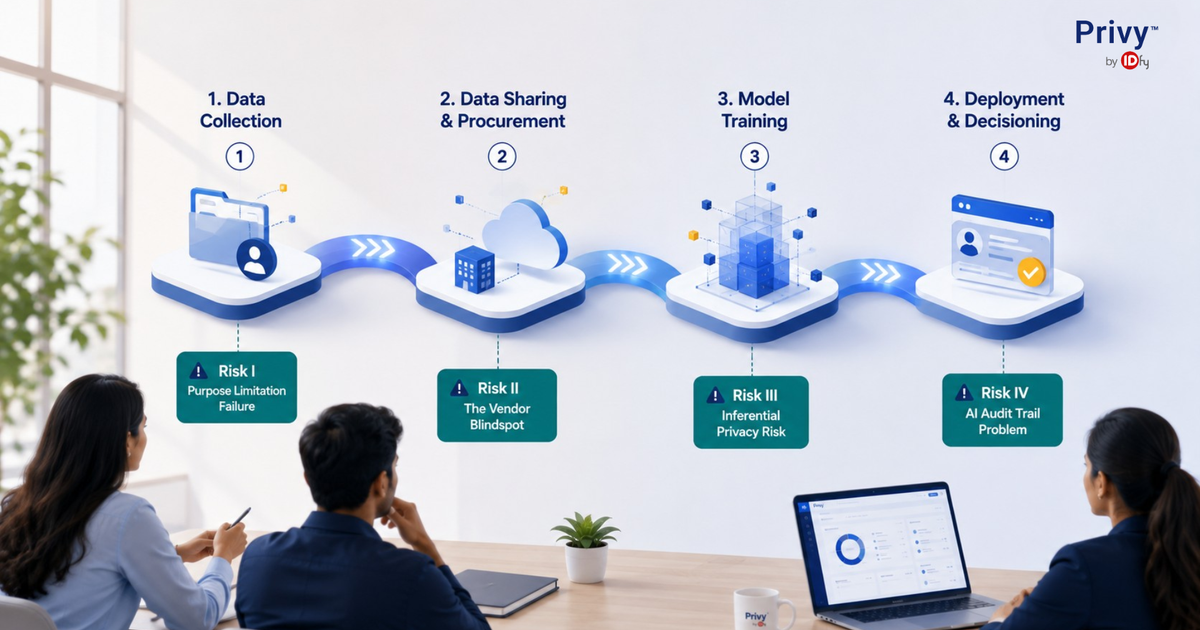
Data Privacy in the AI Era: The Four Risks Indian Corporations Have Already Inherited
Sep 10, 2026




 shivani@idfy.com
 Unit no. 801, Skyline Icon, 804, Andheri - Kurla Rd, Chimatpada, Marol, Andheri East, Mumbai, Maharashtra 400059
 1800 123 4339