

Breach Severity Classification
Definition
Breach severity classification is the process of categorizing data breaches based on impact, risk level, and sensitivity of affected data.
Breach severity classification helps organizations assess the seriousness of a security incident by evaluating factors such as the type of data exposed, scale of impact, affected systems, regulatory exposure, and potential harm to individuals or business operations. It enables organizations to prioritize response efforts, allocate resources effectively, and determine escalation and notification requirements.
As organizations manage complex digital environments across cloud systems, vendors, applications, and data flows, incidents can vary significantly in scope and impact. A structured severity classification framework helps ensure that breaches are evaluated consistently and that critical incidents receive immediate attention and governance oversight.
In the context of the Digital Personal Data Protection Act, 2023, organizations are expected to respond appropriately to personal data breaches, maintain records of incidents, and demonstrate accountability around how risks and impacts were assessed.
In practice, gaps emerge when:
- Organizations classify incidents inconsistently across teams or systems.
- Severity assessment focuses only on technical impact without considering data sensitivity.
- Critical incidents are delayed due to unclear escalation thresholds.
- Breach classification is disconnected from notification and response workflows.
To address this, organizations implement standardized severity frameworks that connect incident assessment with containment, investigation, escalation, notification, and remediation processes. This ensures that response actions are proportionate, traceable, and aligned with regulatory obligations. Within Privy, this is supported through capabilities such as incident workflows, audit trails, governance visibility, and data mapping, enabling organizations to operationalize breach classification with greater consistency and control.
Questions About Staying in Control?
Here’s everything you need to know about this term and how it fits into your compliance program.
It helps organizations prioritize incidents, allocate resources effectively, and ensure that high-impact breaches receive immediate attention.
The sensitivity of affected data, scale of exposure, operational impact, regulatory risk, and potential harm to individuals.
Maintaining consistent assessment standards across technical, legal, compliance, and operational teams.
Because incidents involving sensitive personal data may require faster escalation, stronger remediation, and regulatory notification.
Through standardized classification frameworks integrated with incident response, escalation, and governance workflows.
Still have a question?
Latest Blog
Sep 30, 2026
RBI NBFC Rules Just Banned Dark Patterns and Fake Consent
Sep 29, 2026
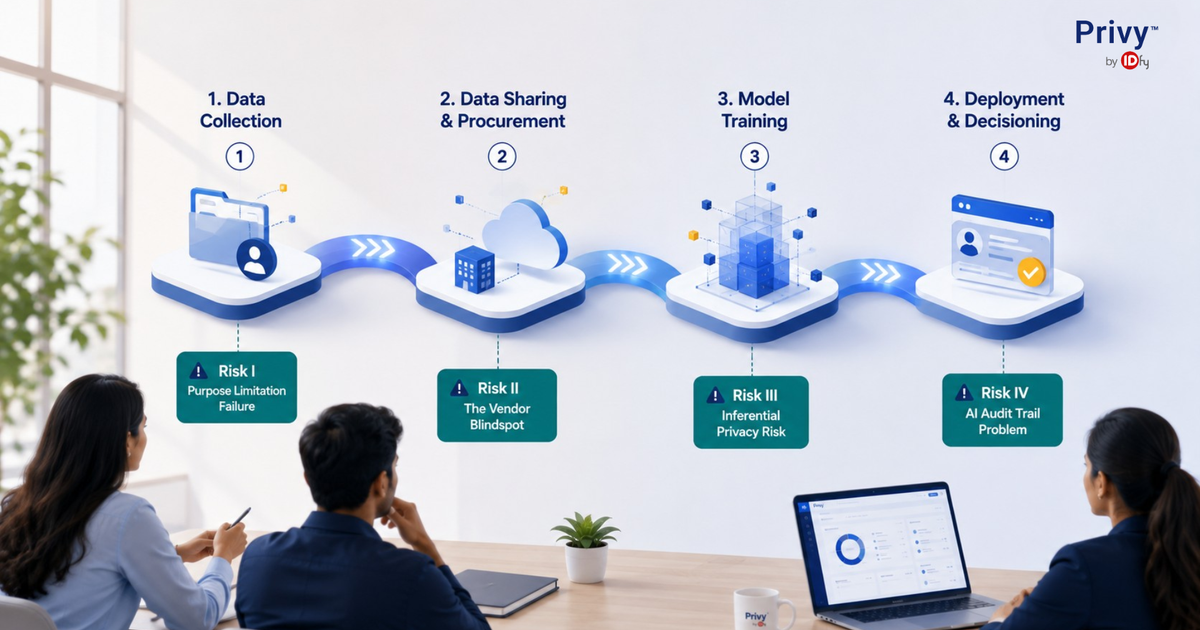
Data Privacy in the AI Era: The Four Risks Indian Corporations Have Already Inherited
Sep 10, 2026




 shivani@idfy.com
 Unit no. 801, Skyline Icon, 804, Andheri - Kurla Rd, Chimatpada, Marol, Andheri East, Mumbai, Maharashtra 400059
 1800 123 4339