
Business Process
Definition
A business process is a structured sequence of activities designed to achieve specific organizational goals and operational outcomes.
A business process defines how tasks, decisions, systems, and teams interact to execute organizational activities such as customer onboarding, service delivery, compliance operations, vendor management, or data handling workflows. These processes help organizations standardize operations, improve efficiency, and ensure consistency across business functions.
As organizations become increasingly digital and data-driven, business processes now operate across interconnected systems, cloud environments, third-party platforms, and automated workflows. This creates operational and governance challenges around how personal data is collected, accessed, shared, retained, and monitored throughout the process lifecycle.
In the context of the Digital Personal Data Protection Act, 2023, organizations are expected to ensure that business processes involving personal data operate within defined purposes, lawful processing requirements, and accountable governance frameworks.
In practice, gaps emerge when:
- Business processes operate without visibility into personal data flows.
- Teams manage processes differently across systems or departments.
- Data handling activities are not aligned with consent or purpose limitations.
- Manual workflows create inconsistencies, delays, or audit gaps.
To address this, organizations implement process governance mechanisms that connect workflows with data visibility, access controls, consent management, and auditability. This ensures that business processes remain operationally efficient while supporting privacy, security, and compliance requirements. Within Privy, this is supported through capabilities such as data mapping, consent lifecycle management, audit trails, and governance visibility, enabling organizations to operationalize business processes with greater control and accountability.
Questions About Staying in Control?
Here’s everything you need to know about this term and how it fits into your compliance program.
Because business processes determine how personal data is collected, accessed, shared, stored, and governed across the organization.
Lack of visibility into how personal data moves across systems, teams, and operational workflows.
Manual workflows increase inconsistency, reduce traceability, and make it difficult to enforce standardized controls or maintain audit readiness.
Processes involving personal data must align with consent, purpose limitation, retention, access governance, and accountability requirements.
By integrating workflows with data mapping, access controls, monitoring, and auditable governance mechanisms.
Still have a question?
Latest Blog
Sep 30, 2026
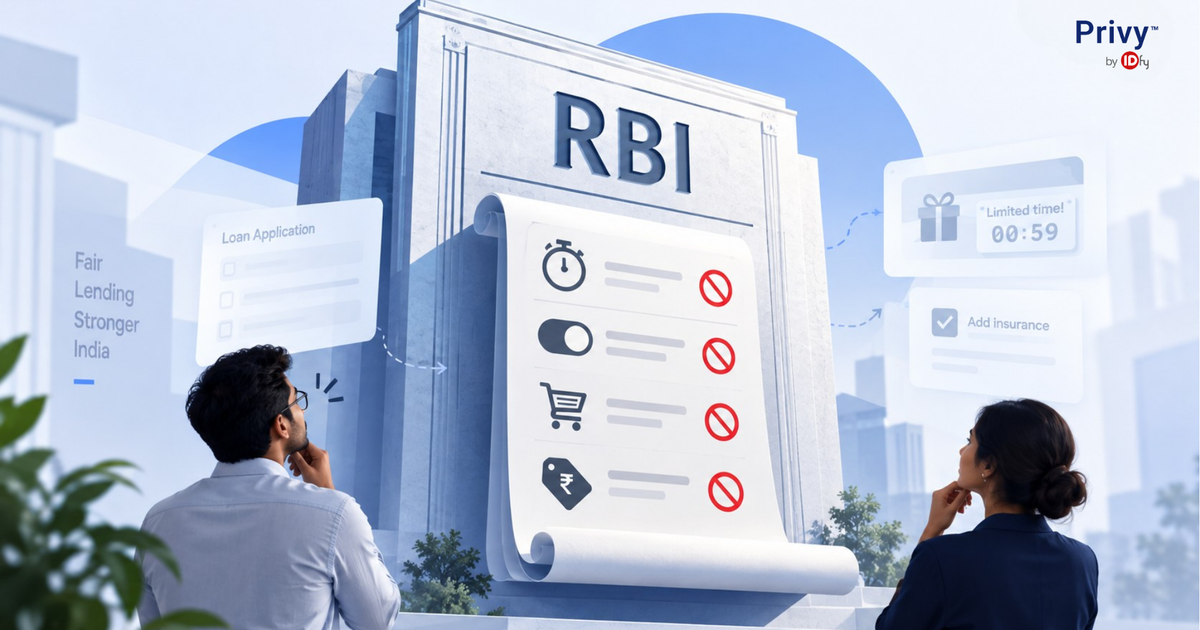
RBI NBFC Rules Just Banned Dark Patterns and Fake Consent
Sep 29, 2026
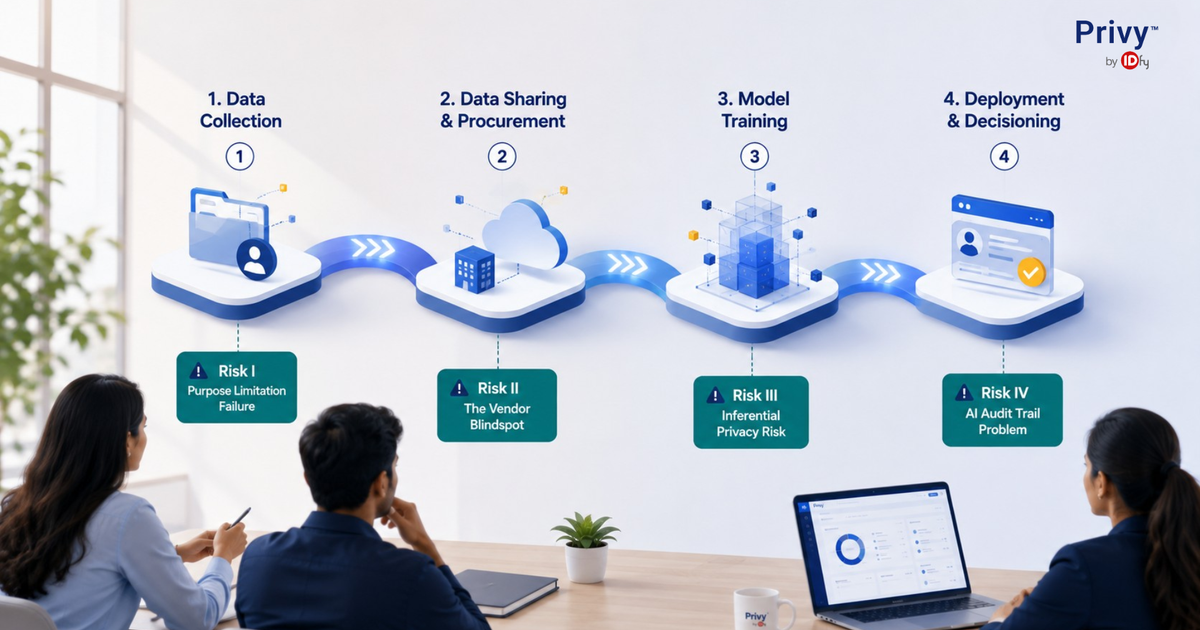
Data Privacy in the AI Era: The Four Risks Indian Corporations Have Already Inherited
Sep 10, 2026




 shivani@idfy.com
 Unit no. 801, Skyline Icon, 804, Andheri - Kurla Rd, Chimatpada, Marol, Andheri East, Mumbai, Maharashtra 400059
 1800 123 4339