
Business Purpose Limitation
Definition
Business purpose limitation is the principle that personal data should only be collected, used, and processed for specific, clearly defined, and legitimate business purposes.
Business purpose limitation defines the boundaries within which personal data can be collected and processed. It ensures that organizations use data only for the purpose originally communicated to the individual, preventing unauthorized reuse, excessive processing, or function creep across systems and teams.
As organizations expand across digital products, analytics platforms, vendors, and AI driven workflows, personal data often moves beyond its original business context. Purpose limitation helps ensure that every data processing activity remains tied to a defined, lawful, and traceable business objective.
In the context of the Digital Personal Data Protection Act, 2023, organizations are expected to process personal data only for purposes that are specific, consented to, and necessary for the intended service or business function.
In practice, gaps emerge when:
- Data collected for one purpose is reused for unrelated activities.
- Consent records are not connected to downstream data processing.
- Purpose definitions remain broad or unclear across systems.
- New business use cases are introduced without reassessing lawful usage.
To address this, organizations implement governance mechanisms that connect consent, data flows, access controls, and processing activities to clearly defined business purposes. This ensures that data usage remains aligned with the original intent throughout the data lifecycle. Within Privy, this is supported through capabilities such as consent lifecycle management, data mapping, audit trails, and governance visibility, enabling organizations to operationalize purpose limitation with greater transparency and control.
Questions About Staying in Control?
Here’s everything you need to know about this term and how it fits into your compliance program.
It ensures that personal data is not used beyond the reason for which it was originally collected, reducing misuse and compliance risk.
Unauthorized reuse of personal data across systems, teams, or business functions without valid consent or lawful basis.
Organizations must ensure that data used for analytics or AI remains aligned with the purposes originally communicated to users.
Because data often moves across disconnected systems without consistent visibility into consent context or intended usage.
By linking consent, data classification, access governance, and processing activities to clearly defined business purposes across systems.
Still have a question?
Latest Blog
Sep 30, 2026
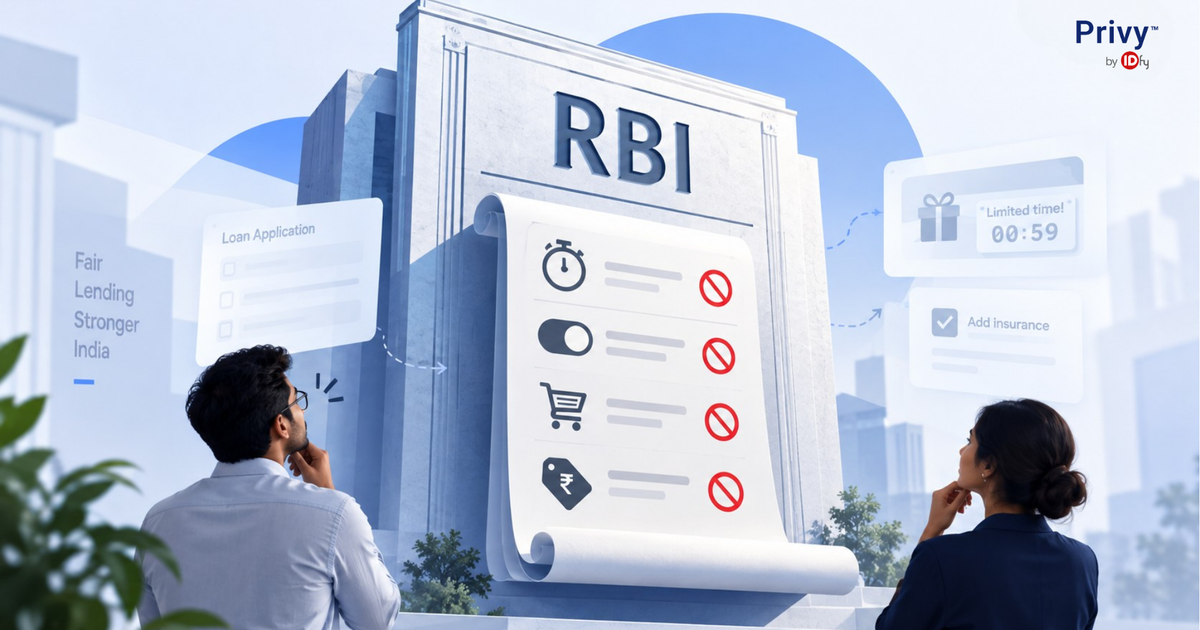
RBI NBFC Rules Just Banned Dark Patterns and Fake Consent
Sep 29, 2026
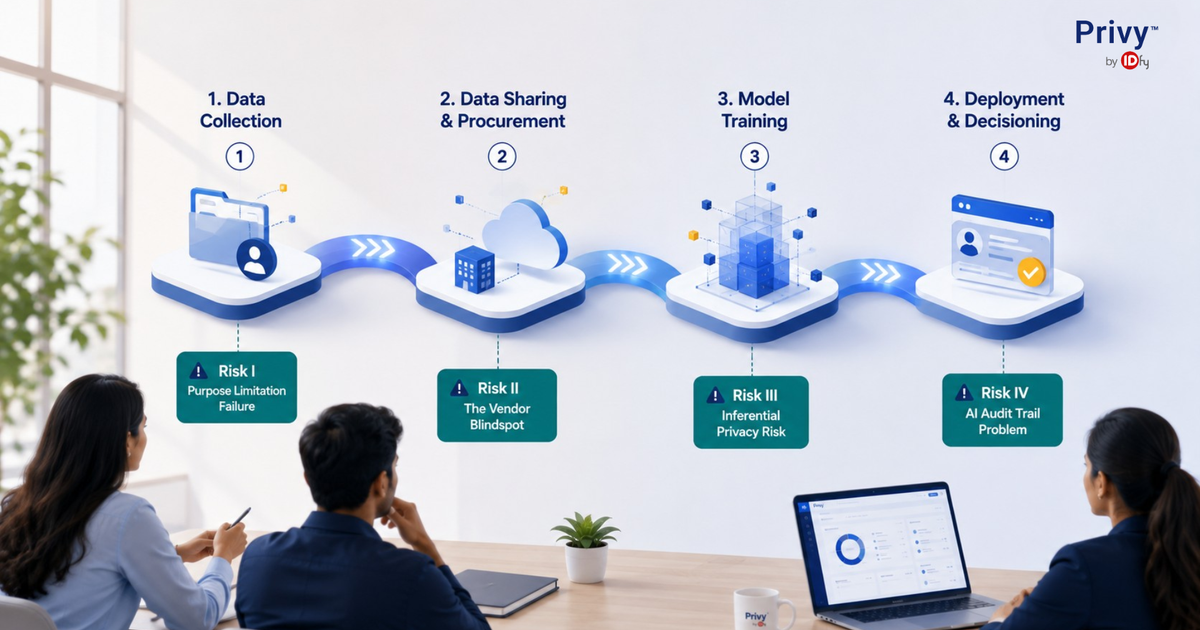
Data Privacy in the AI Era: The Four Risks Indian Corporations Have Already Inherited
Sep 10, 2026




 shivani@idfy.com
 Unit no. 801, Skyline Icon, 804, Andheri - Kurla Rd, Chimatpada, Marol, Andheri East, Mumbai, Maharashtra 400059
 1800 123 4339