

EDR (Endpoint Detection and Response)
Definition
Endpoint Detection and Response (EDR) is a security capability that continuously monitors endpoint devices to detect, investigate, and respond to threats that could compromise personal data and lead to a Personal Data Breach.
In the context of the Digital Personal Data Protection Act, 2023 (DPDP Act), Endpoint Detection and Response (EDR) is a security capability that helps organizations monitor endpoint devices—such as employee laptops, desktops, and managed mobile devices—for suspicious activities that may affect the confidentiality, integrity, or availability of personal data. EDR solutions collect endpoint telemetry, detect malicious behaviour, generate alerts, and support investigation and response to security incidents before they escalate into significant data breaches.
Organizations processing personal data often rely on endpoints for customer onboarding, employee operations, consent management, identity verification, and access to business applications. If an endpoint is compromised through malware, ransomware, credential theft, or unauthorized access, personal data stored or accessed through that device may be exposed. EDR helps security teams identify compromised endpoints, isolate affected devices, investigate attack activity, understand the scope of the incident, and support timely remediation while minimizing the impact on personal data.
The DPDP Act does not require organizations to deploy EDR solutions or any specific cybersecurity technology. However, it requires Data Fiduciaries to implement reasonable security safeguards to protect personal data and respond appropriately to Personal Data Breaches. Depending on the organization's risk profile, EDR may form part of those safeguards by improving endpoint visibility, accelerating incident detection, and supporting forensic investigations and breach response activities.
In practice, gaps emerge when:
- Endpoint threats remain undetected until after personal data has been compromised.
- Security teams cannot identify which endpoint accessed or exposed personal data.
- Compromised devices continue communicating with enterprise systems because they are not isolated promptly.
- Endpoint alerts are generated but not correlated with systems containing personal data.
- Incident investigations lack endpoint evidence needed to determine the scope of a Personal Data Breach.
Organizations strengthen endpoint resilience by continuously monitoring managed devices, integrating endpoint telemetry with incident response processes, maintaining forensic evidence, and prioritizing investigations involving systems processing personal data. Within Privy, capabilities such as automated data discovery, data classification, data mapping, governance workflows, and breach management help organizations identify affected personal data, complementing security technologies like EDR to improve privacy governance and support DPDP compliance.
Questions About Staying in Control?
Here’s everything you need to know about this term and how it fits into your compliance program.
EDR is a security capability that continuously monitors endpoint devices, detects suspicious activities, supports investigations, and helps organizations respond to cybersecurity incidents.
EDR enables organizations to detect compromised endpoint devices quickly, investigate potential threats, and reduce the likelihood of unauthorized access to personal data.
No. The DPDP Act does not mandate the use of EDR. However, EDR can support the implementation of reasonable security safeguards required to protect personal data.
EDR helps identify affected endpoints, reconstruct attack activity, preserve evidence, isolate compromised devices, and support investigations into incidents involving personal data.
While EDR detects and responds to endpoint threats, Privy helps organizations discover where personal data resides, classify sensitive information, map data flows, manage governance workflows, and support breach investigations with greater visibility into affected personal data.
Still have a question?
Latest Blog

Sep 30, 2026
RBI NBFC Rules Just Banned Dark Patterns and Fake Consent
Sep 29, 2026
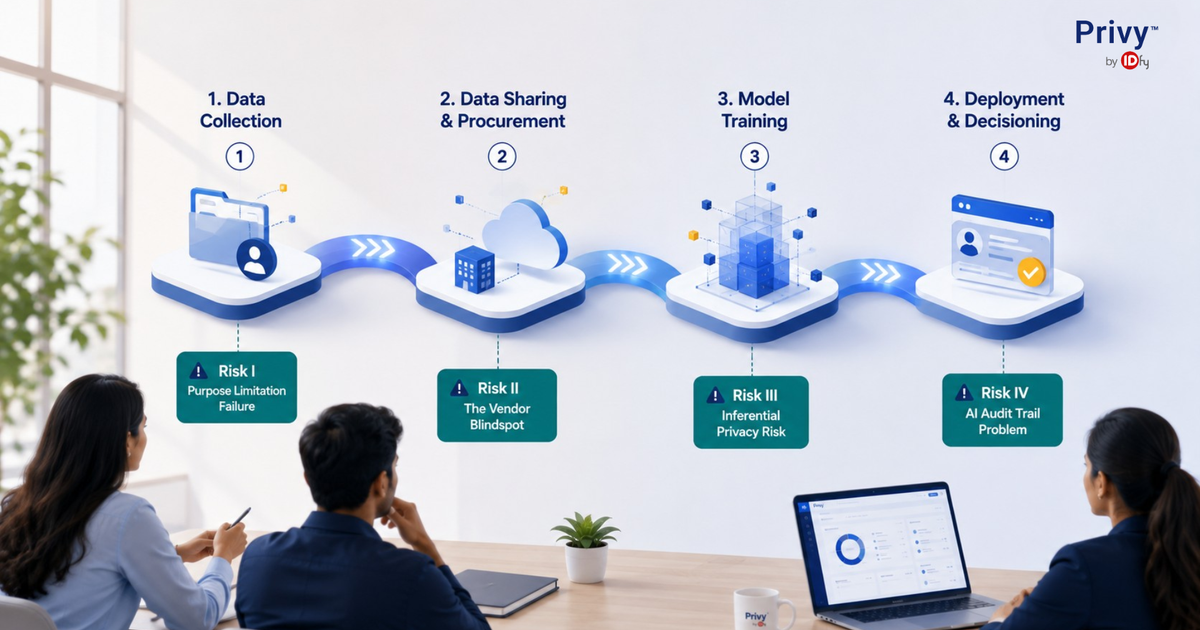
Data Privacy in the AI Era: The Four Risks Indian Corporations Have Already Inherited

Sep 10, 2026




 shivani@idfy.com
 Unit no. 801, Skyline Icon, 804, Andheri - Kurla Rd, Chimatpada, Marol, Andheri East, Mumbai, Maharashtra 400059
 1800 123 4339