

Exposure Management
Definition
Exposure management is the continuous process of identifying, assessing, prioritizing, and reducing risks that may expose personal data to unauthorized access, misuse, or Personal Data Breaches.
In the context of the Digital Personal Data Protection Act, 2023 (DPDP Act), exposure management refers to the practice of identifying and addressing conditions that may put personal data at risk of unauthorized access, disclosure, alteration, or misuse. It involves understanding where personal data exists, how it is accessed, what systems and users interact with it, and whether existing safeguards adequately reduce privacy and security risks.
Organizations process personal data across applications, databases, cloud platforms, endpoints, third-party systems, and operational workflows. Exposure can occur due to excessive access permissions, misconfigured systems, unmanaged data stores, outdated security controls, unnecessary data retention, or unknown data flows. Exposure management helps organizations continuously identify these risks, prioritize remediation based on impact, and strengthen controls around personal data throughout its lifecycle.
The DPDP Act does not specifically define or require exposure management as a standalone obligation. However, it aligns with the Act's requirement for Data Fiduciaries to implement reasonable security safeguards to protect personal data from Personal Data Breaches. Exposure management supports these obligations by helping organizations identify vulnerabilities, improve visibility into personal data processing activities, strengthen accountability, and take proactive measures to reduce risks before incidents occur.
In practice, gaps emerge when:
- Organizations do not have visibility into all locations where personal data is stored or processed.
- Excessive user or system access permissions remain unnoticed for long periods.
- Unknown applications or data stores process personal data without governance oversight.
- Security and privacy teams assess risks separately without understanding data exposure.
- Remediation efforts focus only on vulnerabilities rather than the personal data impact.
Organizations strengthen exposure management by combining data discovery, classification, access reviews, risk assessments, monitoring, and remediation workflows. Within Privy, capabilities such as automated data discovery, data classification, data mapping, governance workflows, privacy assessments, and audit-ready reporting help organizations identify personal data exposure risks and improve visibility across their privacy and compliance landscape.
Questions About Staying in Control?
Here’s everything you need to know about this term and how it fits into your compliance program.
Exposure management is the continuous process of identifying, assessing, prioritizing, and reducing risks that could expose personal data to unauthorized access or misuse.
It helps Data Fiduciaries understand where personal data may be at risk and supports the implementation of reasonable security safeguards required under the DPDP Act.
The DPDP Act does not specifically require exposure management. However, managing data exposure risks supports organizations in protecting personal data and reducing the likelihood of Personal Data Breaches.
Exposure management may address risks such as excessive access privileges, unsecured data stores, unknown personal data locations, third-party risks, outdated controls, and improper data handling practices.
Privy helps organizations identify and manage personal data exposure through automated data discovery, data classification, data mapping, governance workflows, privacy assessments, and audit-ready reporting.
Still have a question?
Latest Blog

Sep 30, 2026
RBI NBFC Rules Just Banned Dark Patterns and Fake Consent
Sep 29, 2026
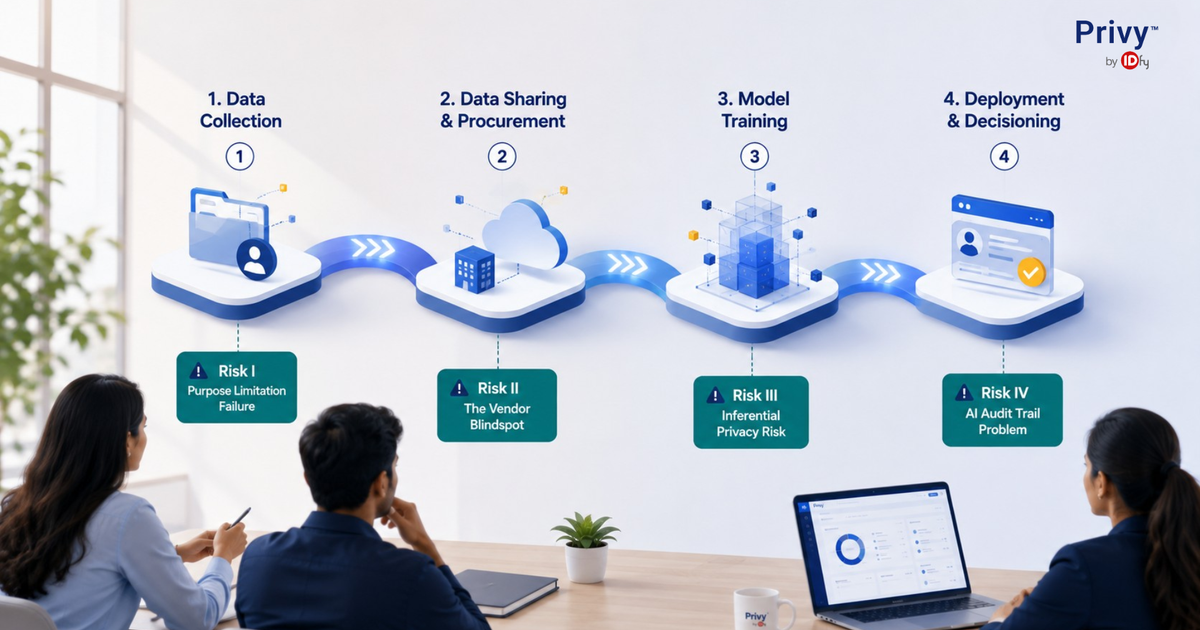
Data Privacy in the AI Era: The Four Risks Indian Corporations Have Already Inherited
Sep 10, 2026




 shivani@idfy.com
 Unit no. 801, Skyline Icon, 804, Andheri - Kurla Rd, Chimatpada, Marol, Andheri East, Mumbai, Maharashtra 400059
 1800 123 4339