

Grievance Redressal Mechanism
Definition
A grievance redressal mechanism is a process that enables Data Principals to raise concerns, complaints, or requests related to the processing of their personal data under the DPDPA.
Under the Digital Personal Data Protection Act, 2023 (DPDP Act), a grievance redressal mechanism refers to the process established by a Data Fiduciary to allow Data Principals to raise concerns regarding the processing of their personal data. It provides a structured channel through which individuals can seek resolution for issues related to their rights, personal data handling, or responses received from the organization.
The DPDP Act provides Data Principals with certain rights, including the right to access information about personal data processing, correction and erasure of personal data, grievance redressal, and nomination. A grievance mechanism helps organizations receive, track, investigate, and respond to concerns raised by individuals while maintaining accountability for how personal data is processed.
Under the DPDP Act, Data Fiduciaries are required to provide a readily available means for Data Principals to register grievances. The Act also provides a process for Data Principals to approach the Data Protection Board of India if their grievance is not resolved satisfactorily. Organizations need to establish appropriate workflows to manage grievances within applicable timelines and maintain records of actions taken.
In practice, gaps emerge when:
- Data Principals do not have a clear channel to raise privacy-related grievances.
- Grievances are handled manually without proper tracking or ownership.
- Organizations cannot demonstrate how complaints were investigated and resolved.
- Responses to Data Principals are delayed due to unclear workflows.
- Grievance records are not maintained for accountability purposes.
Organizations address these challenges by establishing dedicated grievance workflows, assigning responsible teams, tracking requests, maintaining resolution records, and monitoring response timelines. Within Privy, capabilities such as Data Principal rights workflows, privacy operations management, consent management, and audit-ready reporting help organizations streamline grievance handling and maintain visibility into privacy requests.
Questions About Staying in Control?
Here’s everything you need to know about this term and how it fits into your compliance program.
A grievance redressal mechanism is a process through which Data Principals can raise concerns regarding the processing of their personal data and seek resolution from the Data Fiduciary.
Yes. The DPDP Act provides Data Principals with the right to grievance redressal, and Data Fiduciaries must provide a mechanism for individuals to exercise this right.
Data Principals may raise concerns related to personal data processing, responses to their rights requests, or other issues connected with their personal data handling.
If a Data Principal is not satisfied with the response or resolution provided, they may approach the Data Protection Board of India as per the process established under the DPDP Act.
Privy helps organizations manage Data Principal requests through structured privacy workflows, request tracking, process visibility, and compliance reporting capabilities.
Still have a question?
Latest Blog

Sep 30, 2026
RBI NBFC Rules Just Banned Dark Patterns and Fake Consent
Sep 29, 2026
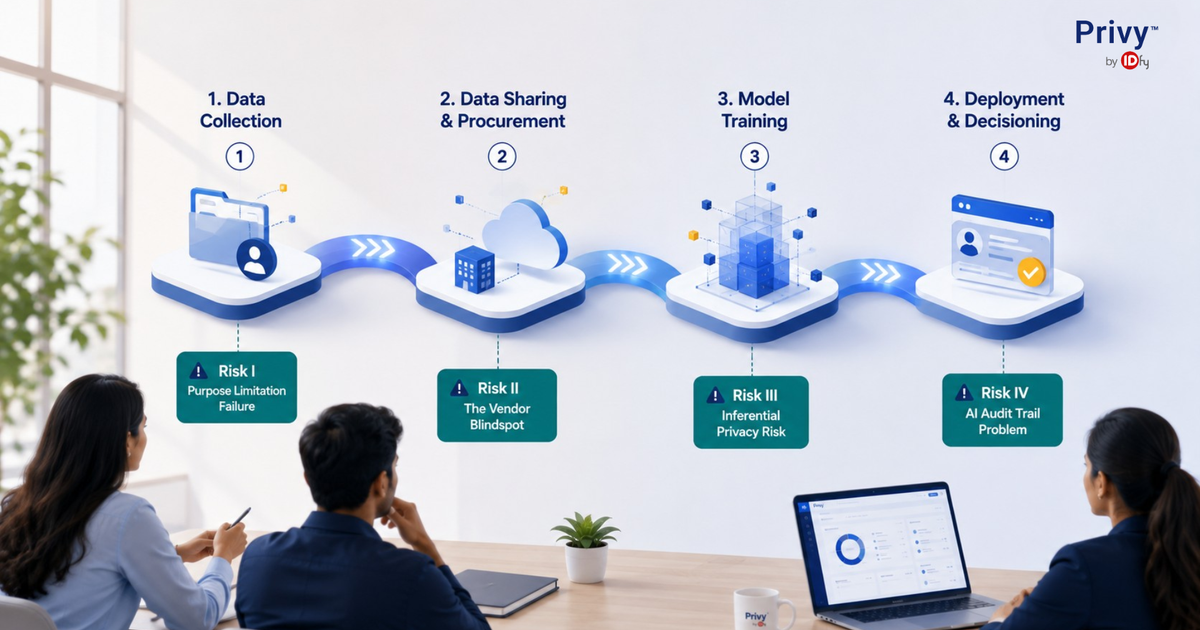
Data Privacy in the AI Era: The Four Risks Indian Corporations Have Already Inherited

Sep 10, 2026




 shivani@idfy.com
 Unit no. 801, Skyline Icon, 804, Andheri - Kurla Rd, Chimatpada, Marol, Andheri East, Mumbai, Maharashtra 400059
 1800 123 4339