

Guardrails
Definition
Guardrails are controls and safeguards that help organizations ensure personal data processing remains aligned with DPDPA requirements, privacy principles, and responsible data handling practices.
Under the Digital Personal Data Protection Act, 2023 (DPDP Act), guardrails refer to the preventive controls, processes, and rules organizations establish to ensure that personal data is processed responsibly and within defined boundaries. These controls help Data Fiduciaries manage how personal data is collected, used, shared, stored, and protected throughout its lifecycle.
Organizations may apply privacy guardrails across different processing activities, including consent collection, access management, Data Processor interactions, data sharing, retention practices, and the use of emerging technologies such as artificial intelligence. Guardrails help reduce the likelihood of unauthorized processing, excessive data use, and handling of personal data beyond the intended purpose.
The DPDP Act does not specifically define the term "guardrails" or require organizations to implement a control framework called guardrails. However, establishing appropriate safeguards supports obligations under the Act, including responsible processing, implementing reasonable security safeguards, protecting Data Principal rights, and preventing Personal Data Breaches.
In practice, gaps emerge when:
- Personal data is processed without clearly defined purposes or usage boundaries.
- Employees access personal data without appropriate authorization controls.
- New technologies process personal data without privacy reviews.
- Data sharing with third parties lacks defined conditions and oversight.
- Organizations cannot verify whether privacy policies are being followed operationally.
Organizations address these challenges by implementing privacy policies, defining processing rules, managing access, monitoring data flows, conducting assessments, and maintaining governance processes. Within Privy, capabilities such as data discovery, data mapping, consent management, privacy workflows, assessments, and compliance reporting help organizations establish visibility and operational controls to support responsible personal data processing.
Questions About Staying in Control?
Here’s everything you need to know about this term and how it fits into your compliance program.
Guardrails are controls and processes that help organizations ensure personal data is processed responsibly and within defined privacy requirements.
The DPDP Act does not specifically use the term guardrails. However, organizations may implement appropriate controls to meet obligations related to personal data protection and accountability.
Privacy guardrails help Data Fiduciaries reduce risks of unauthorized processing, improve governance, and ensure personal data handling practices remain aligned with privacy obligations.
Guardrails can apply to consent management, access controls, data sharing, Data Processor management, retention practices, breach prevention, and AI-related personal data processing.
Privy helps organizations establish operational privacy controls through data discovery, data mapping, consent workflows, assessments, governance automation, and compliance reporting.
Still have a question?
Latest Blog

Sep 30, 2026
RBI NBFC Rules Just Banned Dark Patterns and Fake Consent
Sep 29, 2026
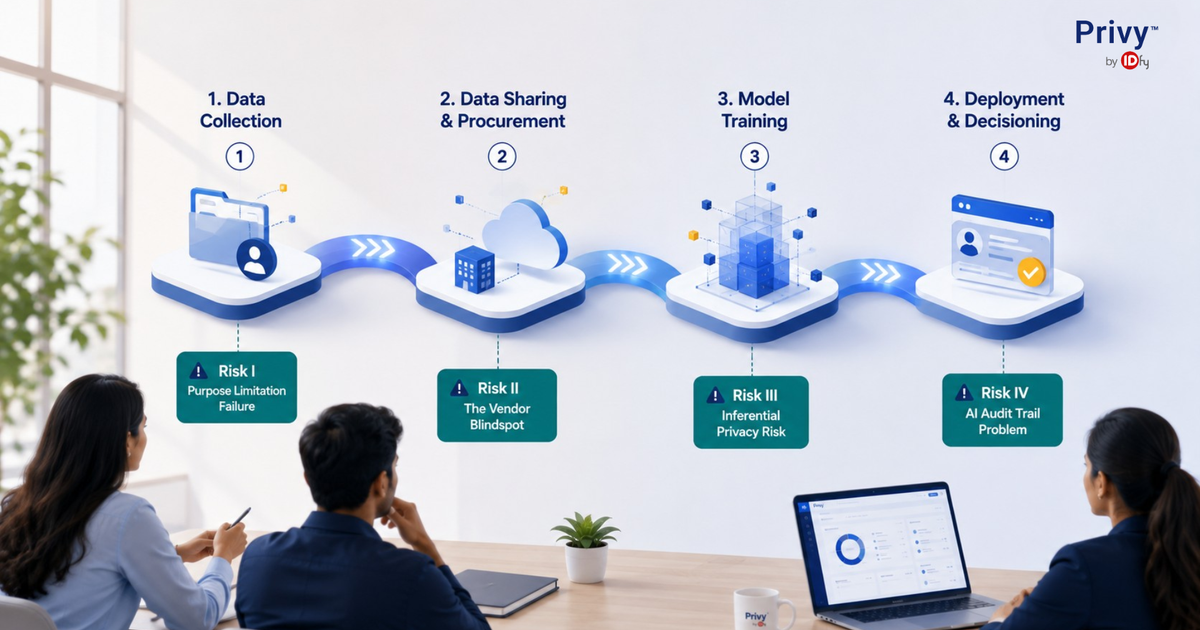
Data Privacy in the AI Era: The Four Risks Indian Corporations Have Already Inherited
Sep 10, 2026




 shivani@idfy.com
 Unit no. 801, Skyline Icon, 804, Andheri - Kurla Rd, Chimatpada, Marol, Andheri East, Mumbai, Maharashtra 400059
 1800 123 4339