

Human Oversight in AI
Definition
Human oversight in AI refers to maintaining human review and accountability when artificial intelligence systems process personal data under the DPDPA framework.
Under the Digital Personal Data Protection Act, 2023 (DPDP Act), human oversight in AI refers to the involvement of human review, monitoring, and decision-making when artificial intelligence systems process personal data. As organizations increasingly use AI systems for automated analysis, recommendations, and decision support, human oversight helps ensure that personal data processing remains accountable, transparent, and aligned with the intended purpose.
AI systems may process personal data during activities such as customer interactions, analytics, personalization, fraud detection, or automated decision-support processes. Without appropriate oversight, organizations may face challenges in understanding how personal data is being used, identifying incorrect outputs, managing risks, and ensuring that AI-driven processes remain consistent with privacy commitments made to Data Principals.
The DPDP Act does not specifically mention artificial intelligence or mandate human oversight for AI systems. However, when AI systems process personal data, Data Fiduciaries remain responsible for complying with applicable obligations under the Act, including lawful processing, providing notices, implementing reasonable security safeguards, and protecting personal data from misuse or Personal Data Breaches.
In practice, gaps emerge when:
- Organizations use AI systems to process personal data without clear accountability.
- AI outputs involving personal data are accepted without review or validation.
- Teams cannot identify what personal data is being used by AI systems.
- AI-related processing purposes are not documented clearly.
- Personal data risks from AI usage are not assessed before deployment.
Organizations address these challenges by defining AI usage policies, maintaining visibility into personal data used by AI systems, assigning accountability, conducting privacy reviews, monitoring AI-related processing, and maintaining governance records. Within Privy, capabilities such as data discovery, data classification, data mapping, privacy assessments, and governance workflows help organizations understand and manage personal data processing across technology environments.
Questions About Staying in Control?
Here’s everything you need to know about this term and how it fits into your compliance program.
No. The DPDP Act does not specifically require human oversight for AI systems. However, organizations remain responsible for ensuring compliant processing of personal data when AI systems are used.
Human oversight helps organizations monitor AI-related personal data processing, identify risks, validate outcomes, and maintain accountability.
The Data Fiduciary responsible for determining the purpose and means of processing personal data remains accountable for complying with DPDP obligations.
AI activities involving personal data, such as training, analysis, personalization, automated workflows, or decision-support systems, may require appropriate privacy governance.
Privy helps organizations discover, classify, and map personal data, enabling better visibility into data processing activities and supporting privacy governance for evolving technology environments.
Still have a question?
Latest Blog

Sep 30, 2026
RBI NBFC Rules Just Banned Dark Patterns and Fake Consent
Sep 29, 2026
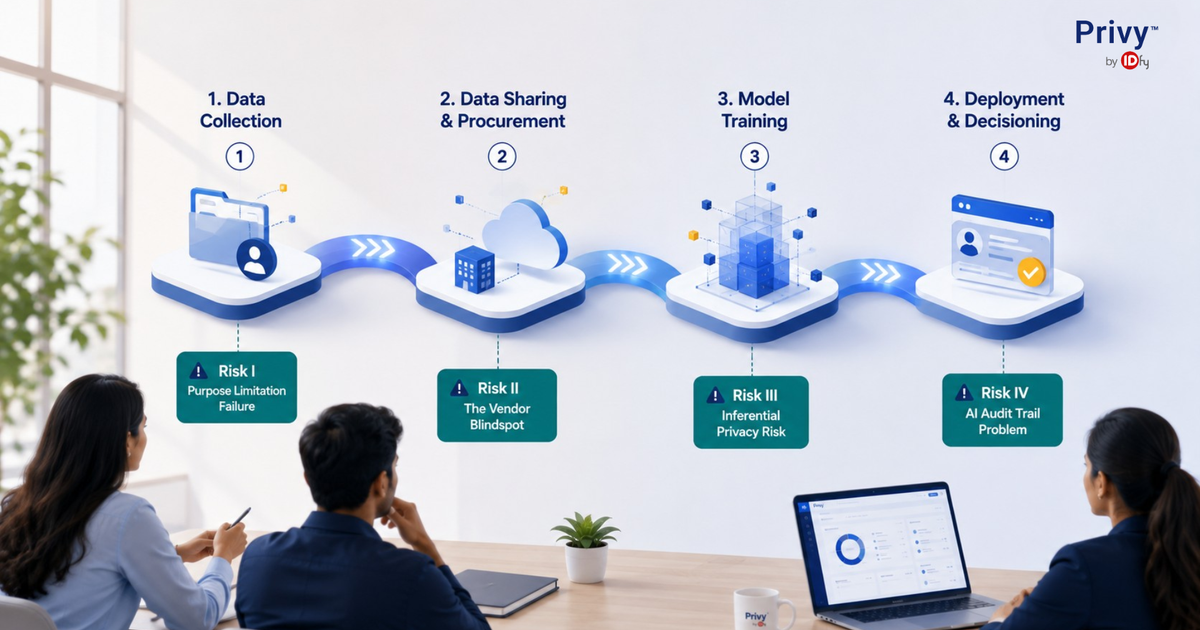
Data Privacy in the AI Era: The Four Risks Indian Corporations Have Already Inherited
Sep 10, 2026




 shivani@idfy.com
 Unit no. 801, Skyline Icon, 804, Andheri - Kurla Rd, Chimatpada, Marol, Andheri East, Mumbai, Maharashtra 400059
 1800 123 4339