


DPDP Rules
Implementation Guide:
A Clear, Practical Guide
for Organisations
A concise guide that helps teams understand the
Digital Personal Data Protection Act and what it
takes to implement it across real-world systems,
processes, and data flows.

What This Handbook Helps You Understand
The Digital Personal Data Protection Act (DPDPA) introduces new expectations around how Indian organisations handle personal data. This guide summarises the essential focus areas across the entire compliance journey, breaking them into simple, actionable components your teams can apply. It covers the three phases of DPDP compliance:
1. Laying the Foundation

Mapping and identifying personal data across systems
Cataloguing, categorising, and classifying PII
Ensuring readiness and gap assessments across people, processes, and tech
Conducting Privacy Impact Assessments (PIAs) to uncover risks early
2. Embedding Privacy Into Operations
Designing clear, multilingual consent notices
Managing the full consent lifecycle
Implementing cookie practices that strengthen privacy posture
Handling data principal grievances and requests for consent correction, erasure, deletion, etc.
Establishing structured third-party oversight
3. Sustaining Privacy Resilience
Ensuring that incident management reporting is aligned with the DPDP rules' 72-hour mandate
Linking privacy modules like data governance, PIAs, consent, and rights
Continuous compliance across evolving sectoral and regulatory needs
A six-quarter roadmap to move from baseline to full compliance
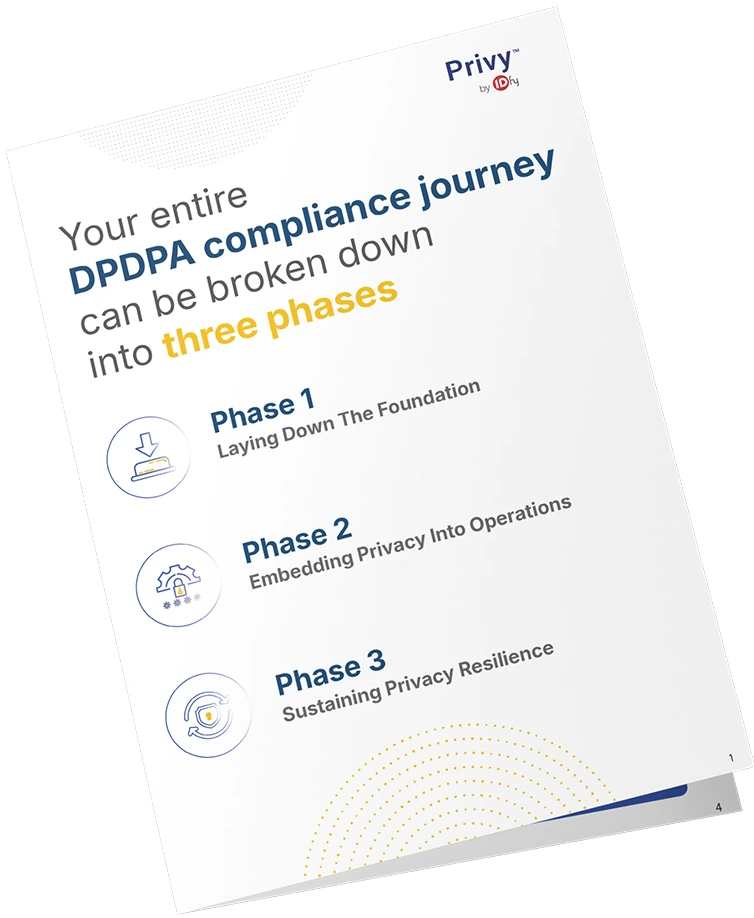
The handbook brings together checklists, workflows, and considerations from real enterprise environments, making it easier for organisations to plan and implement Digital Personal Data Protection Act (DPDPA) obligations with clarity.




 shivani@idfy.com
 Unit no. 801, Skyline Icon, 804, Andheri - Kurla Rd, Chimatpada, Marol, Andheri East, Mumbai, Maharashtra 400059
 1800 123 4339