
India's purpose-built DPDP compliance platform
Don't spend 18–24 months
building DPDP compliance.
Deploy Privy in 14 days.
Building DPDP compliance in-house takes time, resources, and ongoing ownership. Privy provides a purpose-built platform that helps enterprises get ready faster and stay compliant as regulations evolve.
Getting India’s Enterprises Ready for DPDPA

Trust Privy

Discovered & governed

Privacy rights protected

Governed in real time
Trusted by leading banks, fintechs, NBFCs, and digital-first enterprises
Privy vs In-House Build
The Smarter Way To Get DPDP Ready.
Building DPDP compliance software in-house can take 18–24 months, consume engineering bandwidth, and still leave your team responsible for every future regulatory update, workflow change, integration, audit, and breach response.
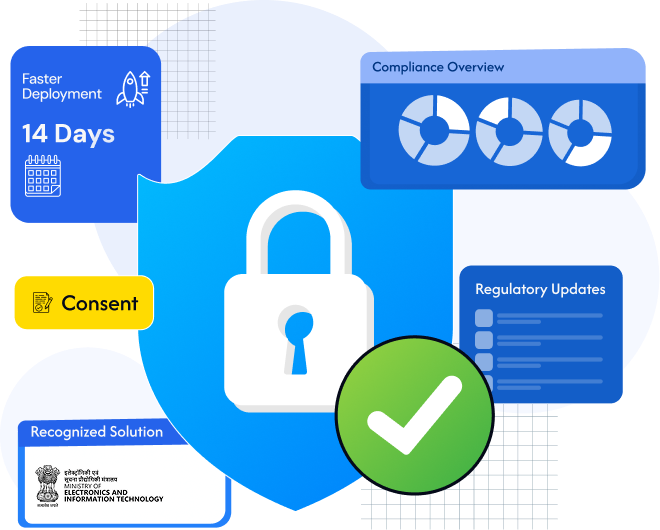
With Privy, you can deploy a purpose-built DPDP compliance platform in as little as 14 days with consent governance, data principal rights, breach workflows, vendor risk, audit evidence, and regulatory updates built in.
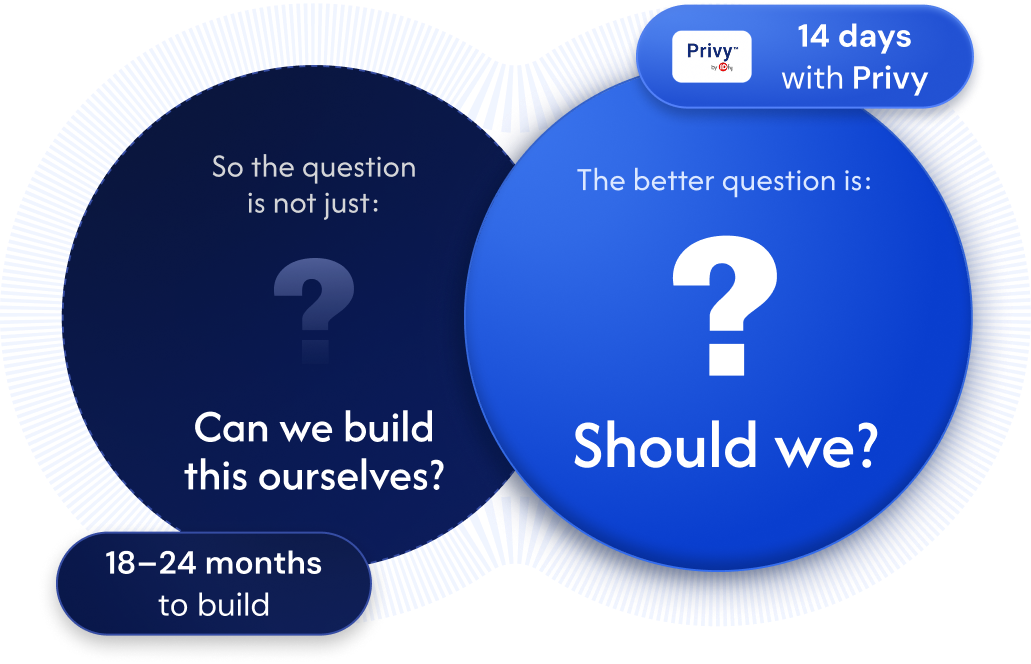
Are you becoming DPDP compliant or building compliance software?

Most organisations start with consent management. DPDP compliance goes far beyond consent collection.
It includes notices, data principal rights, vendor oversight, breach response, audit evidence, and ongoing regulatory obligations. This isn't a single workflow, it's a compliance operating system.
The Privy Compliance Iceberg
Most teams start here
“We need a consent management solution.”
But DPDP compliance is much bigger than collecting consent.

 Consent lifecycle management
 Cookie consent management
 Data principal rights workflows
 Privacy impact assessments
 Breach and incident management
 AI and privacy governance
 Privacy notices
 Data discovery and classification
 Third-party and vendor risk management
 Audit evidence and reporting
 Confidence During Audits
 Build Customer Trust
 Future-Proof Governance
 Confidence During Breaches
 Privacy Expertise Built In
 Peace of Mind for LeadershipConsent lifecycle managementCookie consent managementData principal rights workflowsPrivacy impact assessmentsBreach and incident managementAI and privacy governancePrivacy noticesData discovery and classificationThird-party and vendor risk managementAudit evidence and reportingConfidence During AuditsBuild Customer TrustFuture-Proof GovernanceConfidence During BreachesPrivacy Expertise Built InPeace of Mind for Leadership
More than consent capture.
A full compliance stack.
Consent lifecycle management
Privacy notices
Data discovery & classification
Third-party & vendor risk
Audit evidence & reporting

Cookie consent management
Data principal rights workflows
Privacy impact assessments
Breach & incident management
AI & privacy governance
Consent lifecycle management
Privacy notices
Data discovery & classification
Third-party & vendor risk
Audit evidence & reporting
Cookie consent management
Data principal rights workflows
Privacy impact assessments
Breach & incident management
AI & privacy governance
A practical, line-by-line comparison.
Build in-house
What you compare
Privy by IDfy
18–24 months


Time to go live
As little as 14 days
₹8–15 crore for enterprise-grade build

Initial investment
Subscription-based
High internal dependency

Engineering effort
Lower internal effort
Build from scratch

Consent governance
Included
Build workflows, routing, tracking, evidence

Data principal rights
Included
Build and maintain internally

Privacy notices
Included
Build escalation, reporting, evidence trails

Breach management
Included
Build assessment & tracking workflows

Vendor risk management
Included
Build evidence collection systems

Audit readiness
Included
Re-engineer internally

Regulatory updates
Platform updates supported
Permanent internal responsibility

Maintenance
Managed by Privy
Engineering pulled from core business

Hidden cost
Faster readiness, lower overhead
The Visible Cost Is Software.
The Real Cost Is Ownership.
An in-house DPDP build is not a one-time effort. It becomes a cross-functional operating load.
Teams involved

Product

Engineering

DevOps

Security

Legal & compliance

Data governance
What changes after go-live

Every regulatory update becomes internal engineering work

Every new product flow triggers compliance review

Every new system requires integration and validation

Over time, this shifts from a build project to a continuous maintenance burden.



Why Consultant-Led
Compliance Isn't Always Enough.
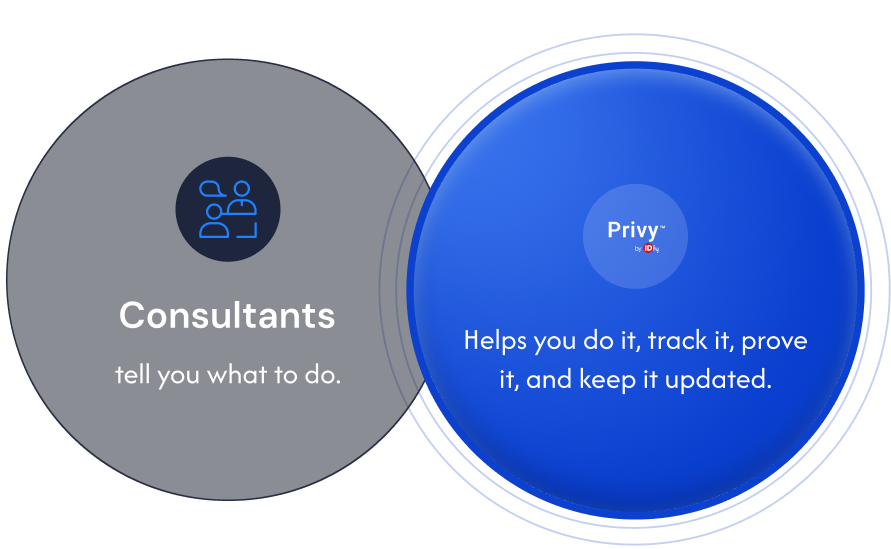
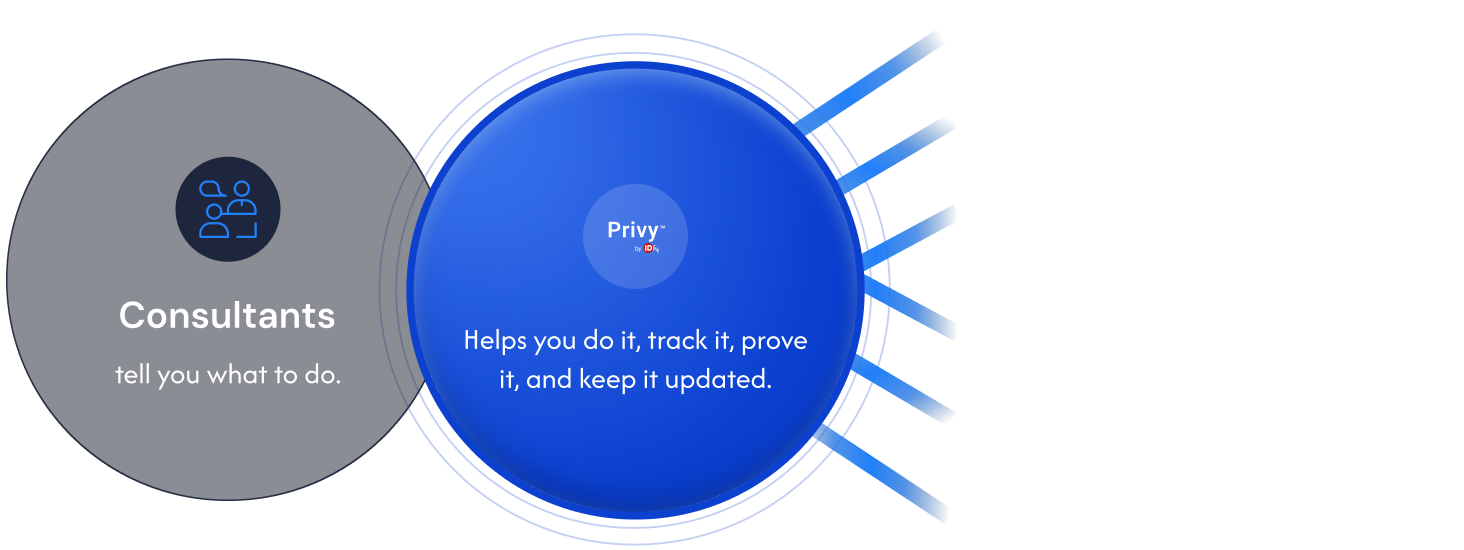
Consultants are useful for strategy, assessment, and policy design; they can help you understand what needs
to be done. But they don't operate your compliance workflows every day.
Checklist
What Enterprises Actually Get With Privy
Speed Is The Headline.
Reduced Complexity Is The Win.

Faster readiness
Move towards DPDP compliance in days, not years.

Lower ownership burden
Reduce internal engineering and maintenance effort.

Audit confidence
Keep evidence, records, and reports available.

Breach readiness
Use built-in workflows when incidents happen.

Compliance automation
Automate consent, rights, notices, and reporting.

Regulatory alignment
Stay prepared as DPDP requirements evolve.

Engineering focus
Keep teams focused on product, customers, and growth.

Customer trust
Show mature privacy governance to users and regulators.
Why Organisations Choose Privy by IDfy
One Unified Privacy Platform.
Built For India's DPDP Act.
Privy helps Indian enterprises simplify DPDP compliance without taking on the cost and
delay of building everything internally.
Proof Point
 Complete DPDP compliance coverage
- Purpose-built workflows for India's DPDP Act
- Faster deployment in as little as 14 days
- Consent, rights, breach, vendor risk, and audit workflows in one platform
- Regulatory update support
- Lower total cost of ownership
- Built-in evidence trails and reporting
- Enterprise-grade trust from IDfy's heritage
- Recognition through the MeiTY DPDP Innovation Challenge
- A unified privacy governance platform, not disconnected systems



Ready to evaluate your DPDP
compliance strategy?
Whether you're considering an internal build, a consultant-led approach, or a purpose-
built DPDP platform, the first step is understanding the true cost of compliance.
Questions Enterprises Ask
Before They Choose Privy.
Buying a DPDP compliance platform is usually faster and easier for enterprises that want built-in workflows, audit evidence, regulatory updates, and lower engineering dependency. Building in-house may work for organisations with large privacy engineering teams and long timelines.
A complete in-house DPDP compliance build can take 18–24 months because it includes consent, data principal rights, privacy notices, breach workflows, vendor risk, audit trails, integrations, and reporting.
Privy can be deployed in as little as 14 days, depending on the scope, integrations, and enterprise readiness.
A DPDP compliance platform should include consent lifecycle management, cookie consent, data principal rights management, privacy notices, privacy impact assessments, data discovery, breach management, vendor risk, audit evidence, and compliance dashboards.
A consultant-led approach is useful for strategy and policy design, but enterprises still need technology to run daily compliance workflows, manage evidence, enforce consent, and stay audit-ready.




 shivani@idfy.com
 Unit no. 801, Skyline Icon, 804, Andheri - Kurla Rd, Chimatpada, Marol, Andheri East, Mumbai, Maharashtra 400059
 1800 123 4339