

Asset Inventory
Definition
Centralized record of data, systems, and assets, including what exists, where it resides, and how it is used.
Asset inventory refers to maintaining a structured and continuously updated record of all organizational assets, including datasets, systems, applications, and infrastructure. It goes beyond listing assets to providing visibility into ownership, location, sensitivity, and how each asset is used across the organization.
As data environments grow more distributed, asset inventory becomes foundational to governance. Without a clear view of what exists, organizations cannot effectively manage access, assess risk, or enforce controls. In the context of the Digital Personal Data Protection Act, 2023, this visibility is critical to ensure that personal data is identified, tracked, and managed in line with defined purposes and obligations.
In practice, gaps emerge when:
- Assets are documented once but not updated as systems evolve.
- Data assets exist across tools without centralized visibility.
- Ownership and responsibility for assets are unclear.
- Inventory lacks context, such as sensitivity, usage, or data flow.
To address this, organizations move toward dynamic asset inventories that continuously map and update assets across systems. This includes linking assets to ownership, usage, and governance controls, ensuring that visibility is not static but operational. Within Privy, this is supported through data mapping, consent linkage, and audit trails, enabling organizations to maintain an accurate and actionable view of their data landscape.
Questions About Staying in Control?
Here’s everything you need to know about this term and how it fits into your compliance program.
Asset inventory identifies what exists, while data mapping explains how those assets move and interact across systems.
Because they are often maintained manually and not updated as systems, integrations, and data flows change.
Including context such as ownership, sensitivity, and usage, rather than just listing assets.
By identifying critical assets and enabling organizations to assess exposure, access, and potential impact.
That a static list of assets is sufficient when, in reality, inventory must be continuously updated and contextual.
Still have a question?
Latest Blog

Sep 30, 2026
RBI NBFC Rules Just Banned Dark Patterns and Fake Consent
Sep 29, 2026
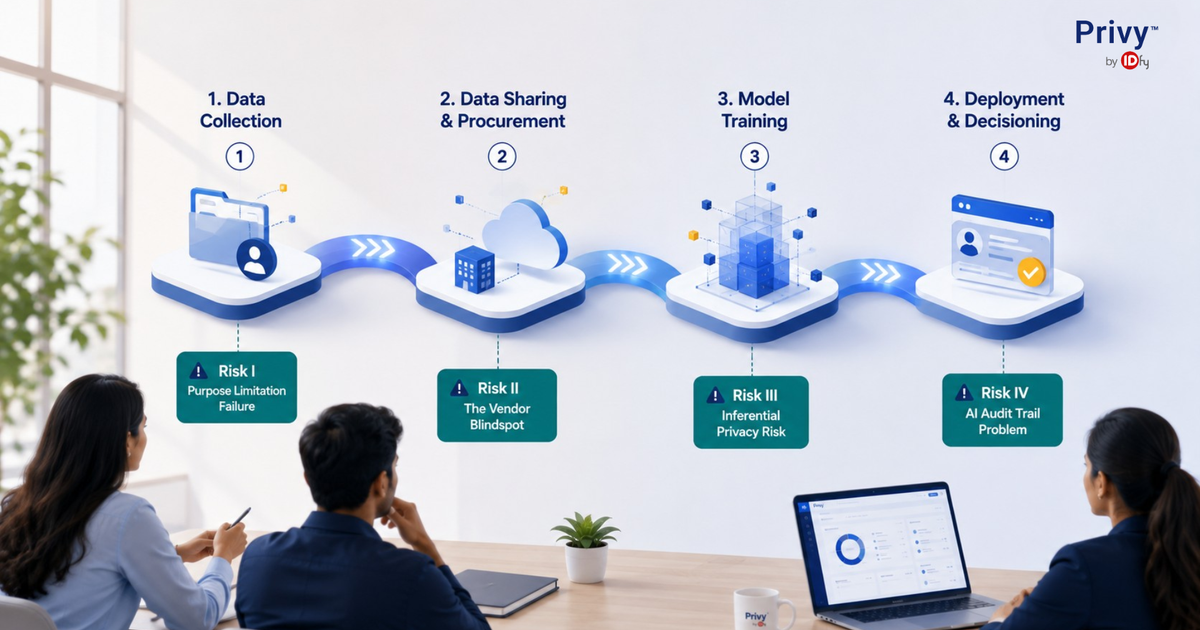
Data Privacy in the AI Era: The Four Risks Indian Corporations Have Already Inherited
Sep 10, 2026




 shivani@idfy.com
 Unit no. 801, Skyline Icon, 804, Andheri - Kurla Rd, Chimatpada, Marol, Andheri East, Mumbai, Maharashtra 400059
 1800 123 4339