

Asset Risk
Definition
Risk associated with data, systems, and assets based on exposure, sensitivity, and potential impact.
Asset risk refers to the likelihood and impact of threats affecting organizational assets such as data, systems, and infrastructure. It is determined by how sensitive an asset is, how exposed it is to access or misuse, and the potential consequences if it is compromised. In modern environments, data is often the most critical asset, making its protection central to overall risk management.
As data moves across systems and is accessed by multiple users and processes, risk is not static. It evolves based on changes in access, usage, and context. In the context of the Digital Personal Data Protection Act, 2023, asset risk is closely tied to how personal data is handled, as inadequate protection or misuse can lead to regulatory exposure and penalties.
In practice, gaps emerge when:
- Assets are not classified based on sensitivity or criticality.
- Risk assessments are conducted periodically rather than continuously.
- There is limited visibility into how assets are accessed or used.
- Controls are applied uniformly without considering varying risk levels.
To address this, organizations adopt a continuous and context-driven approach to risk management, where assets are classified, monitored, and protected based on their sensitivity and usage. This includes linking asset risk to access patterns, data flows, and governance controls. Within Privy, this is supported through capabilities such as data mapping, consent lifecycle management, and audit trails, enabling organizations to identify, assess, and manage asset risk with visibility and precision.
Questions About Staying in Control?
Here’s everything you need to know about this term and how it fits into your compliance program.
High sensitivity, broad access, and high impact if compromised, especially in the case of personal or regulated data.
Because data usage, access patterns, and system integrations change continuously, altering the risk profile.
By monitoring data flows, access, and usage in real time instead of relying only on periodic reviews.
Treating all assets the same without differentiating based on sensitivity, exposure, and business impact.
Higher risk assets require stronger safeguards and controls to meet regulatory expectations and prevent violations.
Still have a question?
Latest Blog

Sep 30, 2026
RBI NBFC Rules Just Banned Dark Patterns and Fake Consent
Sep 29, 2026
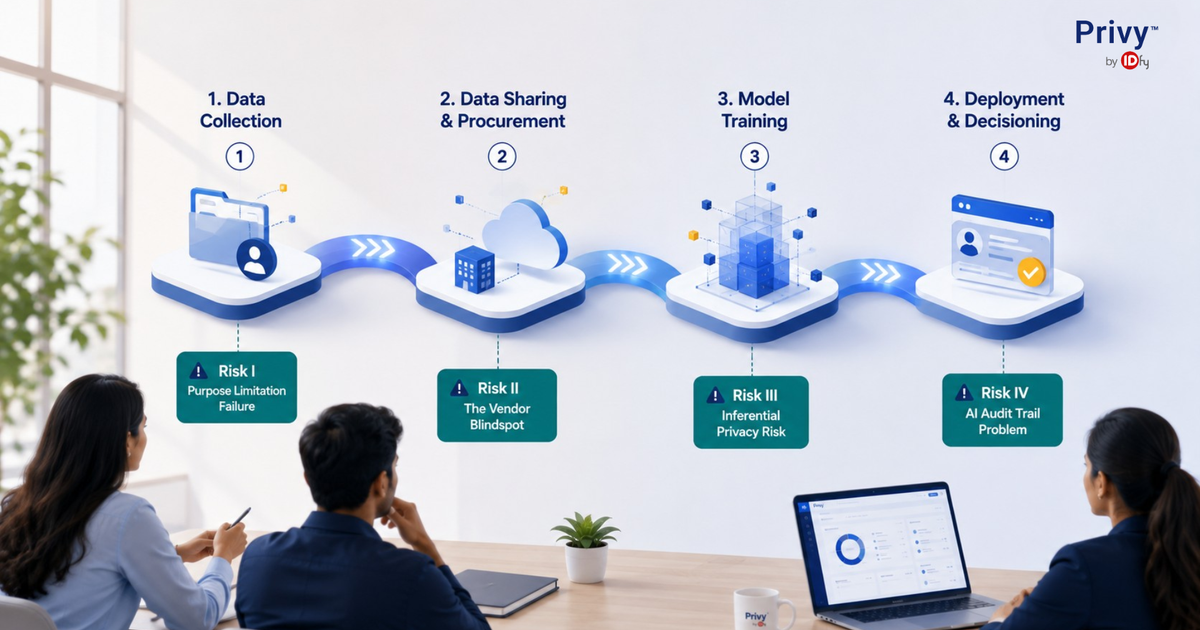
Data Privacy in the AI Era: The Four Risks Indian Corporations Have Already Inherited
Sep 10, 2026




 shivani@idfy.com
 Unit no. 801, Skyline Icon, 804, Andheri - Kurla Rd, Chimatpada, Marol, Andheri East, Mumbai, Maharashtra 400059
 1800 123 4339