

Authentication
Definition
Process of verifying a user’s identity before granting access to systems or data.
Authentication is the process used to confirm that a user or system is who they claim to be before allowing access. It relies on factors such as something the user knows (passwords), has (one-time passwords or tokens), or is (biometrics). As digital systems expand, authentication becomes the first layer of defense against unauthorized access and data misuse.
Across environments, authentication is a foundational security control. In the context of the Digital Personal Data Protection Act, 2023, it supports the principle that personal data should only be accessed by authorized entities. Weak or inconsistent authentication increases the risk of unauthorized access, which can directly lead to data exposure and compliance failures.
In practice, gaps emerge when:
- Authentication relies solely on passwords without additional verification.
- Access is granted without validating user identity across systems.
- Authentication is not consistently enforced across applications.
- Compromised credentials are not detected or acted upon.
To address this, organizations implement layered authentication mechanisms that combine multiple factors and enforce identity verification consistently. This ensures that access to systems and data is controlled, monitored, and aligned with security and compliance requirements. Within Privy, this is supported through capabilities that enable secure identity verification and ensure that access to personal data is governed with control and traceability.
Questions About Staying in Control?
Here’s everything you need to know about this term and how it fits into your compliance program.
Authentication verifies identity, while authorization determines what that identity is allowed to access.
When it relies on weak methods such as passwords alone or is inconsistently enforced across systems, creating entry points for unauthorized access.
Based on the sensitivity of data and the risk associated with access, higher-risk scenarios require stronger or multi-factor authentication.
Consistency across applications, use of multiple verification factors, and the ability to detect and respond to suspicious access patterns.
It ensures that only verified users can access personal data, reducing the risk of unauthorized exposure and regulatory violations.
Still have a question?
Latest Blog

Sep 30, 2026
RBI NBFC Rules Just Banned Dark Patterns and Fake Consent
Sep 29, 2026
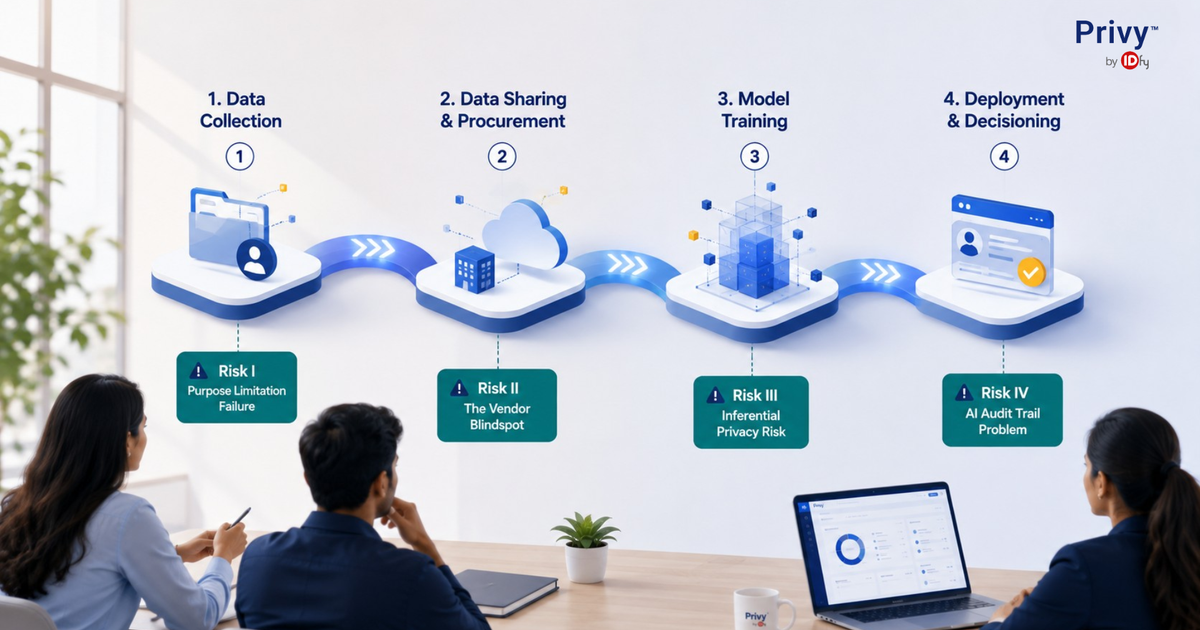
Data Privacy in the AI Era: The Four Risks Indian Corporations Have Already Inherited
Sep 10, 2026




 shivani@idfy.com
 Unit no. 801, Skyline Icon, 804, Andheri - Kurla Rd, Chimatpada, Marol, Andheri East, Mumbai, Maharashtra 400059
 1800 123 4339