

Automated Decision Making
Definition
Use of systems and algorithms to make decisions without human intervention.
Automated decision making refers to the use of algorithms and AI systems to evaluate data and produce decisions without direct human involvement. It is widely applied across functions such as credit scoring, hiring, fraud detection, and personalization, where speed and scale are critical. As these systems influence real-world outcomes, the focus shifts from efficiency to ensuring that decisions are consistent, explainable, and governed.
Such practices are common globally, but regulatory expectations differ by jurisdiction. In the context of the Digital Personal Data Protection Act, 2023, automated decisions that rely on personal data must be lawful, purpose-driven, and implemented with safeguards to prevent arbitrary or unfair outcomes. Organizations are expected to maintain transparency in how data is used and ensure accountability when decisions significantly affect individuals.
In practice, gaps emerge when:
- Decisions cannot be explained or traced back to input data.
- Personal data is used without a clear linkage to a purpose or consent.
- Bias or unintended outcomes are not detected or reviewed.
- Human oversight is absent in high-impact decision scenarios.
Addressing this requires embedding governance into automated workflows, ensuring that data usage, decision logic, and outcomes are continuously monitored and auditable. This includes maintaining traceability, enabling review mechanisms, and aligning decisions with defined policies. Within Privy, this is supported through capabilities such as data mapping, consent lifecycle management, and audit trails, enabling organizations to govern automated decisions with visibility and accountability.
Questions About Staying in Control?
Here’s everything you need to know about this term and how it fits into your compliance program.
Automation is effective for speed and consistency, but decisions that impact access, eligibility, or outcomes require defined thresholds for human intervention. Organizations must determine where automation ends and oversight begins.
A decision is defensible when it can be reconstructed—showing what data was used, how it was processed, and why the outcome was generated.
Bias often enters through training data or evolving usage patterns. Continuous monitoring, periodic validation, and outcome reviews are required to ensure fairness.
Organizations must provide meaningful explanations of how decisions are made, especially when personal data is involved under the Digital Personal Data Protection Act, 2023.
By linking the data used in decision-making back to its original purpose and consent context, ensuring automation does not extend beyond permitted use.
Still have a question?
Latest Blog

Sep 30, 2026
RBI NBFC Rules Just Banned Dark Patterns and Fake Consent
Sep 29, 2026
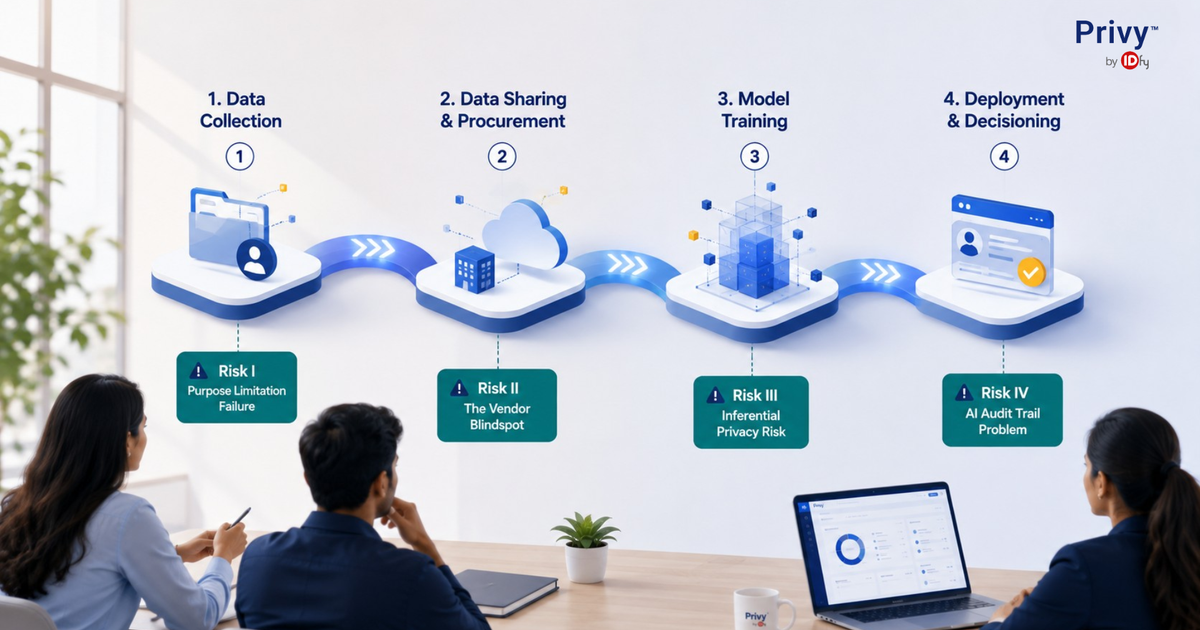
Data Privacy in the AI Era: The Four Risks Indian Corporations Have Already Inherited
Sep 10, 2026




 shivani@idfy.com
 Unit no. 801, Skyline Icon, 804, Andheri - Kurla Rd, Chimatpada, Marol, Andheri East, Mumbai, Maharashtra 400059
 1800 123 4339