

Cross-Border Data Transfer
Definition
Cross-border data transfer is the movement of personal data from one country to another for processing or storage.
Cross-border data transfer refers to the movement of personal data across countries where data collected in one jurisdiction is processed, accessed, or stored in another. This typically occurs in cloud environments, global SaaS platforms, and outsourced service ecosystems.
As organizations operate across distributed infrastructure and global vendors, personal data often flows across multiple geographies as part of normal business operations.
Under the GDPR (General Data Protection Regulation) and the Digital Personal Data Protection Act, 2023, such transfers are regulated to ensure personal data remains protected even outside its country of origin.
GDPR requires lawful transfer mechanisms such as Standard Contractual Clauses (SCCs), adequacy decisions, and other approved safeguards. DPDP requires compliance with government-notified restrictions and approved jurisdictions.
In practice, gaps emerge when:
- Data is transferred without clear visibility into the destination geography
- Vendor systems process data in unverified jurisdictions
- Transfer approvals are inconsistent across business units
- Actual data storage locations differ from the assumed data residency
To address this, organizations implement structured cross-border governance frameworks that define approved destinations, enforce safeguards, and maintain traceability of data movement.
Within Privy, cross-border governance ensures international data flows remain controlled, visible, and compliant with GDPR and DPDP requirements.
Questions About Staying in Control?
Here’s everything you need to know about this term and how it fits into your compliance program.
It is the movement of personal data from one country to another for processing or storage.
Because data must remain protected even when processed outside its original jurisdiction.
Standard Contractual Clauses, adequacy decisions, and approved transfer mechanisms.
Lack of visibility into where data is actually processed or stored.
By defining approved jurisdictions, enforcing safeguards, and tracking data movement.
Still have a question?
Latest Blog

Sep 30, 2026
RBI NBFC Rules Just Banned Dark Patterns and Fake Consent
Sep 29, 2026
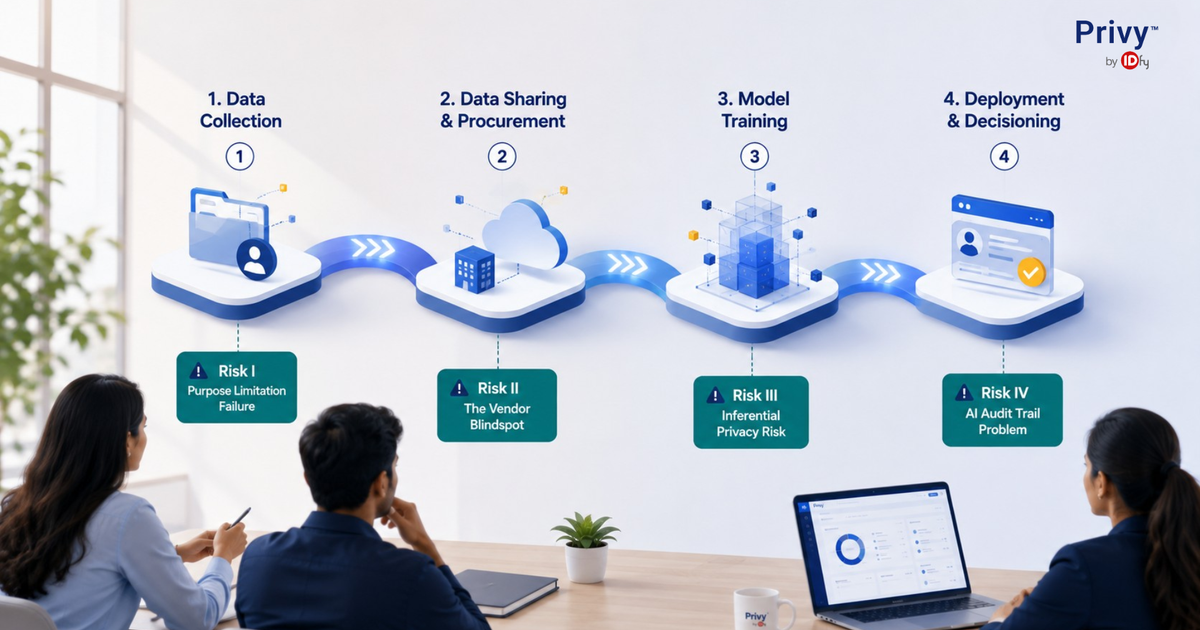
Data Privacy in the AI Era: The Four Risks Indian Corporations Have Already Inherited
Sep 10, 2026




 shivani@idfy.com
 Unit no. 801, Skyline Icon, 804, Andheri - Kurla Rd, Chimatpada, Marol, Andheri East, Mumbai, Maharashtra 400059
 1800 123 4339