

Data Classification
Definition
The process of categorizing data based on sensitivity, business importance, and compliance requirements to enable appropriate governance and protection.
Data classification helps organizations identify and organize data based on factors such as sensitivity, criticality, usage, and regulatory impact. Common classifications may include public, internal, confidential, or sensitive data, allowing enterprises to apply the right controls based on the level of risk associated with the data.
In modern enterprises, data classification is foundational to governance, security, and compliance execution. It enables organizations to understand which data requires stricter handling, monitoring, retention, or access controls across systems and workflows. Without clear classification, enforcing privacy policies and managing data risk becomes inconsistent and difficult to operationalize at scale.
Under the Digital Personal Data Protection Act, 2023, organizations are expected to protect personal data through appropriate safeguards and responsible processing practices. Data classification supports this by helping enterprises identify sensitive and regulated data across systems, enabling stronger governance and policy enforcement.
From a compliance perspective, organizations must be able to demonstrate that different categories of data are handled according to their sensitivity and business purpose. Classification helps establish clearer accountability around access, storage, retention, sharing, and processing activities, strengthening operational readiness for audits and regulatory review.
In practice, gaps emerge when:
- Sensitive data remains unidentified across distributed systems
- Classification policies are applied inconsistently across business units
- Manual tagging processes lead to outdated or inaccurate classifications
- Organizations cannot connect classified data to access controls or processing activities
- Data sensitivity changes over time, but classifications are not continuously updated
Organizations strengthen governance by implementing centralized and automated data classification processes that continuously identify, tag, and monitor sensitive data across systems. This helps improve traceability, policy enforcement, access governance, and risk visibility across the data lifecycle.
Modern enterprises also integrate classification frameworks with governance, consent, and monitoring workflows to maintain stronger operational control over personal data handling. Within Privy, this is supported through capabilities such as data mapping, governance workflows, and audit-ready traceability that help organizations operationalize continuous compliance.
Questions About Staying in Control?
Here’s everything you need to know about this term and how it fits into your compliance program.
Data classification helps organizations identify sensitive data and apply appropriate governance, security, and compliance controls based on risk and business importance.
It enables organizations to understand which data requires stricter protection, monitoring, and handling under regulatory requirements.
Organizations often struggle with inconsistent classification policies, fragmented systems, manual processes, and outdated data inventories.
It creates better visibility into sensitive data, supports policy enforcement, and strengthens accountability across the data lifecycle.
Privy supports connected governance and traceability through capabilities such as data mapping, workflow management, and audit-ready visibility across systems.
Still have a question?
Latest Blog

Sep 30, 2026
RBI NBFC Rules Just Banned Dark Patterns and Fake Consent
Sep 29, 2026
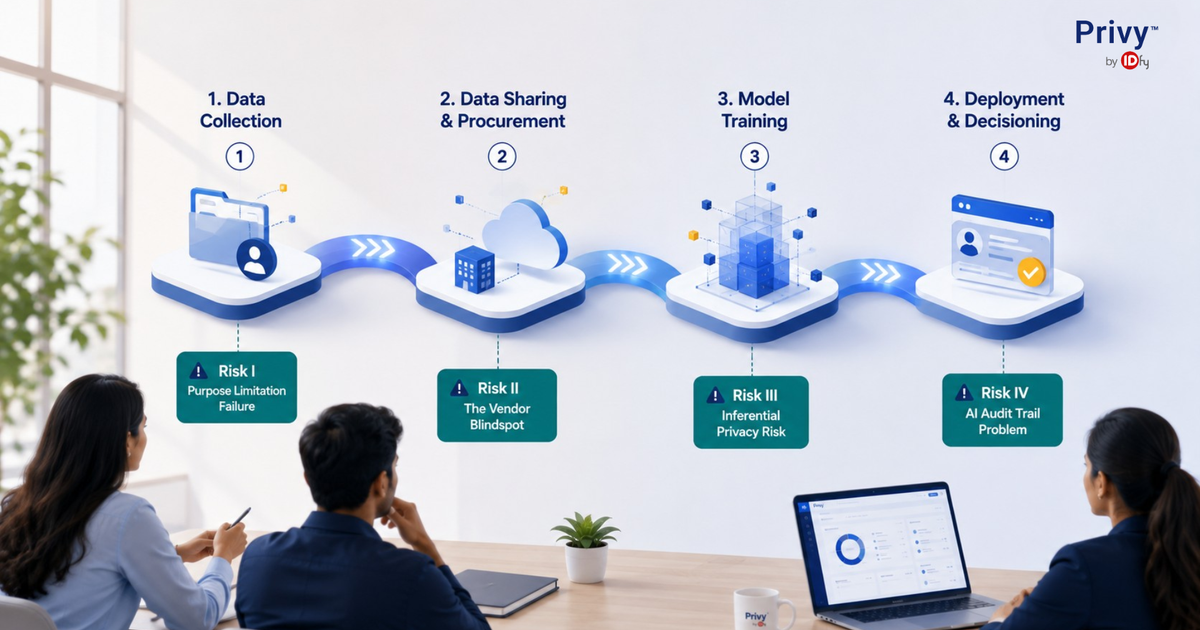
Data Privacy in the AI Era: The Four Risks Indian Corporations Have Already Inherited
Sep 10, 2026




 shivani@idfy.com
 Unit no. 801, Skyline Icon, 804, Andheri - Kurla Rd, Chimatpada, Marol, Andheri East, Mumbai, Maharashtra 400059
 1800 123 4339