

Data Processor Disclosure
Definition
Data Processor disclosure refers to informing individuals or relevant stakeholders when personal data is processed by a Data Processor on behalf of a Data Fiduciary, where required by law, notice, or contractual obligations.
Data Processor disclosure refers to the practice of informing individuals, regulators, or other relevant parties that personal data is processed by one or more Data Processors acting on behalf of a Data Fiduciary. Such disclosures are typically made through privacy notices, contractual documentation, or other transparency mechanisms. Rather than listing every operational activity, the objective is to provide appropriate transparency regarding the involvement of third parties in the processing of personal data.
Organizations commonly engage cloud service providers, software vendors, payment processors, customer support providers, analytics platforms, and other service providers to process personal data on their behalf. Maintaining visibility into these processing relationships enables organizations to strengthen governance, manage vendor risks, and provide accurate information to individuals regarding how their personal data is handled. Processor disclosures also help organizations maintain consistent documentation of third-party processing activities across business functions.
The Digital Personal Data Protection Act, 2023 requires Data Fiduciaries to provide a notice that enables Data Principals to understand the personal data being processed and the purpose for such processing. While the Act does not expressly require organizations to disclose or publish the identity of every Data Processor, organizations should ensure their notices accurately reflect how personal data is processed, including the involvement of processors where appropriate under applicable legal, contractual, or transparency requirements.
In practice, gaps emerge when:
- Organizations engage new Data Processors without updating privacy notices.
- Vendor inventories do not accurately reflect active processing relationships.
- Business teams cannot identify which processors handle specific categories of personal data.
- Third-party processing activities are documented inconsistently across departments.
- Privacy notices provide limited information about outsourced processing activities.
Organizations improve transparency by maintaining current vendor inventories, documenting processor relationships, regularly reviewing privacy notices, and integrating vendor governance into privacy operations. Within Privy, capabilities such as vendor governance, data mapping, automated discovery, and governance reporting help organizations maintain visibility into processor relationships and associated personal data processing activities.
Questions About Staying in Control?
Here’s everything you need to know about this term and how it fits into your compliance program.
Data Processor disclosure is the practice of informing relevant stakeholders that personal data is processed by third parties acting on behalf of a Data Fiduciary.
No. The DPDP Act does not expressly require organizations to disclose the identity of every Data Processor. However, organizations should provide clear and accurate notices regarding personal data processing.
It improves transparency, strengthens vendor governance, and helps organizations maintain accurate records of third-party processing activities.
Organizations may explain the categories of processors engaged, the services they provide, the purpose of processing, and how personal data is protected.
Privy helps organizations maintain visibility into processor relationships through data discovery, data mapping, governance workflows, and reporting capabilities.
Still have a question?
Latest Blog
-1-1200x630.png)
Oct 19, 2026
DPDP Compliance Services: Same Law, Different Data in Every Industry
Sep 30, 2026
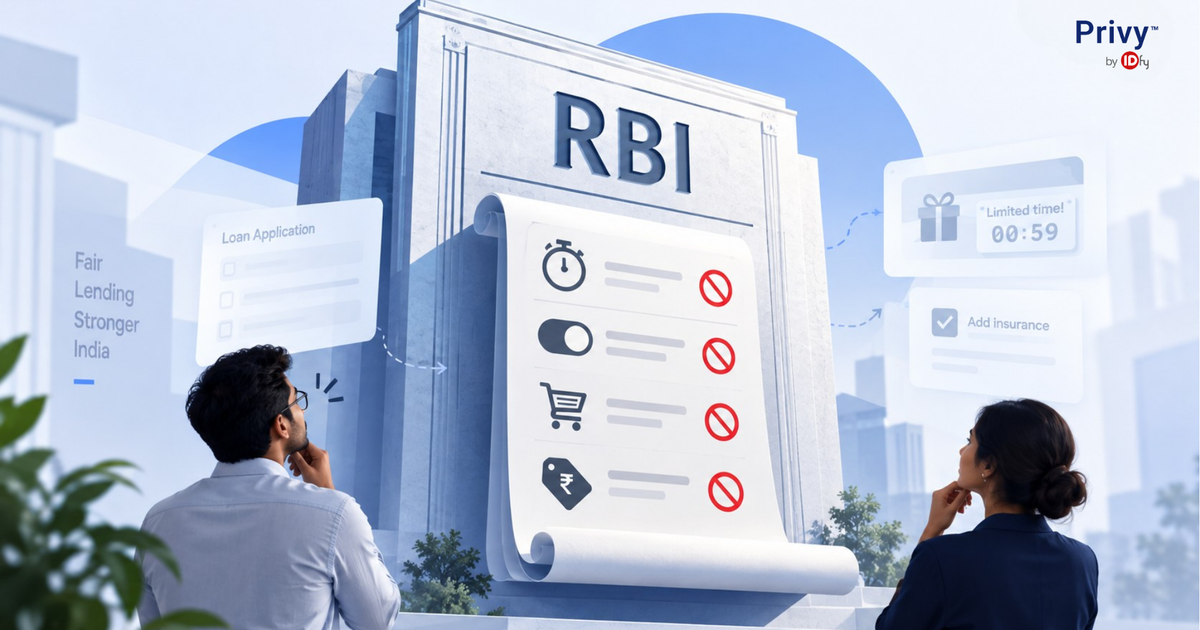
RBI NBFC Rules Just Banned Dark Patterns and Fake Consent
Sep 29, 2026




 shivani@idfy.com
 Unit no. 801, Skyline Icon, 804, Andheri - Kurla Rd, Chimatpada, Marol, Andheri East, Mumbai, Maharashtra 400059
 1800 123 4339