
Data Protection Officer
Definition
A Data Protection Officer (DPO) is an individual responsible for overseeing an organization's data protection and privacy compliance program and advising on privacy obligations.
A Data Protection Officer (DPO) is a designated individual responsible for overseeing an organization's privacy governance program, monitoring compliance with applicable data protection requirements, advising on privacy risks, and promoting responsible handling of personal data. Depending on the applicable legal framework and organizational structure, a DPO may coordinate privacy initiatives, support policy development, conduct awareness programs, assist with risk assessments, and serve as a point of contact for privacy-related matters.
As organizations process increasing volumes of personal data across digital platforms, cloud environments, and third-party ecosystems, privacy governance requires dedicated oversight. A DPO helps establish accountability by coordinating privacy programs across legal, compliance, information security, technology, and business teams. Their role supports consistent implementation of privacy policies, incident response planning, vendor governance, employee awareness, and ongoing monitoring of organizational privacy practices.
Under the Digital Personal Data Protection Act, 2023, Significant Data Fiduciaries, as may be notified by the Central Government, are required to appoint a Data Protection Officer who represents the Significant Data Fiduciary. The DPO should be based in India and serve as the point of contact for grievance redressal under the Act. Organizations that are not classified as Significant Data Fiduciaries are not generally required by the Act to appoint a DPO, although many choose to designate privacy leaders as a governance best practice.
In practice, gaps emerge when:
- Privacy responsibilities are distributed across teams without clear ownership.
- Employees lack guidance on privacy-related decision-making.
- Regulatory changes are not consistently incorporated into internal policies.
- Privacy incidents are escalated through informal processes.
- Data Principal requests are handled inconsistently across business units.
Organizations strengthen privacy governance by defining clear accountability, establishing privacy leadership, documenting governance processes, and conducting periodic reviews of compliance activities. Within Privy, capabilities such as consent management, governance workflows, request management, and audit reporting help organizations operationalize privacy programs and support DPO responsibilities.
Questions About Staying in Control?
Here’s everything you need to know about this term and how it fits into your compliance program.
A Data Protection Officer is an individual responsible for overseeing an organization's privacy governance and advising on data protection obligations.
The DPDP Act requires Significant Data Fiduciaries, as notified by the Central Government, to appoint a Data Protection Officer. It is not a general requirement for all organizations.
A DPO oversees privacy governance, advises on compliance, coordinates privacy initiatives, supports incident management, and acts as a point of contact for privacy matters.
Yes. Depending on the organization's size and governance structure, a DPO may also perform other responsibilities, provided conflicts of interest are appropriately managed.
Privy helps DPOs through automated data discovery, consent management, governance workflows, request management, and audit-ready reporting that improve visibility into personal data processing.
Still have a question?
Latest Blog
-1-1200x630.png)
Oct 19, 2026
DPDP Compliance Services: Same Law, Different Data in Every Industry
Sep 30, 2026
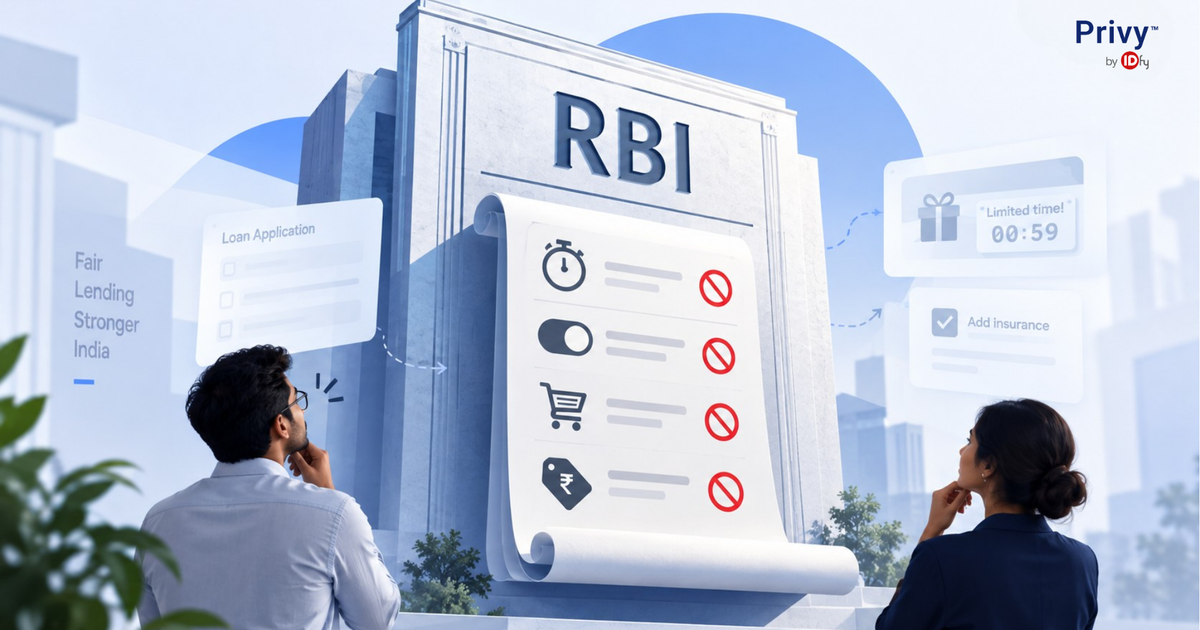
RBI NBFC Rules Just Banned Dark Patterns and Fake Consent
Sep 29, 2026




 shivani@idfy.com
 Unit no. 801, Skyline Icon, 804, Andheri - Kurla Rd, Chimatpada, Marol, Andheri East, Mumbai, Maharashtra 400059
 1800 123 4339