

Major Incident Management
Definition
Major incident management refers to the structured process of identifying, responding to, and resolving significant personal data incidents under the DPDPA framework.
Under the Digital Personal Data Protection Act, 2023 (DPDP Act), major incident management refers to the processes followed by a Data Fiduciary to identify, assess, contain, and respond to significant incidents involving personal data. A major incident may involve events that impact the confidentiality, integrity, or availability of personal data and may qualify as a Personal Data Breach under the Act.
Organizations handling large volumes of personal data need structured processes to manage incidents that may affect Data Principals. Major incident management helps organizations coordinate response activities, identify affected personal data, determine the scope of an incident, assign responsibilities, maintain records, and take corrective actions. It supports faster decision-making when incidents require escalation and regulatory communication.
The DPDP Act requires Data Fiduciaries to take reasonable security safeguards to prevent Personal Data Breaches and requires intimation of certain breaches to the Data Protection Board of India and affected Data Principals as prescribed under the Act and applicable rules. While the Act does not define a "major incident management" framework, having structured incident response processes helps organizations meet breach management and accountability obligations.
In practice, gaps emerge when:
- Organizations cannot quickly determine whether an incident involves personal data.
- Incident response responsibilities are not clearly assigned.
- Teams lack visibility into affected personal data during a breach.
- Breach investigation records are incomplete.
- Corrective actions after incidents are not tracked effectively.
Organizations address these challenges by establishing incident response workflows, defining escalation paths, maintaining breach records, identifying impacted personal data, and tracking remediation activities. Within Privy, capabilities such as personal data discovery, data mapping, breach management workflows, and compliance reporting help organizations improve visibility and support structured privacy incident response.
Questions About Staying in Control?
Here’s everything you need to know about this term and how it fits into your compliance program.
Major incident management refers to the process that organizations use to identify, respond to, and resolve significant incidents involving personal data.
The DPDP Act does not mandate a specific incident management framework. However, Data Fiduciaries must implement reasonable security safeguards and manage Personal Data Breaches appropriately.
A major privacy incident may involve unauthorized access, disclosure, loss, or compromise of personal data that could affect Data Principals.
It helps organizations identify affected personal data, coordinate breach response, maintain records, and support required notifications.
Privy helps organizations improve visibility into personal data, understand data impact during incidents, manage privacy workflows, and maintain compliance evidence.
Still have a question?
Latest Blog

Sep 30, 2026
RBI NBFC Rules Just Banned Dark Patterns and Fake Consent
Sep 29, 2026
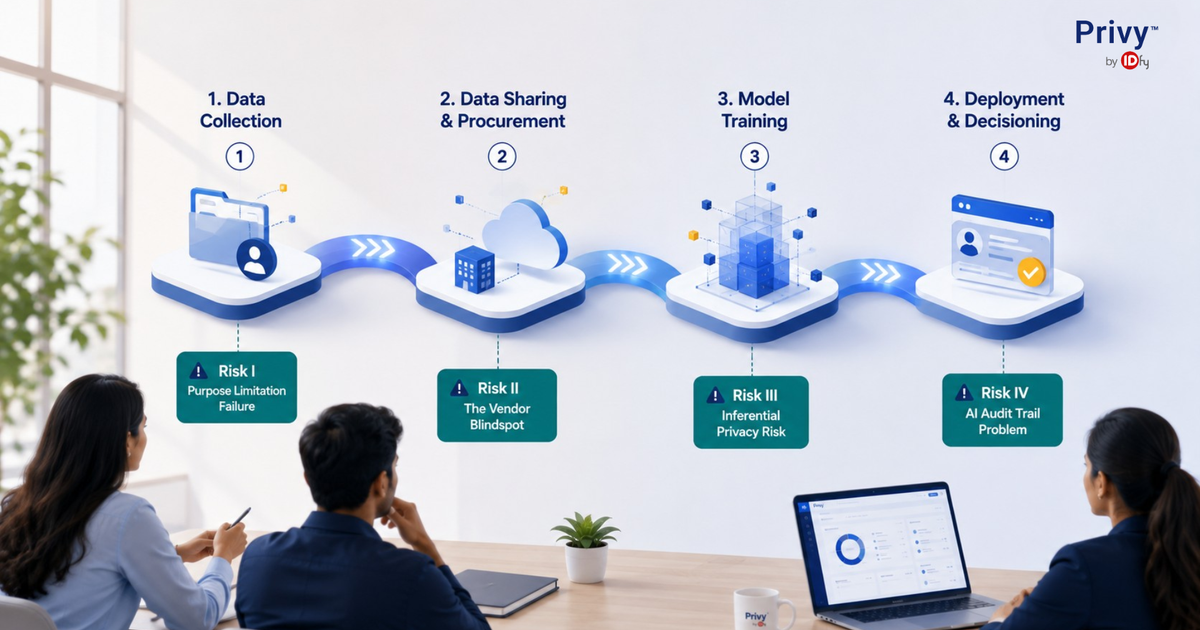
Data Privacy in the AI Era: The Four Risks Indian Corporations Have Already Inherited
Sep 10, 2026




 shivani@idfy.com
 Unit no. 801, Skyline Icon, 804, Andheri - Kurla Rd, Chimatpada, Marol, Andheri East, Mumbai, Maharashtra 400059
 1800 123 4339